Jazz Classic: Coleman Hawkins Plays Body And Soul
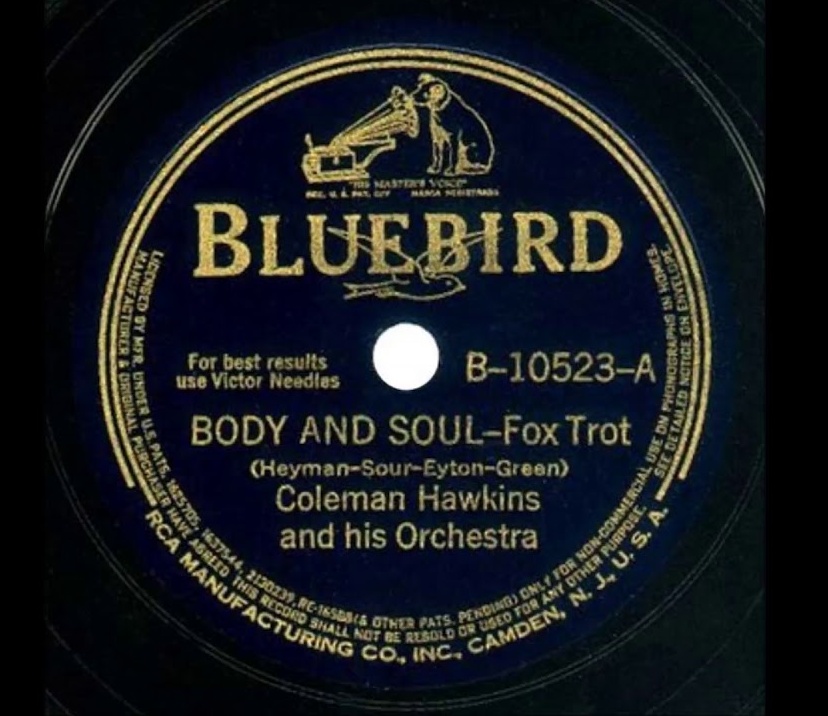
When old-time jazz is addressed hereabouts, your humble scribe often tends to reach into dusty corners to find underappreciated gems to share with his audience. But sometimes there are the musical versions of that mythical 800 pound gorilla which cannot be avoided. Today is one of those days where we, well, face the music.
We have featured one early game-changing masterpiece of the 1920’s, Louis Armstrong’s West End Blues. That record was an inflection point in the music, which showed how instrumental solos did not have to be random bleatings. Instead, they could be thoughtfully composed (if improvised) pieces that hold together with a beginning, a middle and an end. Today we will visit another of those musical mileposts from a decade later – Body And Soul by tenor saxophone great Coleman Hawkins.
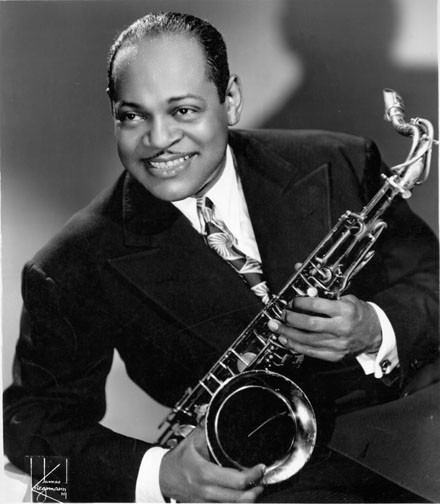
I have always known that someday I would write about this record, but I was never quite sure how I was going to approach it. As one of a handful of notable recordings of the song? As a literary recreation of a “cutting contest” between Hawkins and the other great tenor player of the era, Lester Young?1 It was not until I sat down at the keyboard that I decided that Coleman Hawkins and this record should not have to share the stage with anyone or anything else. And so, here we are.
Coleman Hawkins was born on November 21, 1904 in St. Joseph, Missouri. He started playing piano at age 4, cello at age 7 and saxophone at 9. By 14 he was living in Topeka, Kansas and playing for local bands. Hawkins had an uncommon head for music (some say this was the inspiration for his nickname “Bean”) and even took two years of college level harmony and composition while still in high school.
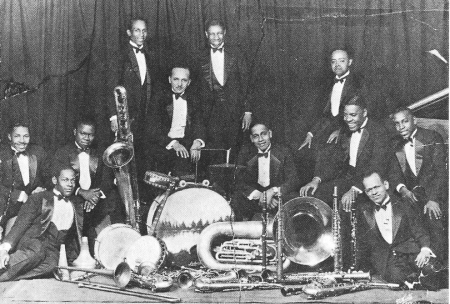
A 1921 gig with Mamie Smith’s Jazz Hounds turned into a full-time job and got him to New York, where he was hired by bandleader Fletcher Henderson in 1923. It was in his decade with the Henderson band that Hawkins, almost singlehandedly, turned the tenor saxophone into one of the most important instruments of jazz. And his bold, full-bodied sound inspired a whole generation of young players.2
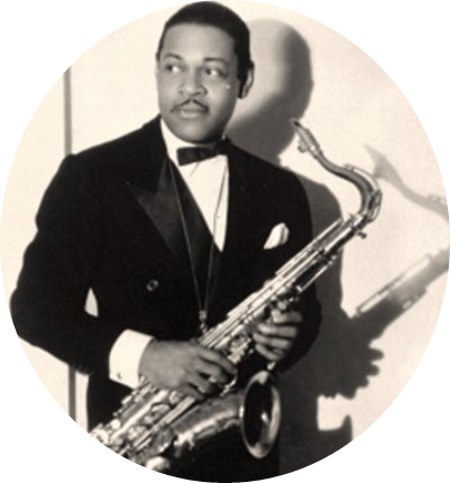
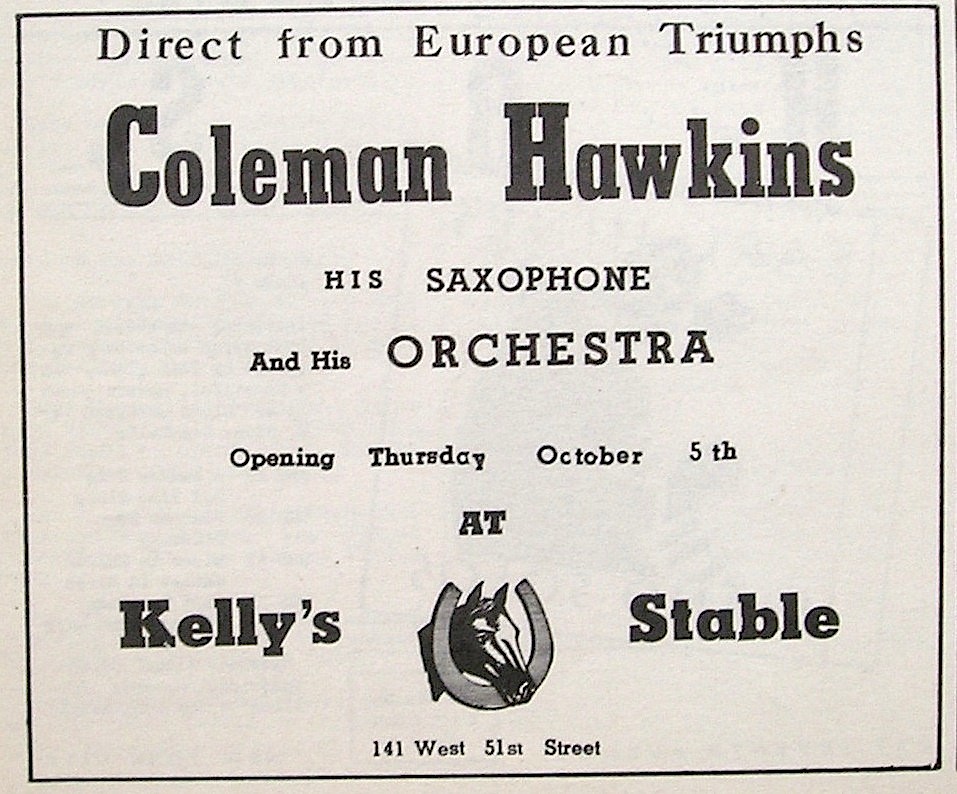
However, Henderson’s band had fallen on hard times by 1934 and Hawkins accepted an opportunity to play with Jack Hylton’s outfit in England. He had only intended to spend about six months in Europe but ended up staying there until the looming war in mid 1939 made advisable the return stateside. Hawkins quickly saw how much the jazz scene had changed during his five-year absence. He quickly settled in and spent evening after evening in the clubs, listening to the newest players, absorbing their innovations and absorbing the best of them into his own unique sensibilities.
Hawkins had not been back for three months before he was in the Victor recording studios with a small group of side musicians on October 11, 1939 at Victor Records’ New York studios. After finishing the three songs he had planned to do, a member of the recording team approached Hawkins and told him that someone from the company had called – he had seen Hawkins play Body And Soul in a club and wanted to hear it on a record. Hawkins said OK, thought a minute, took a slug of cognac, then stepped up to the mic and asked his piano man to do an intro.
The song itself was an oldie, dating to 1930. The melody was written by Johnny Green for the English singer Gertrude Lawrence, who introduced it to a London audience.3 British bandleader Jack Hylton (the one who would hire Hawkins four years later) recorded it first, and American bandleader Paul Whiteman had a moderate hit with it here in the U.S. shortly thereafter. And in a typical pattern, after a number of recordings of it in the first year, the tune fell off the map. Until Coleman Hawkins.
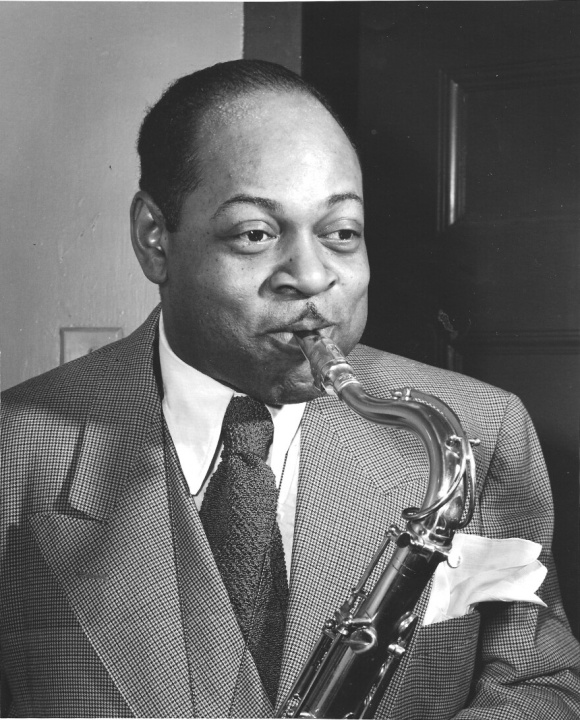
Most jazz performances of the time would have begun with a chorus that closely followed the tune’s melody, saving the improvisation for later. But there was no time for that approach. Hawkins had indeed played this piece live, but in performances that could stretch to 40 minutes or more. Having only the 3 minutes (more or less) allowed by the 10 inch 78 rpm disc, the Hawk (another nickname) got right to work.
That time limit meant that there would only be time for two choruses of the song’s standard 32 bars (four lines in an AABA form where the As are the basic melody and the B is the bridge). And other than a brief whiff of the melody in the first few bars, the entire performance was Coleman Hawkins instantaneously composing a cohesive whole while never straying from the song’s basic chord structure. This would become a staple of the bebop movement after WWII, but Hawkins was among the first to approach a song in this way – certainly the first to do it as successfully as he did.
The Bean began with the most mellow version of his trademark sound, which was full and masculine, with a good dose of vibrato. Each phrase connected to the next in ways that led slowly and inexorably to the climax of the performance. And then, just in the nick of time, Hawkins brings it to a soulful and subdued close. There are some horns providing background texture during the second chorus, but they are easy to miss. What we are left with is a masterclass in the tenor saxophone, with no musical waste, no musical dead ends and something that holds tightly together, leaving the listener wanting more.
Hawkins later recalled that he was surprised that the record was popular with the general public – he had not recorded it for them, but for other musicians and the others in their immediate orbit. He did not even listen to the freshly cut record after it was finished, sure that the Victor engineers had recorded just another little something that might make a brief splash and then sink below the surface, as so many records jazz records did then.
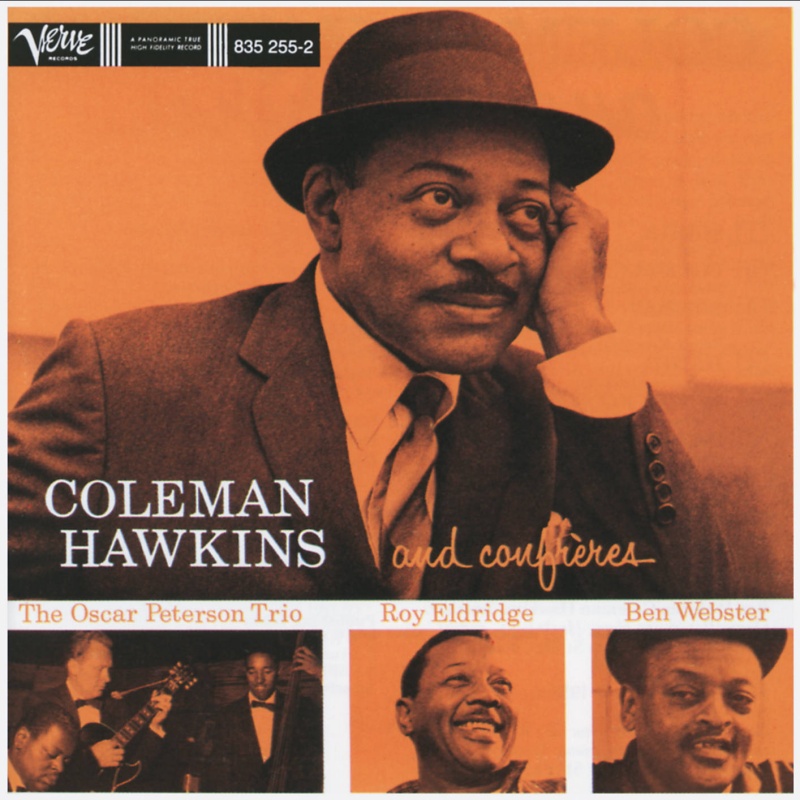
Body And Soul has been recorded countless times, both as jazz instrumentals and as vocals,4 and reportedly edged out Hoagy Carmichael’s Stardust as the most-recorded tune of its genre quite a number of years ago. And Coleman Hawkins continued making great jazz for most of the next three decades, mostly with small groups. Coleman Hawkins was always one who appreciated new things happening in music and never settled into the nostalgia circuit that trapped some once-great older musicians.5 It was only in his last two or three years of declining health before his death in 1969 at age 64 that his musical output began to ebb.
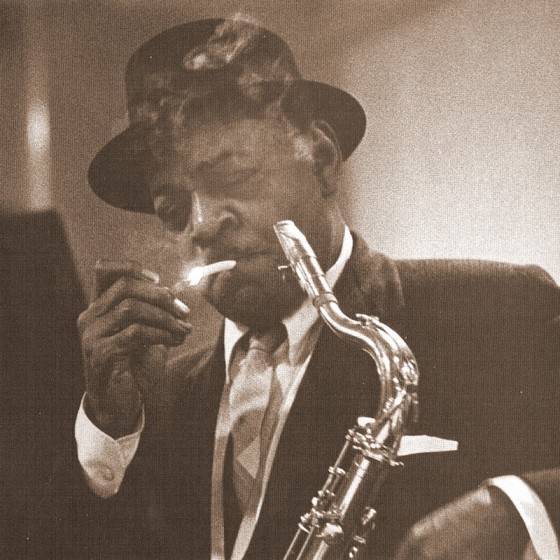
Jazz musician and writer Stephen Rush has said that Coleman Hawkins’ 1939 recording of Body And Soul demonstrates the not-so-subtle difference between entertainment and art.6 Hawkins took a well-known piece of music and used it as a platform to express his own musical ideas. That those ideas succeed so completely as both art and entertainment makes this record something to savor.
- A “cutting contest” was generally an after-hours event where two top players (or singers) would take turns doing their best in a long performance of the same song, for bragging rights as top dog. History tells us that such a contest took place between Hawkins and Young, probably August of 1939. The back and forth may have gone on for an hour, and there have been differences of opinion on who came out on top. See Mike Zirpolo, Body And Soul, 2016 and Bob Bernotas, Body And Soul, 2010. Each of these sources makes for great reading. ↩︎
- We previously featured a 1929 record under the name of McKinney’s Cotton Pickers, in which a young Coleman Hawkins subbed in with some of that band’s regulars, taking an impressive solo on his tenor saxophone. ↩︎
- The song had lyrics, written by the obscure triumvirate of Edward Heyman, Robert Sour and Frank Eyton. Many singers have done the song over the years, but one of the best vocal interpretations can be found in a 1947 recording by Frank Sinatra. ↩︎
- There have even been vocalese performances of Hawkins’ saxophone solo. Jazz singer Eddie Jefferson supplied words to this version in the 1960’s, remade by The Manhattan Transfer in 1979. ↩︎
- We have also featured Coleman Hawkins as elder statesman with bebop alto saxophone phenom Charlie Parker in a 1944 performance. ↩︎
- Stephen Rush, Body And Soul by Coleman Hawkins, 2004. ↩︎


Can’t sleep, and it seems the perfect morning to listen to this classic cut! Excellent selection for your column. I have a little Hawkins on CD, but not as much as I should. So smooth… BTW, Coleman was also in the “Great Day In Harlem” photo! Was there ever a better name for a group than the “Jazz Hounds”?
LikeLike