Becoming Billie Holiday, 1935-37
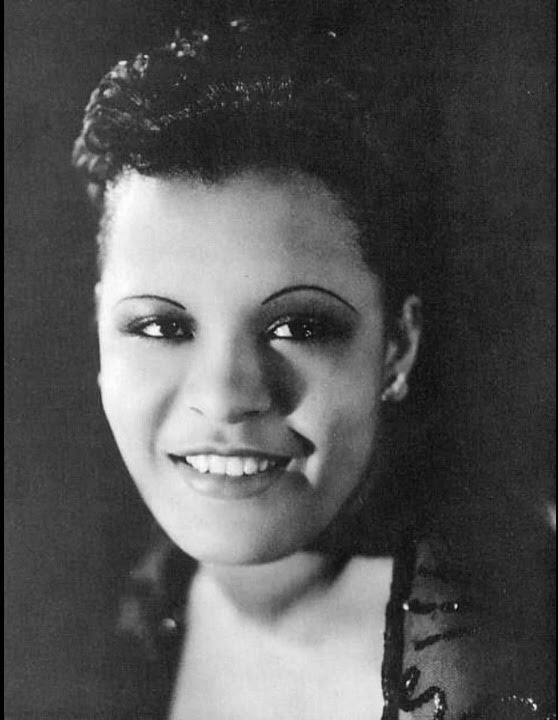
There are certain names that the jazz critics and jazz writers over the decades have boosted into the top echelon. My contrarian’s nature is to resist those highly revered names in favor of the less celebrated players who were often just as skilled. This was why I put off listening to Billie Holiday for a long time. It was not until I was well into my third decade of savoring vintage jazz records that my curiosity started getting to me. Now I am a fan.
As with many players, Holiday had different eras or periods. After some time to think things over, I have concluded that my favorite part of her plentiful output is that of her earliest years – the mid 1930’s. It is from this period that I have picked a few samples to share with those who might be interested to put some music with a name that almost everyone has heard.
I put off writing about her for a different reason – Billie Holiday has been written about so much that anything I might add would have very little value. But I have come around, having decided that most of the people who read here have probably heard of Holiday, but may not have actually heard her. So it is in that frame of mind that I decided to tackle Lady Day.
OK, maybe not tackle. Because “tackling” implies covering a lot of material in a comprehensive way. Let’s go with a short dip, because there is way too much material to tackle here. From her start in 1935(1) until her contract with Brunswick/ARC/Columbia(2) ended in early 1942, Billie churned out 153 tracks in 44 sessions, not including alternate takes. This makes for A LOT of material to choose from.
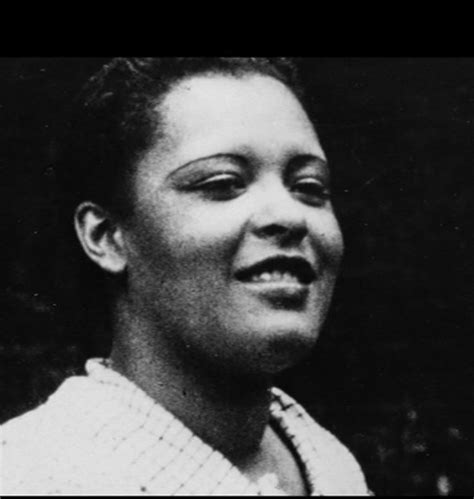
But before we get to her music, just a little about Billie herself. She was born Elnora Fagan on April 7, 1915 to a pair of unwed teenagers. After a highly chaotic childhood (absent parents, quit school at 11, raped by a neighbor at 12 are the headlines) she ended up with her mother in New York’s Harlem section, where she began singing under her father’s surname, Halladay. She teamed up with a friend who played saxophone and they played clubs around New York starting about 1929. Benny Goodman recalled seeing her in 1931.
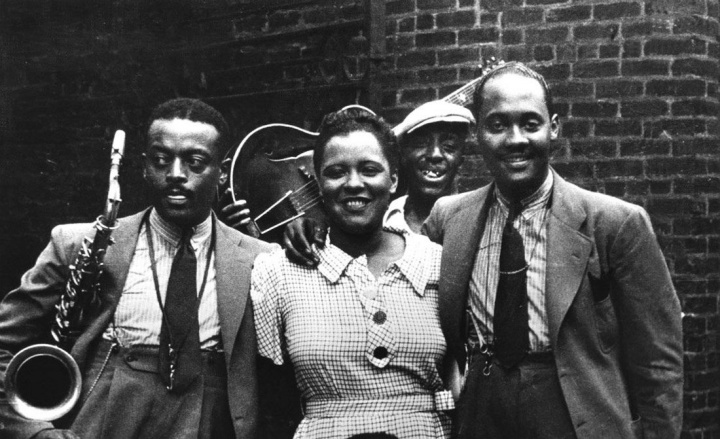
In 1933 she was singing at a Harlem club called Covan’s. Jazz fan and promotor John Hammond had come to see another singer and took a liking to the style of the girl now billed as Billie Holiday. Hammond, who was also responsible for bringing both Benny Goodman and Count Basie out of obscurity, put Billie in the studio for a couple of dates with Goodman in 1933 and then got her set up to record for Brunswick in mid 1935. This session would begin a long and fruitful career with another musician in the Hammond-Goodman orbit, pianist Teddy Wilson, with whom she would eventually record 94 tracks.
“I Wished On The Moon” is the first side from her first Brunswick date, recorded in New York on July 2, 1935. “Teddy Wilson and his Orchestra” would be the running name for a series of pickup groups, almost always some of New York’s best jazz musicians This particular session was made up of a not-yet-famous Benny Goodman (clarinet), Roy Eldridge (trumpet), Ben Webster (tenor sax), John Truehart (guitar), John Kirby (bass) and Cozy Cole (drums). Almost all of these players would go on to gigantic careers in jazz.
It is immediately apparent that Holiday was not graced with one of the great voices of jazz. Even at only 20 years old, she had a narrow range that was barely more than a single octave. For comparison, Ella Fitzgerald could cover three octaves, while Sarah Vaughn could boast of four. Holiday also had a tone that went from thin and brittle up high to rough as gravel down low.
But what she lacked in her vocal instrument, she more than made up with her ability to improvise her way behind, ahead of and around the melody as she sung the lyrics. The song itself is a kind that Billie sung so well – a mid-tempo ballad played with a lazy swing.
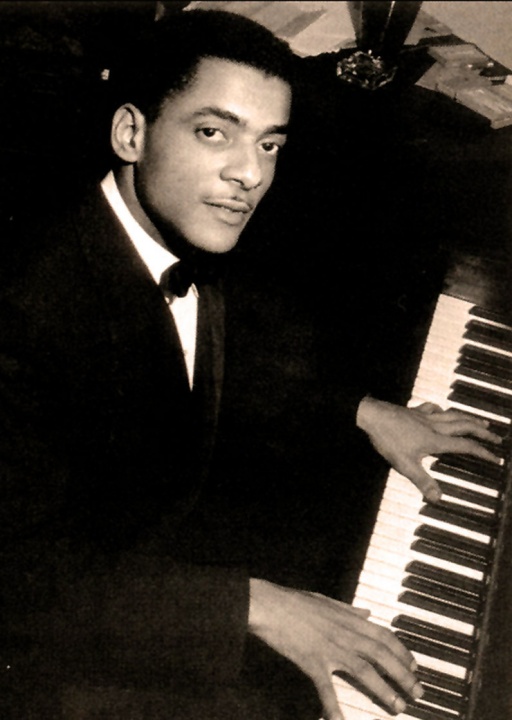
It must be mentioned that nobody ever played a more elegant jazz piano than Teddy Wilson, another Hammond discovery who also played as a part of Benny Goodman’s original trio.
Okay, I had planned to only do one record for each of Billie’s first three years of studio recordings. But there are so many. And it’s Billie Holiday. “Eeny Meeny Miney Mo” is a highly forgettable pop tune written by Johnny Mercer and recorded October 25, 1935 at Billie’s third Brunswick session. Personnel for Teddy Wilson’s group on this date: Roy Eldridge (trumpet) Benny Morton (trombone) Chu Berry (tenor sax) Teddy Wilson (piano) Dave Barbour (guitar) John Kirby (bass) Cozy Cole (drums).
I include this one only to show that Billie wasn’t just a ballad singer, but one who could handle the up-tempo stuff too. I like these early records because Billie is just another of the musicians with all of them sharing the spotlight as they take their turns showing the folks how to do jazz. Incidentally, the Dave Barbour who played guitar on this date is the same one later married to singer Peggy Lee and who we have featured here before.
By 1936, Holiday was hitting her stride in the recording studio. It is interesting that in her entire career, Billie Holiday never did a record that was a big hit. She was always a niche performer who was popular with jazz insiders and the glitterati of New York and Hollywood who attended her live club performances.
Her 9th Brunswick session (11th in total) was on October 21, 1936 and included the tune “The Way You Look Tonight”, a Jerome Kern composition for the Fred Astaire-Ginger Rogers movie, Swing Time. The personnel for Teddy Wilson and his Orchestra consisted of Irving ‘Mouse’ Randolph (trumpet) Vido Musso (clarinet) Ben Webster (tenor sax) Teddy Wilson (piano) Allen Reuss (guitar) Milt Hinton (bass) Gene Krupa (drums).
“The Way You Look Tonight” was a new song at the time, and one that has remained in the first rank of The Great American Songbook. It is also a higher quality song than many she recorded in these early years. Billie and Teddy take this at a faster tempo than it has usually been done, and to great effect.
In addition to Billie’s ability to improvise around a tune’s melody, this record shows how she also played loose with a song’s tempo. Holiday had a way of slowing down and getting behind the tempo, and then catching up (if not jumping a bit ahead). Teddy Wilson was a rhythmic player, and one who was always on the beat. An interesting tidbit is that he was not a big fan of Holiday’s singing style, mainly because of her looseness with tempos. However, Wilson’s unflinching fidelity to the beat (and her own unerring sense of timing) gave Holiday the freedom to do things the way she did.
Vido Musso on the clarinet was a fascinating choice – immigrated from Sicily as a child and, while obscure, is most commonly remembered for his tenor saxophone work with Stan Kenton’s band of the late 1940’s and 50’s.
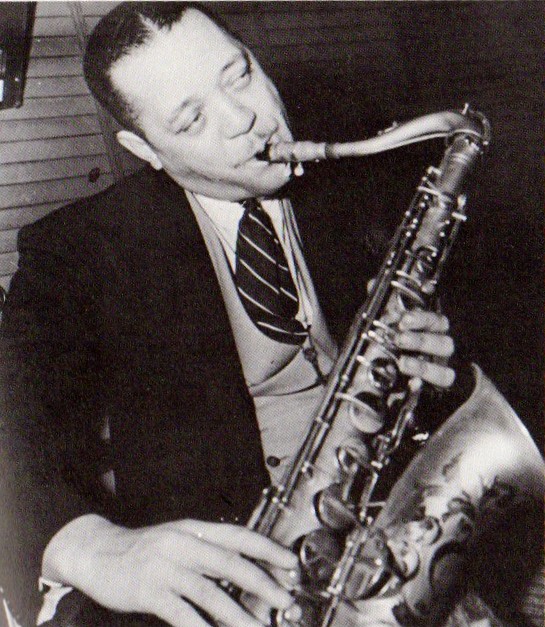
The final selection for today is from January 25, 1937, and marks a significant milestone in Holiday’s artistic career. This, her 13th session for Brunswick (and her 15th overall) marked her first recording that included tenor saxophone great Lester Young. The collaboration between Holiday and Young would grow to approximately 50 sides over the next decade or so and would become one of jazz’s most famous and most musically compatible coupling of artists. It was Young who bestowed the nickname of Lady Day on Billie, while she was the first to call him Prez (for President of the tenor saxophone).
Again identified as “Teddy Wilson and his Orchestra”, this group was another all-star session, this time featuring a now-famous Benny Goodman and the core of the early Count Basie band. Players were Buck Clayton (trumpet) Benny Goodman (clarinet) Lester Young (tenor sax) Teddy Wilson(piano) Freddie Green (guitar) Walter Page (bass) and Jo Jones (drums). This connection with the Basie band likely led to Holiday’s briefly becoming the vocalist for the Basie band for a short time in late 1937 and early 1938. Sadly, no records came from that association because of contractual issues with their respective record labels.
The song is “This Year’s Kisses”, a classic rendition of an excellent Irving Berlin tune. To me, this record near unto jazz perfection, with no single performer dominating. Instead, each contributes to a sublime whole. Like virtually all of these Brunswick dates, there was no written music beyond the basic chords and the flavor of an informal jam session, constricted only by the 3-minute time limit for the record being made. You can hear in the final chorus, as each of the musicians ad-libs his way through the tune in a way that perfectly complements the others.
It is little wonder that both Holiday and Young are probably more associated with the song than anyone else, with Young recording it again in 1956, late in his career when he was in declining health. Later in life, Holiday said that the only two musicians who could solo behind her and not get in the way were Teddy Wilson and Lester Young.
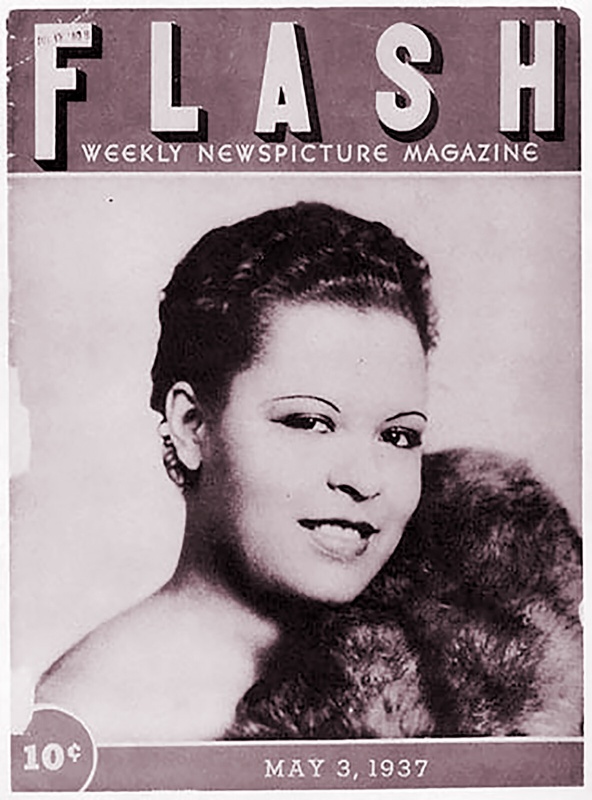
This brief slice of Holiday’s life and career cannot begin to represent the sum of her all-too-short life. Professionally, Holiday’s musical style gravitated away from jazz jam sessions and more into lushly accompanied ballads. Personally, Billie moved on from spending most of her time around other jazz musicians and more of it with the more adventurous members of the upper crust. Her life was a messy one that included bad marriages, too much drinking, and that scourge of musicians in the 40’s and 50’s – heroin. Billie died in 1959 at the age of 44. The official cause was complications from cirrhosis, but her early death was the natural result of a life in which everything came hard – sometimes despite Holiday’s best efforts and sometimes because of them.
Holiday’s short, hard life left a musical legacy that has been hard for others to match, even these many decades later. Jazz Writer Gunther Schuller has said that the way Billie Holiday sang could not be written out using the normal rules for musical notation. Fortunately for us, those long-ago sessions in the Brunswick recording studios found another way to capture it.
(1) Holiday’s only recordings prior to the 1935 Brunswick sessions discussed here are two vocals with an early version of Benny Goodman’s band in the last two months of 1933.
(2) The Brunswick label has a convoluted history. It was originally a division of the Brunswick-Balke-Collender Co. of Dubuqe, Iowa, beginning in 1916. In 1930 the company was sold to Warner Brothers Pictures which, in turn, leased it to the parent of American Record Company (ARC) in 1931. Brunswick was ARC’s flagship label until ARC was acquired by the Columbia Broadcasting System (CBS) in 1939. CBS opted to discontinue the Brunswick and Vocalion labels in favor of reviving the Columbia and Okeh labels. Warner determined that this was a violation of its 1931 lease agreement, and reclaimed Brunswick and Vocalion, which it then sold to American Decca (including masters that pre-dated the December, 1931 lease). The Brunswick records recorded by Holiday have remained part of the CBS/Columbia catalog.
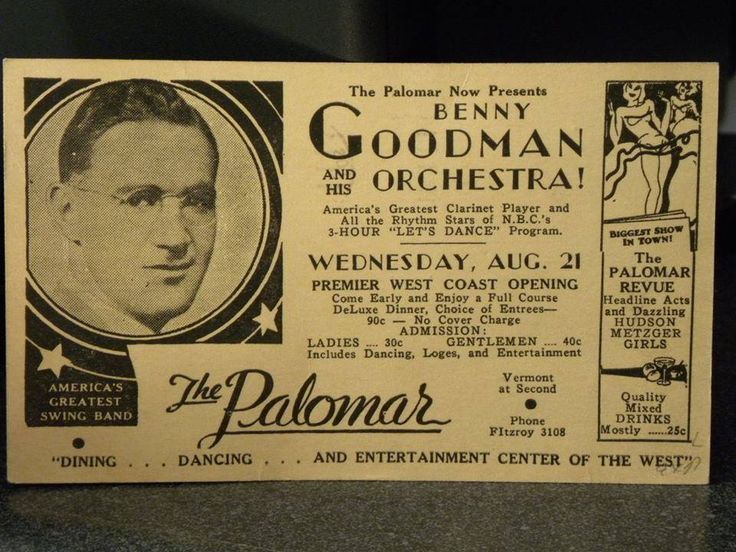
(3) The July, 1935 session with Billie Holiday must have been immediately before Goodman embarked on a disastrous cross-country tour with his big band. Attendance at dances and shows was so bad that he planned to disband at the end of the tour, following the final appearance at the Palomar. Goodman had no idea that California fans had been listening to his radio show (that played in the wee hours of the morning in New York) and buying his records. The Palomar date became a legendary smash for Goodman and the start of a career that lasted the rest of his life.
Billie Holiday’s discography has been extensively researched, and can be found at billieholidaysongs.com.
This essay also acknowledges and relies on the research of John Szwed and his book “Billie Holiday, The Musician And The Myth”, Penguin Press, 2016.


I too had a kind of circle back around relationship to Billie Holiday, having somewhat dismissed her earlier since I only knew her late recordings from when she wasn’t in such good shape. But as I started to learn more about the bands and performers I loved from the 1930s, I realized that there was a lot more to Billie than I’d thought…and I came around. Personally, I think that hearing her early Brunswick recordings is exactly what makes me now appreciate the later recordings too. It gives some background in terms of style and experience that makes the later stuff sound authentic and takes away the notion I originally had that she sound more like a parody of a jazz singer than the actual original that she was. (OK, so now I know what my sound track is going to be for today)
LikeLiked by 1 person
There was so much to this lady. You are right that the later stuff is a whole different thing (which I, too, have come to appreciate). The last couple of weeks have been a deep dive for me, with hours of listening and the 8-hour audio version of the book I cite in the notes. And yes, if you know any of the names of the top musicians of that era, it is fun to see how many of them are randomly peppered into these early Holiday records.
I will take either credit or blame for hijacking your playlist for today. 🙂
LikeLike
I’ve always said that one listen to Billie, and there is zero mystery about her reputation in the music world.
LikeLiked by 1 person
There was absolutely nobody like her! My first listen to her back in the 80s was her last Verve/Clef album from 1956 or 57. Her voice was shot by then, and I was slow to come around. Now that I have had some exposure to her whole catalog, the late stuff still has something going for it.
LikeLike
BTW, for those that “ain’t got none” and “want some”… may I absolutely recommend the: Billie Holiday, Complete Decca Recordings from 1991. A thin, hard cover book with two CD’s, and lot of information! 1944-1950. May not be available new, but might be available as new/old stock, as well as used. I’ve treasured this ever since I bought it new in the early 90’s. I listen to it every few years or so…
https://www.amazon.com/Billie-Holiday-Complete-Decca-Recordings/dp/B000003N36
LikeLiked by 1 person
Those Decca cuts are a whole ‘nuther style from these Brunswick/Columbia records, but I will agree that they are excellent.
LikeLike
JP, you are correct in your statement that “most of the people who read here have probably heard of Holiday, but may not have actually heard her.” That is true for me as well and now I know more about her career and music thanks to this post. In fact, I am not sure I ever heard of Billie Holiday until the film “Lady Sings the Blues” came out and I never saw that movie – it was likely heavily promoted here in the Detroit area because of Diane Ross and Motown. Though she had some heartache and health issues in her short 44-year life, she sure churned out a lot of tracks.
LikeLiked by 1 person
That film has not aged well. I saw it on TV in the 70s and remember how poorly suited Diana Ross was for the role. Ross’ voice was so unique and so associated with the Motown of the 60s, and she had no feel at all for jazz of an earlier era. Maybe if someone else had dubbed the vocals, but then she and Gordy might not have been interested.
The movie was based on Holiday’s 1956 autobiography of the same title, and 2 or 3 prior movie projects on the book had collapsed. I am surprised that nobody else has made a run at a high quality biopic – the material is certainly there.
LikeLiked by 1 person
Ditto. I thought Diana Ross and her fame were so well known in the era, and had virtually nothing to do with jazz, or Billie Holiday, that it was a complete mis-cast. Like casting Don Knotts to play Humphrey Bogart. It was so obvious a ploy to attach a current known talent to a picture about someone not very well known to the general public, to generate buzz or to put butts theaters, that the producers should have blushed red with embarrassment. Not to mention that there was probably female jazz talent that not only looked more like Holiday, but would have been happy to take the role and “kill” it.
LikeLiked by 1 person
That’s good to know – I always felt I had missed something by not seeing it. I’ve never been a fan of Diane Ross, finding her a bit of a diva and you’re likely right about not using her vocals would end their involvement in the film. Perhaps a remake is in order – look how many times “A Star is Born” has been done. I’ve only seen the version with Barbra Streisand and Kris Kristofferson.
LikeLiked by 1 person
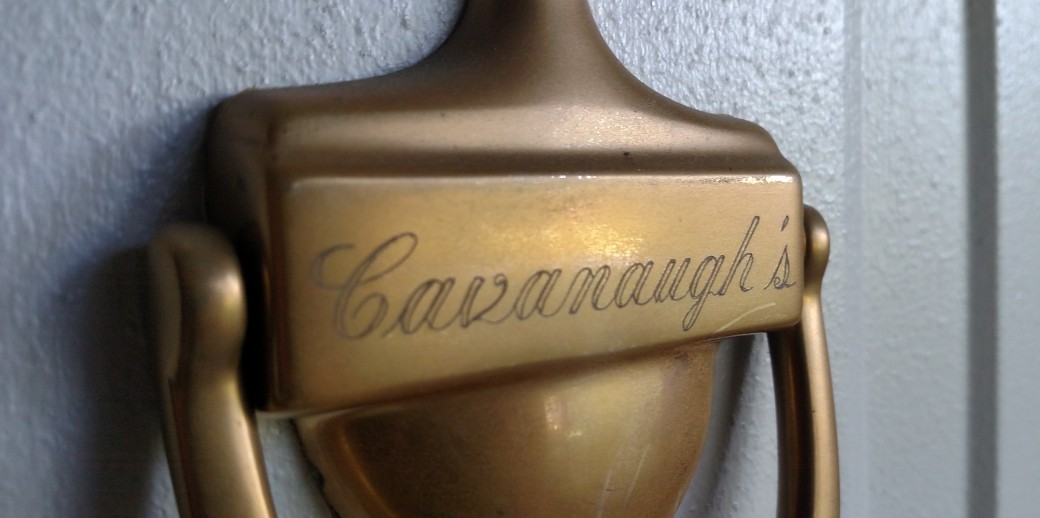
“Come early and enjoy a full course ‘DeLuxe’ dinner… 90c”
I’m not sure why the way ‘DeLuxe’ is spelled amused me as much as it did.
I definitely have heard Bilie Holiday once or twice in my life; I’ve never sought her out. Any association with jazz I have is casual – Some Duke Ellington, Ella Fitzgerald… If Louis Armstrong fits in jazz, he’s probably the most I’ve ever listened to. Though I do like Benny Goodman, I’ve never thought of him as ‘jazz’…
Living hard and dying early is nothing new in music — she got to live longer than some.
LikeLiked by 1 person
True that! She’s also not the last who made a terrible voice go a long way. Janis Joplin and Bonnie Raitt come to mind, though like you and jazz, my association with them has been casual.
LikeLiked by 1 person
The only Billie Holiday song I remember was Stormy Weather…..and I always wondered why she was so popular as her voice can be kind of painful in the way that Taylor Swift can sometimes be painful but you tend to overlook it for the sake of the better parts and the whole overall package. But I did like Last Year’s Kisses. It’s surprising (to me) how the vocals were only a small part of the songs, as compared to today where it is usually the main feature.
LikeLiked by 1 person
Lena Horne was, of course, the singer that “owned” Stormy Weather, mostly because of her version sung in the 1943 film of the same name. I always remember Holiday’s version of Solitude, and it’s what comes to mind whenever anyone says her name, maybe because for years the instrumental version was used as the opener for an overnight jazz show by famous midwest regional jazz DJ Ron Cuzner. The most “famous” Billie Holiday song was Strange Fruit, altho not the most popular. Those that have never heard Strange Fruit should take a listen, it’s a very disturbing 1939 song referencing black hangings in the south, and has been called the beginning of civil rights movement in America.
https://en.wikipedia.org/wiki/Strange_Fruit
LikeLiked by 2 people
Thanks Andy! I listened to Lena Horne’s version and yes it is much better. The only Lena Horne song I have on my vintage playlist is “It’s All Right by Me” which is not my favourite, although I like the lyrics. I was a bit familiar with the Strange Fruit song and it’s association with the civil rights movement.
LikeLiked by 1 person
I don’t think it was until the 1940s that it became common for singers to “carry” a record. Before that, they usually got the middle of three choruses, and it was the band that had the first and third.
LikeLiked by 1 person
I’ve always been a fan. It’s funny that she had such a limited range. You wouldn’t know it to hear her voice. 🤣😎🙃
LikeLiked by 1 person
It’s always funny how, while Ella Fitzgerald always sang happy, Holiday always seemed to sing sad.
LikeLiked by 1 person
Ohh yes. And she wasn’t afraid to be controversial. 🤣😎🙃
LikeLiked by 1 person
Bonus Track! While thinking about Billie Holiday these past few days, it brought to mind the wild “mash-up” video from the Bahama Soul Club w/Billie Holliday, of “Ain’t Nobody’s Business”. Bahama Soul Club, a German Group with sort of a jazz, funk, Caribbean vibe, has been around in some form since 2005, unbeknownst to me! This Billie Holiday mash-up was available in 2019, and I was “clued in” to it by a coffee barista in about 2022, who was playing it in the shop. It was the first time I heard of the group or the cut. Color me clueless! Some great studio footage of Billie, as well as some film pick-ups from the Coppola and Scorsese funded restoration of the Russian film “I Am Cuba”, from 1964. More of this film is shown in the Bahama Soul Club’s video of “Ay Jona” from their “The Cuban Tapes” album, also on Youtube. Both worth a watch, but great seeing Billie live here:
https://www.youtube.com/watch?v=A9ECB-rXekU&list=RDA9ECB-rXekU&start_radio=1
LikeLike
Very interesting! Some of that footage was from a late 50s television special which brought Holiday and Lester Young together for the first time in years. Neither of them had long to live, so it was good that they were captured!
LikeLike
Hope you picked out Gerry Mulligan on the left with his “trademark” forward combed brush cut and huge baritone sax!
LikeLiked by 1 person
Pingback: A Movie, A Song, and Annie Ross | J. P.'s Blog
Pingback: JP’s Book Report – Summer 2026 Edition | J. P.'s Blog