Old School Remedies (or A Trip To My Mother’s Medicine Cabinet) – Smith Brothers’ Cough Drops
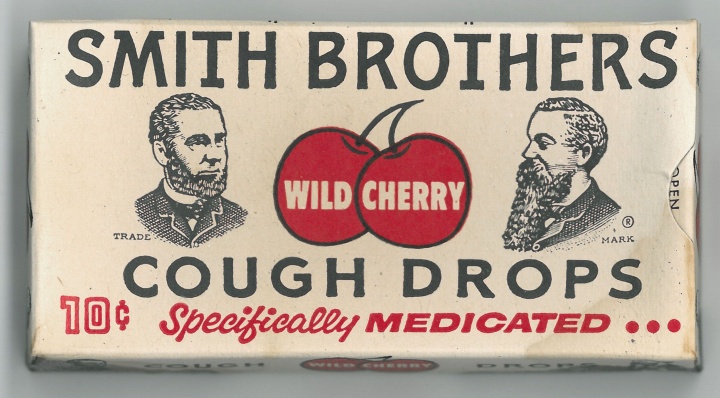
What do you remember from your parents’ medicine cabinet from your childhood? I remember lots of things, few of them pleasant. Perhaps one day I might come back to Phillips Milk of Magnesia (for constipation) or Merthiolate, the mercury-infused antiseptic that stung an open cut like something applied by the Devil himself. I only recall one home remedy that was really pleasant. When I got a cough or a sore throat, the go-to was Smith Brothers’ Cough Drops (wild cherry flavor, thank you). Was it medicine? Was it candy? We will come back to that.
It is funny how topics come to me for this thematically-meandering blog. One of my readers who appreciates oddball memorabilia as much as I do made a recent comment about the blue bottle of Phillips Milk of Magnesia. I started wondering if they still made the stuff and began looking into it. But then I stopped – might this fellow (who shall remain nameless to keep him clear of the kind of public pressure that fame in this space can bring) be inclined to dive into the interesting history of one of America’s most venerable laxative products?
This was the point at which I began remembering the other product’s in Mom’s medicine chest. You must understand that I never questioned any of the things there. My mother was a 1954 graduate of Fort Wayne’s Lutheran Hospital School of Nursing. And unlike many other nurses-turned-mothers of that time, Mom actually made her living as a practicing nurse. And nurses know everything medical, as we all know. So if Mom chose to buy Phillips Milk of Magnesia instead of Ex-Lax (or the mixture of prune juice and apricot juice that was reputedly known at one of the local hospitals as “The Parkview Bomb”), who was I to question it?
On further reflection, I am starting to wonder if the Smith Brothers’ Cough Drops were actually something in my grandma’s medicine chest. She was a 1927 graduate of that same nursing school. But if there was anything that we were absolutely sure of in the late 1960’s, it was that people who learned stuff in the 1920’s didn’t know what they were talking about. Today, of course, we are starting to give some respect to those students of a century ago while we question those who learned things in the 50’s. I know, my own day is coming. I learned law in the 80’s. Fortunately, I have retired from that discipline so that it no longer matters if everything I learned turns out to have been crap. But I digress.
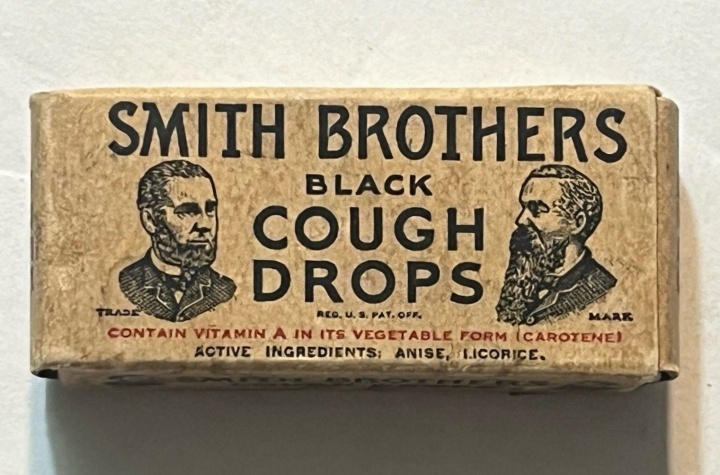
Did you know that Smith Brothers’ Cough Drops (in their original licorice, or “black” variety) was the first commercially available cough and sore throat remedy in the United States? And, if we want to get even deeper into Mr. Ripley’s world of Believe It Or Not, that they are still available today?
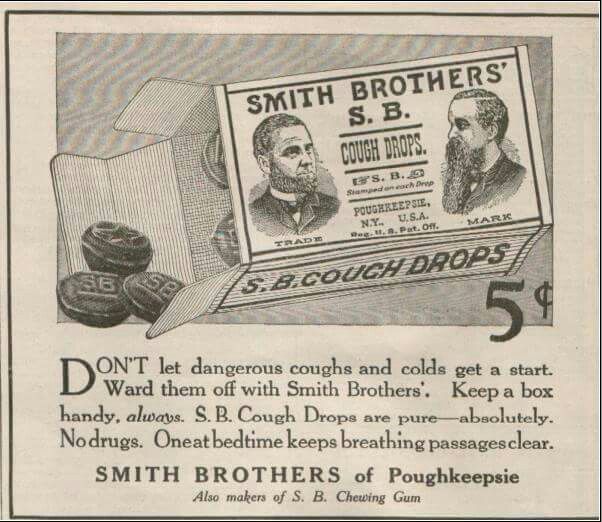
James Smith emigrated from Scotland (via Quebec) to Poughkeepsie, NY in the 1840’s and opened a combination confection shop/restaurant called James Smith & Son. In 1852 he bought a recipe for cough drops from an itinerant peddler. He cooked up a batch and sent his two sons, William and Andrew, out into the community to sell them. The drops must have been a hit, because there was something for the boys to take over after James died in 1866.
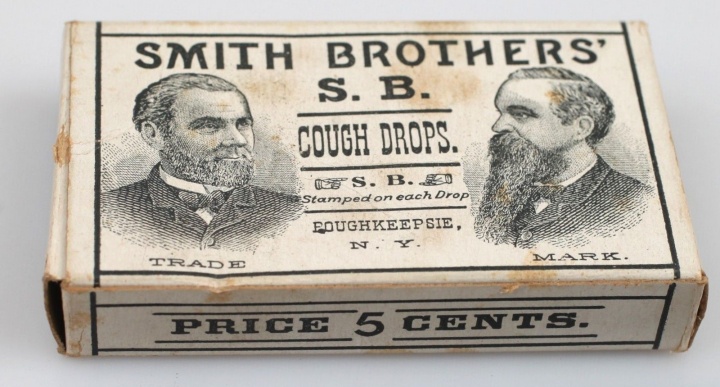
The drops proved to be such a hit with local sufferers of dry and scratchy throats that others began selling copycat versions, which caused the brothers to create one of the most famous trademarks in the world. At least at one time. Individual boxes, decorated with portraits of the brothers, in such a way that wags of the day (and of most of the next century) joked that the brothers’ names were Trade and Mark.
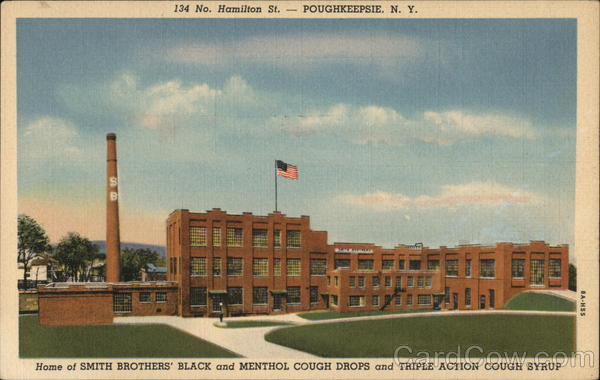
After the deaths of Andrew (Mark) in 1895 and William (Trade) in 1913, two additional generations of Smiths ran the business from Poughkeepsie . . .
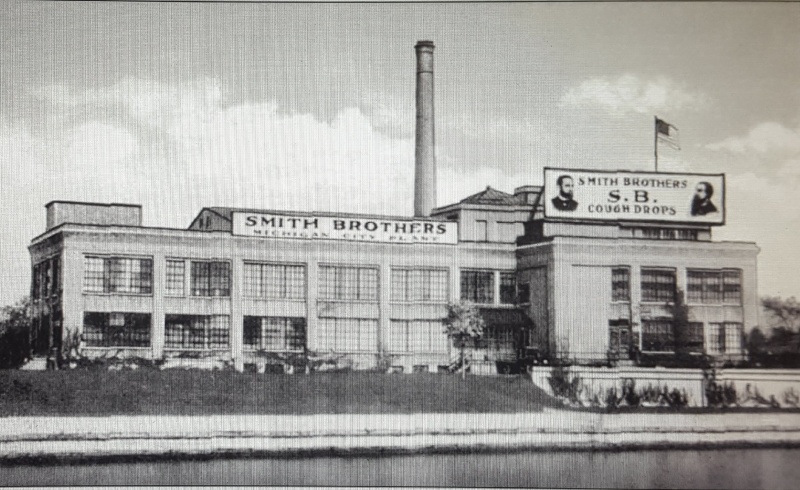
. . . (with another manufacturing plant in Michigan City, Indiana) until the last of them died in 1962. Along the way, they added a menthol variety, cough syrup, and finally the Wild Cherry flavor cough drops.
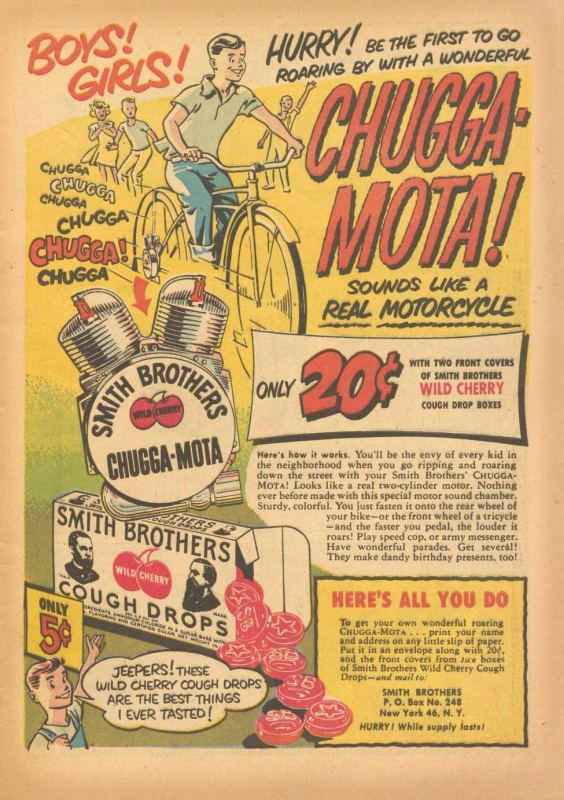
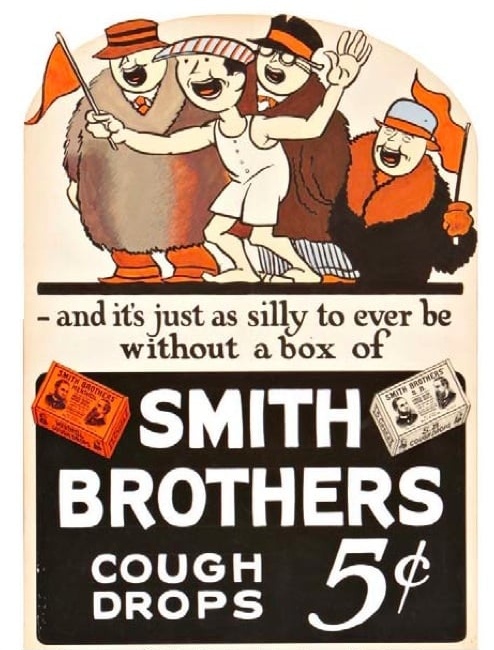
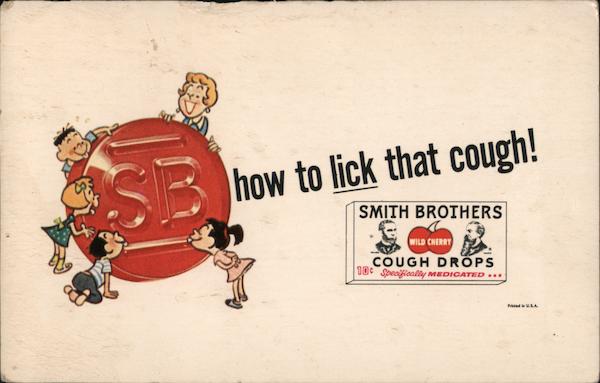
The family did a solid job of keeping the product fresh, even advertising in comic books. What kid of 1950 wouldn’t want a Chugga Mota for his bike? Even the old Smith Brothers Restaurant remained open as a going concern during most of this time. Sadly, after the last of the active generation died, the heirs apparently decided that they were too good to keep running a cough drop business and sold out to Warner Lambert in 1963.
From there, things went as expected with Warner-Lambert selling the brand in 1972 to something called F&F Foods from Chicago, which continued riding Smith Bros. into the ground before offloading it to a California private equity fund (GemCap) in 2011, which, in turn, dealt it to another fund in 2014, York Capital Management. Which pronounced the bearded brothers dead in 2016.
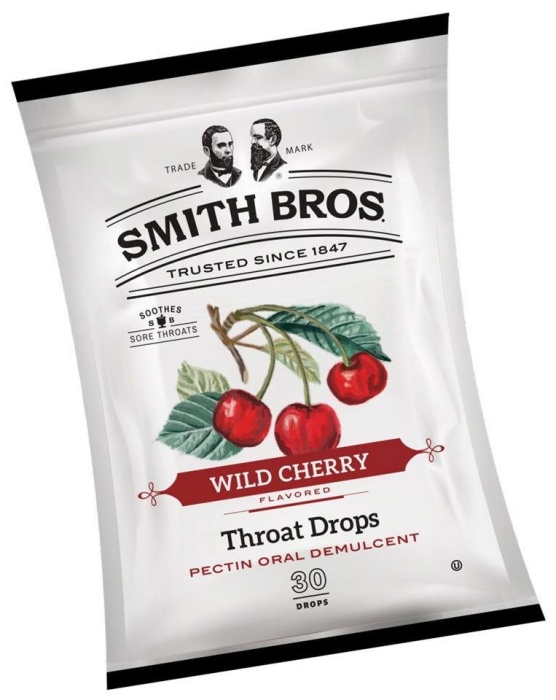
But, in the style of every great monster movie, the venerable remedy was not actually dead, but just badly wounded. Lanes Brands, the U.S. subsidiary of a U.K. company, began making the drops again in 2017, which are currently sold Stateside by BT Remedies, LLC of Trevose, PA. You can buy the modern formulation (which may or may not be the original formula) on Amazon in Honey Lemon, Warm Apple Pie, Black Licorice and my choice, Wild Cherry. Which I bought.
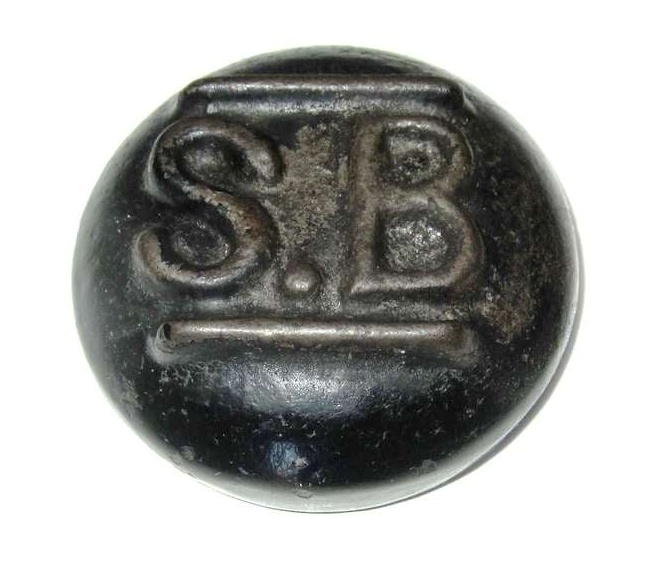
Do they taste like the Wild Cherry Smith Brothers’ Cough Drops of my youth? I have no idea, because I will confess that I am one of the ungrateful and unreliable consumers who kind of forgot about them some time in the 1970’s. I believe the drops themselves are different, lacking the “S.B.” molded into the drop like the old ones. Did you know that Smith Brothers’ once made paperweights that were made to look like their cough drops? I didn’t either.
And I must come back to that question that is surely on the minds of my highly inquisitive readership – do these things actually have any medicinal benefits? Or are they just fancy candy. The answer is yes and yes. The active ingredient is pectin – the fruit-derived substance that thickens jams and jellies. Pectin, it seems, forms a viscous, protective coating over inflamed throat tissue. The informed folks who write about such things call it a demulcent effect – meaning that it soothes. The good news is that pectin appears to have no side effects, so whether you seek relief from a sore throat or just feel like sucking on a piece of hard candy, Smith Brothers’ Cough Drops fit the bill. Oh wait – now they call them Smith Brothers’ Throat Drops. I guess the Federal Trade Commission never sleeps.
So, now you know! Hard as it is to believe, a cough and sore throat remedy being commercially sold before the Civil War remains available to do the same thing for us today. The bag I just bought is now sitting in my own medicine chest, awaiting my next sore throat. If, that is, I can avoid the desire to treat them like candy before then. Either way, I am all set to party like it’s 1849!


I hadn’t thought about this product in ages. Thanks for the memories.
LikeLiked by 1 person
Isn’t it funny how things that were once such a part of the culture have become so obscure?
LikeLike
I remember even in my teens, I bought Smith Bros. cough drops, in the white box with the two bearded heads on it, so it must have been easily available in the late 60’s. I think I stopped buying it because it disappeared from the shelves, not because I didn’t think they worked, or because I was fascinated by a different brand. The history of retail wholesaling in the 80’s, starting to have a lot to do with shelf space being monopolized by brands that had “co-op money” give backs for the retailer, as well as whether or not the brands had superior sales. With limited shelf space, some classic brands that may have not been playing along like the big boys, may have found themselves with increasingly reduced wholesale purchases. Any trip to a big retailer like Target or Walmart, will find the cough drop section entirely populated by Hall’s Mentholyptus, all it’s versions, and the house brand knock-off of the same, and maybe Riccolo.
LikeLiked by 1 person
So true, just as the candy aisle has become dominated by multiple varieties of the same big brands. And once a brand goes from one of the big players like Warner Lambert to a smaller company that probably didn’t promote and support the brand much, the rest was inevitable.
It occurred to me after writing this that we Americans are still prone to calling something a “cough drop”. I’ll bet it was the Smith Brothers who trained us to do that.
LikeLike
Thanks for this! I have to admit that as a child I grew up under the supervision of a mother who insisted that cough drops were simply poor excuses for candy and hence they were not to be consumed. She was of a mind that if you had a cough, you’d best “just stop doing that” and if that was not possible then you needed the full treatment of a visit to the pediatrician, bed rest, cough syrup (I believe Robitussin was the stuff), several nights with the boiling water vaporizer, and of course a slathering of Vicks VapoRub. Cough drops would have been a much easier solution, but “easy” (I was always told) was surely the path to a life of indigence, TB, and other long term problems that she needed to get on top of immediately.
Nevertheless, the Smith Brothers – especially Mark’s fabulous beard – always fascinated me. “Fisherman’s Friend” came in close behind. Who would have guessed that a cough drop empire could have been founded upon your dad telling you and your brother “Here, I got this recipe from a hobo…now go out and sell ’em!” Cool.
LikeLiked by 1 person
As I have continued to think about this, I am pretty sure that it was Chloraseptic Losenges that was the sore-throat treatment in our house. Plus that Chloraseptic liquid in the spray bottle that would actually numb your throat. And woe unto you if you mis-aimed the sprayer on the first pump, with some other oral region getting the numbing instead of the throat! The Smith Brothers was definitely from Grandma, though she herself chose the traditional Black variety. As one who has always despised the taste of black licorice, the Wild Cherry was a Godsend. And I think the only kind of cough these things helped was the one that came from what my mother described as “a tickle in your throat”.
That was one benefit of having a nurse for a mother, we didn’t have to go to the doctor very often. It had to be bad before we went to see the doc in his little solo office. My sister and I did experience our share of the Vicks Vapo Rub and the steam humidifier, though.
LikeLike
I have a vague memory of advice to keep a little bottle of syrup of ipecac always handy. If my folks ever did have one of those, it must have remained unopened, thankfully.
LikeLiked by 1 person
Oh boy, I don’t think I ever had to do the ipecac syrup thing. Mom’s method was the more direct finger-in-your-throat to start the gag reflex, which would jump-start the barfing (when such a thing was called for). I am not sure which method would be worse.
LikeLike
Agreed. I’ll stick to Smith’s cough drops thank you. Mind you, I remember as a kid, using Vick’s cough drops, the little triangle shapes. Vick’s was everywhere, Vap-o-rub, inhalers, you name it. Slather that stuff all over you.
LikeLiked by 1 person
My mom went for the Vicks-or-generic-version-of and I essentially detested cough drops from that. I tend to opt for Fisherman’s Friend now — I doubt it’s any less candy than any other cough drop, but it is an unappealing beige color that makes it seem less like candy when I have to go for something like that.
When I have a sore throat or some such, I am far more likely to reach for a cold sparkling water than a cough drop.
LikeLiked by 1 person
I have not come across Fisherman’s Friend – either I have not been paying attention or it has skipped my region. And I count the candy color and flavor as a plus!
LikeLiked by 1 person
Well, I have just learned something. Fisherman’s Friend cough drops come from England. Possibly they don’t make their way to sunny Indiana, but please let us know if you come across them.
LikeLiked by 1 person
As another son of a nurse, I am concerned about possibly having led a sheltered life as I’ve never heard of Smith Brothers. My mother always foisted Vicks Formula 44 on my sister and I…mom bought either 44D (for deadly) or 44M (for murderous). We had to take that stuff until she tried it one day then it all disappeared. Mom grew up getting kerosene mixed with sugar for cough medicine, so I suppose Vicks was progress.
Reading about the brands you’ve covered which get repeatedly sold and then fade into obscurity has been fascinating.
LikeLiked by 1 person
I wondered how young someone has to be to have escaped exposure to the Smith Brothers. Now I know!
My mother was a confirmed Robitussin girl. I guess Robitussin DM stood for deadly murderous. I still can’t stand the taste of that stuff. But it has to be better than kerosene and sugar! Gad!
LikeLike
I was digging on my property and came across this old blue bottle. The embossed lettering reads: BROMO-SELTZER, EMERSON DRUG CO., BALTIMORE MD. It’s probably about 100 years old. I’m amazed that it laid in the ground for over a century without breaking. In our older towns, there’s probably tons of antique stuff hidden underground that perhaps future archeologists will one day dig up!
Bromo-Seltzer contained Sodium Bromide, which is actually toxic, but who knew? Amazingly, the Emerson Drug Co. headquarters still survives in the City of Baltimore, with an intricate clock tower reminiscent of London’s Big Ben. It is lit up in beautiful cobalt blue like the Bromo-Seltzer bottle!
LikeLiked by 2 people
Note to Stephen…if there ever were to be an article written about Phillips MoM, it may well include a sidebar discourse on Bromo Seltzer. I’m just saying.
LikeLiked by 1 person
What a great find! I knew of Bromo Seltzer from consuming old media. I have heard the radio ads, where the vocal chorus chanted “Bromo Seltzer, Bromo Seltzer Bromo Seltzer” in the rhythm of a steam locomotive. It seems like one of those things that was advertised heavily and that became part of public lore. And I always wondered how Alka Seltzer (which didn’t seem to carry that kind of pop culture weight back then) outlasted Bromo Seltzer. Maybe it was because the Alka Seltzer customers outlived the ones who bought the Bromo? 🙂
My sister lives in an old farmhouse and once unearthed a glass bottle for embalming fluid from under the house during a remodel.
LikeLike
Also, when I was a kid my mother was walking through a park behind an old mansion. She came across this tall, thin bottle: BUMSTEAD’S WORM SYRUP STANDARD SINCE 1855 C A VOORHEES M D PHILADA. I still have it.
https://encrypted-tbn0.gstatic.com/images?q=tbn:ANd9GcT-uycurhn1V925g87tvMkIxToeHKXjkMdpulcfm09cLw&s=10
LikeLiked by 1 person
Blonnnndiiiiieeee!!!! 🤣
LikeLike
I for one am quite happy to know that Smith Brothers is (are?) still available. As soon as my supply of Luden’s (wild cherry and black licorice) runs out I’ll have to order some.
When I was small my great-grandmother always had a supply of cherry Vicks cough drops in her purse, and whenever we saw her she handed them out. I can’t remember why but I was always happy to get one. However, back in the summer of 1970 I bought some of Vicks in the original flavor (the green box) and was *not* pleasantly surprised.
When it came to the hard stuff we were a Sucrets family and I tend to keep a tin of them handy as well.
LikeLiked by 1 person
We had the Sucrets tins too – much more like medicine and less like candy. For some reason, my mother never bought the Vicks cough drops (even though she was Customer No. 1 for their Vapo Rub).
LikeLike
Thanks for the trip down memory lane. My elementary school was right next to the neighborhood market, so things like Smith Brothers cough drops were easily available. But… I vividly remember an unwritten school-wide ban on those cough drops. It was very difficult for kids to sneak one into school, and teachers always seemed to figure out when a kid had some contraband.
Funny that you mentioned merthiolate – just yesterday I cut myself and doused the injury with the stuff. I don’t know if its even made any more, or if its in fact legal or healthy. And the bottle I have is very old too. For that matter, its a flip of the coin if I use merthiolate or iodine (is that stuff bad for you too?).
Another thing my parents used to use for skin lesions was ‘black sauve’ I just looked that stuff up and was horrified at what it does. Basically burned away the skin.
Whenever we had upset stomach, the parents immediately administered Pepto Bismol, which 100% of the time immediately caused me to throw up. I swear that if I were to even smell that stuff today I’d probably regurgitate. Once I moved out of their house that stuff has NEVER come into my house!
LikeLiked by 1 person
My wife and I are polar opposites when it comes to Pepto. She feels like you do while I look for reasons to drink it. ;^)
LikeLiked by 1 person
I have never heard of black suave. That stuff sounds awful! My mother never bought Pepto Bismol. She bought something called Emetrol for relief of nausea. I think I got Pepto at my Dad’s house after they divorced. I loved the stuff – it tasted like my favorite Wint-O-Green Life Savers!
LikeLike
Oh, this brought back memories of how one kid at school got a cold and it made the rounds. The pediatrician must have told my mom to dose me bigtime with menthol. I remember Vicks menthol cough drops, but I also remember the Vicks Vaporub with its strong vapors every time you breathed in. I didn’t get a lot of colds, maybe because I had a spoonful of cod liver malt every morning, but if I did get really sick, it was Vaporub under my nose and on my chest which Mom covered with a red flannel, plus a vaporizer in my room. I remember the Mercurochrome for cuts and my mom was not one to pull off a bandage gently. She ripped that sucker off so we could move along. 🙂 I remember Calamine Lotion, the pink stuff dotted on mosquito bites so they didn’t itch.
LikeLiked by 1 person
Ah, I got the Calamine lotion too – I recall one called Caladryl that I believe included some benadryl in it. And I don’t think any kid of our generation could ever forget the smell/sensation of Vicks Vapo Rub.
LikeLiked by 1 person
Yes, sporting pink polka dots and that feeling like you’ll turn inside out if you breathe in too deeply.
LikeLiked by 1 person
In my house it was Mentholatum, not Vapo-Rub. I suspect it’s not quite as potent but it works wonders on chapped lips and chapped, stuffy noses. Even today I keep a jar on my nightstand.
LikeLiked by 1 person
For my family it was Sucrets. They tasted terrible, and lasted a good 30 minutes.
I never learned about the Smiths until they were dying. 🤣😎🙃
LikeLiked by 1 person
Yes, nobody ever confused Sucrets with candy!!
I hate learning about a product right before it is discontinued.
LikeLiked by 1 person
If they tasted terrible I suspect you had the original green version. Were they in a jar instead of a tin?
LikeLiked by 1 person
They were the green ones in tins, as I remember it.
LikeLike
When we were kids, my little brother called Smith Brothers Cough Drops “the ones with Hayes and Lincoln on them.” He thought the Smith Brothers looked like Rutherford B. Hayes and Abraham Lincoln.
LikeLiked by 1 person
Haha, good one!
LikeLiked by 1 person
I found that to be a very interesting, JP, considering my pharmaceutical background. I do sort of remember the Smith brothers cough drops, but am more familiar with the Vicks brand. I don’t remember getting many sore throats when I was a kid, but Halls seems to have taken over the market now. Your mother was wise about the Milk of Magnesia – I remember it being on the standard post-op orders for all surgeons when I worked in hospital, as it was a gentle laxative. It still comes in the blue bottle, and I buy it occasionally. Magnesium seems to be so popular vitamin-wise now that it’s just a bit extra when you’ve had too much cheese!
LikeLiked by 1 person
PS. Sign me up for warm apple pie anything!
LikeLiked by 1 person
Good to get a professional opinion!
LikeLiked by 1 person
I had two uncles that had long beards like Mark Smith (see what I did there?). My grandma took their picture and sent it in to the company. I don’t recall if it was a contest or something but anyway, they got a free case of cough drops because of their beards.
LikeLiked by 1 person
Haha, I love this story!
LikeLiked by 1 person
My wife has bought cough drops for our daughters, but I can’t remember if they are Smith Brothers. I don’t recall my mother keeping any around for my brother and I.
Merthiolate…that stuff BURNED. I remember my grandmother using it. That was a case of the treatment being as bad as the original injury! She later switched to hydrogen peroxide, which didn’t sting nearly as much.
I’ve used hydrogen peroxide for my daughters. My younger daughter has complained that “it stings.” I want to say, “You have no idea!”
LikeLiked by 1 person
Haha, my mother eventually switched to hydrogen peroxide too. It felt like spa day by comparison!
LikeLiked by 1 person
As a guy who had a few college level chem classes, I’ve never heard of anyone recommending “internal” (or even for gargling) use of hydrogen peroxide!
https://www.poison.org/articles/hydrogen-peroxide
LikeLiked by 1 person
It IS true – stuff people learned in the 1950’s is highly suspect. That was one thing I figured Mom had right, ditching the Merthiolate in favor of hydrogen peroxide. You could tell it was actively cleaning the germs out of a cut by the way it was bubbling, right? I guess this will become one of those things that my own kids write about in another decade or so. “Can you believe it? My parents used to pour hydrogen peroxide on an open cut before putting on the Band Aid! All because it was what they learned from their parents.”
LikeLike
It was quite common to dab a cut with a cotton ball soaked in hydrogen peroxide before applying the Band Aid.
LikeLiked by 1 person
I don’t remember much about any medicine cabinet. We had bandages for cuts that bled and crackers for upset stomachs but anything short of an emergency room visit was pretty much ignored by my parents!
LikeLiked by 1 person
And yet – here you are! It is examples like yours that make me believe that we over-think parenting these days.
LikeLiked by 1 person