JP’s Book Report – Fall 2026 Wrap-Up

Since I last reported, I have consumed quite a few books in audio version. Some people listen to music and others like podcasts. I, however, love a good book. Yes, I know – audiobooks are not actually books. But as I have stated in the past, there is no time in my home life for the luxury of hours with a printed book, while my work hours behind a steering wheel offer plenty of time for the audio versions. So, what’s new?
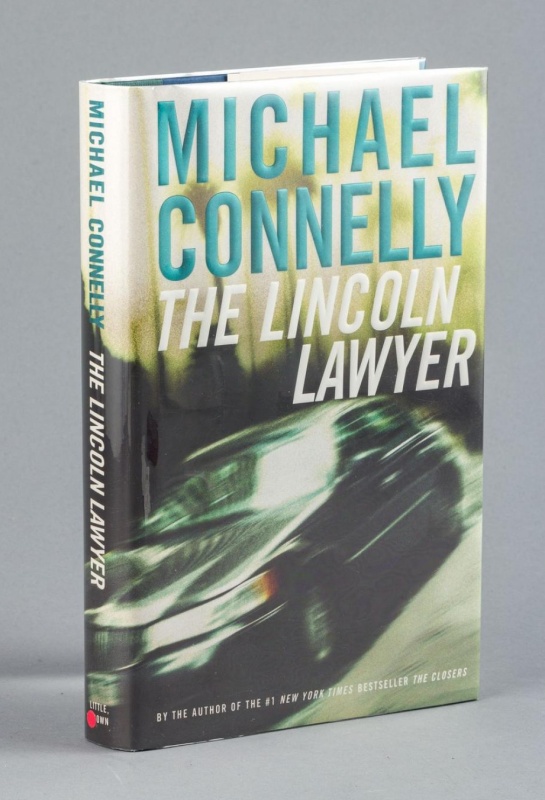
The Lincoln Lawyer, Michael Connelly (Little, Brown & Co., 2005) Marianne and I watched the movie version of this (starring Matthew McConaughey) and it was only then I realized that a book came first. So I got it. This was also when I realized that the author, Michael Connelly, was the same guy who originated the Bosch series of novels (which became one of my favorite streaming shows for the several seasons it ran).
Some movies veer off in crazy directions from a source novel, but the 2011 film follows the Connelly novel quite closely. Which works for both. It is a good movie and a good book. Micky Haller is a criminal defense lawyer who mostly works out of his car, driven by a former client who has gone straight. Haller is hired to represent a wealthy young real estate agent who is implicated in the savage beating of a prostitute. As facts come to light, the case has some surprising similarities to a murder case that sent one of Haller’s former clients to prison. Haller comes to believe that his client committed both, but he seems to be in a bind between how to do right by one client without damaging the other. Both the book and movie share the many plot twists and the elegant solution.
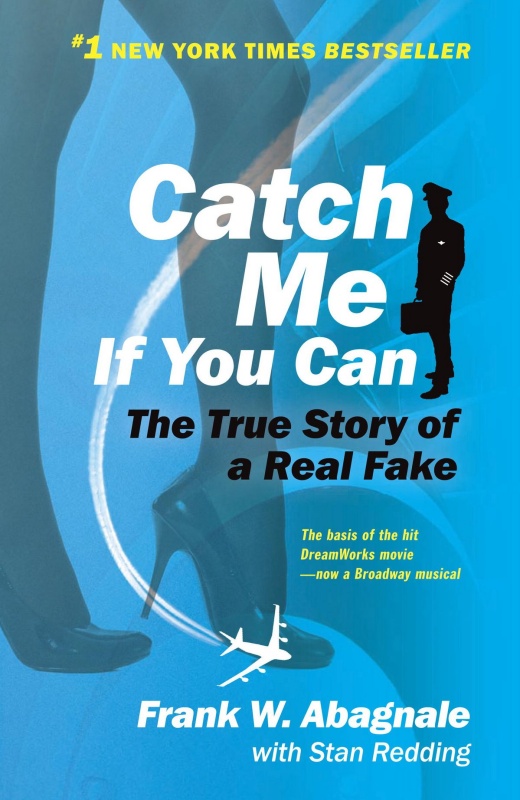
Catch Me If You Can, Frank W. Abagnale (Grosset & Dunlap, 1980). This is another book choice inspired by a movie, this time the 2002 Stephen Spielberg film of the same name that starred Leonardo DiCaprio and Tom Hanks. Here, the book is far, far more interesting and detailed than the movie. There is a much more detailed (and believable) backstory on how an average kid from the suburbs of New York became one of the biggest check forgers and con artists of his day.
Abagnale’s story reminds me of what a high-trust society we lived in during the 1960’s. The things he was able to get away with because people were inclined to trust the dapper man who looked every inch an airline pilot were, well, incredible. Maybe too incredible, as it turns out. As I finished the book, I did a bit of light research into Abagnale. It turns out that there are several who claim that almost all of the events in the book are either gross exaggerations or outright fabrications. Which might not be unexpected from an accomplished con artist, amiright? And maybe this book was his biggest con job of all – one that made his name and his fortune. Whether true or not, it is still a rollicking tale and a fascinating read.
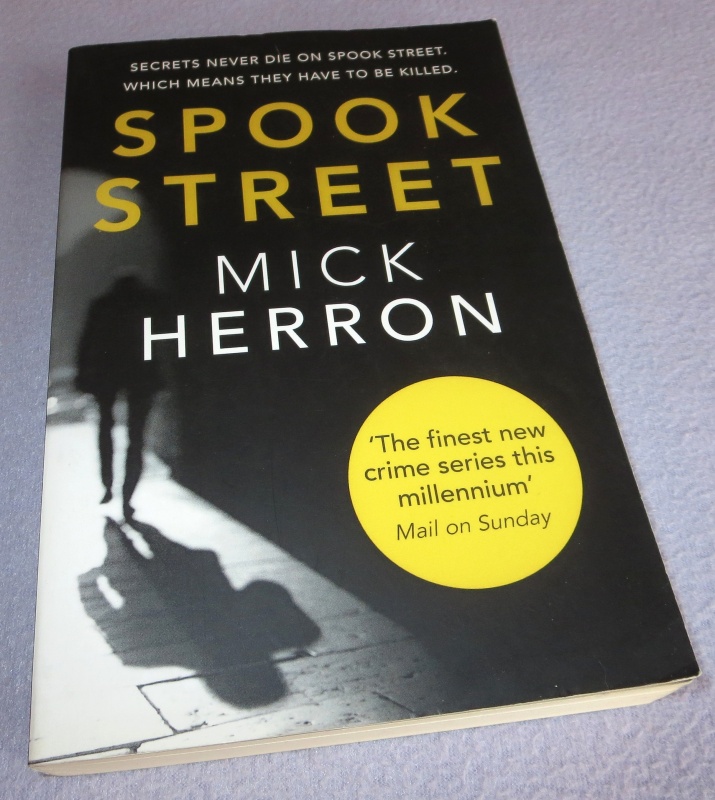
Spook Street, Mick Herron (Hachette, 2017) This is the 5th book in Herron’s Slough House series, about a group British MI-5 agents who are sidelined to the place where The Service sends the misfits and screwups. This series has become a favorite of mine and this installment did not disappoint. Agent River Cartwright was assigned to Slough House after a training incident that went badly wrong. The thing that kept him from being sacked altogether was that he was the grandson of one of the legendary higher-ups, David Cartwright.
Mr. Cartwright is, however, in a bad way from advancing dementia. When he disappears (leaving a bloody dead body in his house), River goes looking for him and learns some unexpected things about his past. And also how these hidden links relate to a savage terrorist attack in a shopping mall. Herron creates some memorable characters, none moreso than Jackson Lamb, a fat over-the-hill spook whose fabulously unpleasant personality hides some still-sharp skills. If I ever decide to spring for a subscription to Apple TV, I will be sure to binge watch the series made from these books. Until then, you will see more of these books in future installments.
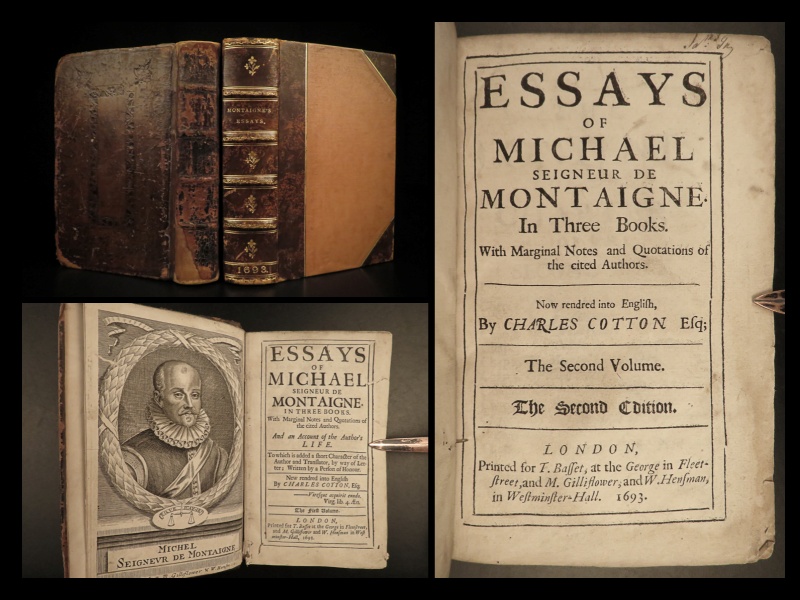
Selected Essays, Michael de Montaigne (First French edition, 1580, First English Translation 1603). With every dessert comes the vegetables, and every so often I must partake. All fun and games would make me a duller boy than I already am, so I periodically force myself back to my home bookshelf of classics for some literary self-improvement (which sometimes becomes literary self-flagellation). This was another book that was abridged on my home bookshelf but which is only available in unabridged form via audio. So I did what every red-blooded schoolkid would do and picked out only the selections from my paper copy. Which were quite enough, thank you.
Montaigne was a pre-revolutionary French thinker who wrote a long series of essays between about 1570-92. These essays cover a wide range of topics, from drunkenness and liars to discussions of notable Greek and Roman thinkers. These often meandering monologues serve as reminders that mankind is the same now as he was in the late 16th Century as he was in the late B.C. period.
Although I cannot say that I enjoyed reading these essays, at least finishing the last one offered a pleasant sense of elation. I read these because they are supposed to be good for me, and I suppose I am a better and more well-rounded person for it, if only marginally (and not in any practical sense). One particularly annoying trait of the audio version I chose is that the French writer was read by an aristocratic-sounding Englishman – something that obscured some of the author’s uniquely French experiences and ways of looking at things. So there. Crossed off. The vegetables have been eaten and we can move on to more appetizing fare.
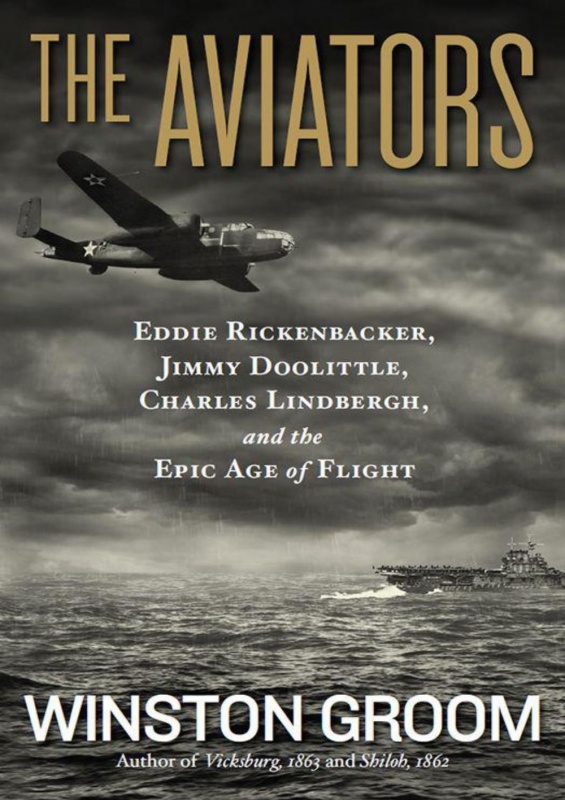
The Aviators: Eddie Rickenbacker, Jimmy Doolittle, Charles Lindbergh, and the Age of Flight, Winston Groom (National Geographic, 2013). I love a good biography, and also have a fascination with the early days of flight. This book combined the bios of three of the most consequential fliers of the early 20th Century into a single volume that just, well, flew by. I was at least aware of these three men, but their stories were far better than I had anticipated. Charles Lindbergh is the most famous of the three, and little needs to be added here about him, except that his flying skills were invaluable in improving the planes and flying techniques of WWII.
Eddie Rickenbacker was a reckless kid who became a mechanic/engineer and then one of the most successful race car drivers in the early days of auto racing. His mechanical acumen led to flying when he came across a stranded military plane and diagnosed the problem. That chance encounter eventually led to flight training and Rickenbacker becoming the most famous air ace of WWI. Along the way, “Captain Eddie” also found time to start a car company, own the Indianapolis Motor Speedway and run Eastern Airlines.
Finally, Jimmy Doolittle is best known as the pilot who led the 1942 long distance bombing raid on Tokyo. He is also the man who perfected the technique of flying on instruments, something that allowed aviation to advance beyond being a dangerous stunt. He was active in air racing and in promotion of high octane aviation fuels for the Shell Oil Company, and in getting the military to sanction the high powered engines that high octane fuels allowed – which became a major edge against the Germans whose aircraft engines were of lower power because of the standard grades of gasoline they used. If this is a topic that interests you, this is a great book.
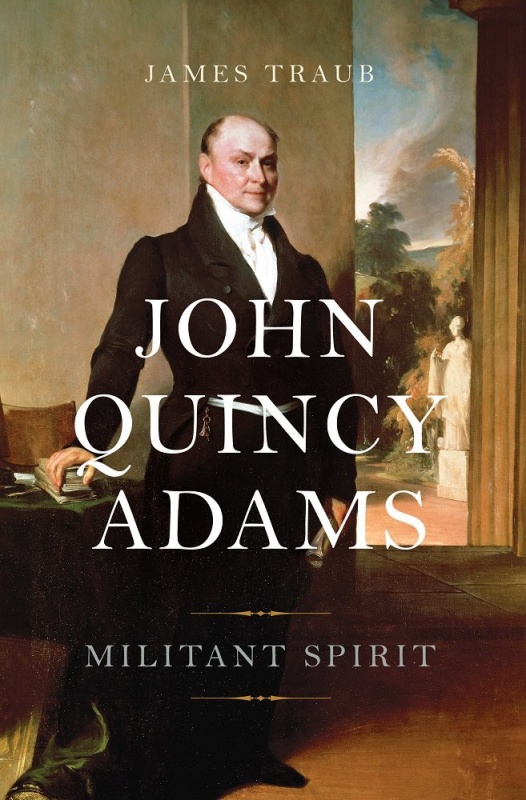
John Quincy Adams: Militant Spirit, James Traub (Basic Books, 2016). I read two presidential bios this cycle, and this was the first. Adams (the son of John Adams) was the 6th to hold the office and was perhaps the most qualified man to ever be President. He followed his father on a diplomatic mission to Europe and was educated there. He was a brilliant intellect, possessed extremely good judgment, and was of the highest moral character. He also served as James Monroe’s Secretary of State and was probably Monroe’s closest confidante. Sadly, Adams’ single-term presidency was mostly a disaster.
Adams was every bit as headstrong and irascible as his father, and was only elected because of a 4 way contest (with Henry Clay, William Crawford and Andrew Jackson) in which there was no majority of electoral votes, which sent things to the House of Representatives. Clay threw in with Adams (and became Vice President) and the ticket squeaked through on the first ballot, with 13 out of 24 States. This made an enemy out of Jackson, which only added to Adam’s political troubles – the few remaining of the Federalist party considered him a turncoat for working with Monroe and the members of the Jeffersonian Republicans (almost everyone else) did not consider him one of “theirs”. And Adams was such a stickler for ethics that he would not appoint supporters to political roles in his Administration. With no political friends and political enemies all around, virtually nothing got done during Adams’ 1825-29 term.
Adams had a successful final act as a member of the House of Representatives from 1831-48. During that long run, Adams made it his mission to become the vocal leader of the anti-slavery minority in the House. It was a revelation to me just how powerful the political forces for slavery were early in the Republic. The constitutional compromise which had counted each slave as 3/5 of a person for purposes of representation stacked the House with a pro-slavery contingent that was politically untouchable – the two Adams’ were the only Presidents of the first six that had not been slaveholders. John Quincy Adams remained a blister under their saddle for the rest of his life. This book was an excellent read.
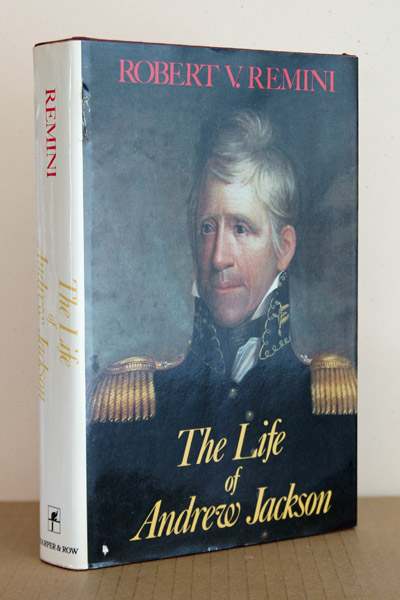
The Life of Andrew Jackson, Robert Remini (Harper & Rowe, 1988) I followed up with a bio of our 7th President. This is a single volume (448 pages) distillation of a 3-volume, 1600 page set published between 1977 and 1984. Andrew Jackson could not have been more different from his predecessor. Jackson was a man of fierce temper. At his best he was a hero – he was the General who routed the British (and ended the War of 1812) at the Battle of New Orleans. At his worst, he was a loose cannon who was uncontrollable by superiors and who held lifelong grudges.
He is widely acknowledged as the founder of the modern Democratic Party, and there was probably never a President more partisan than Jackson. He railed all his life about what he perceived as corruption that kept him out of the White House in 1824. But then he went on to pack the government with political loyalists, largely without regard to ability. He was also the man who undid Alexander Hamilton’s financial system when he terminated the charter of the Bank of The United States. In all, Jackson had no appreciation or use for the systems devised by the Founding Fathers, instead doing all he could to promote a democracy (not a term used much by Jefferson or Madison) of individuals against the moneyed interests.
I found this book a challenge. First, it was not available on my normal audio sources, so I had to buy a Kindle version and have it read to me by an mostly-satisfactory AI voice via an app. Second, this author seemed as partisan as his subject. If Jackson believed it, it was right – and vise versa. Was Jackson really America’s first true war hero? I would think George Washington should be part of that conversation. There was also the author’s uncritical acceptance of Jackson’s characterization of a “corrupt bargain” between Adams and Clay that cheated him out of the presidency in 1824. Adams’ biographer is more evenhanded when discussing the two men, but Remini is clearly all in for Team Jackson, with virtually nothing good to say about Adams – someone who was so bound up in his principles that he made nothing but political enemies. I would have liked a bit more nuance or critical examination. Even Jackson’s worst flaws, like his terrible political appointments, are mostly blamed on others. Worse, there is virtually no serious discussion of Jackson’s pro-slavery views. Instead, the author praises Jackson’s thrift in replacing several paid white house servants with slaves. All in all, the book was frustratingly biased, and his subject deserved better. Or maybe this is exactly the bio the subject would have wanted. It is for these reasons that I would try a different bio of “Old Hickory” if I were starting over.
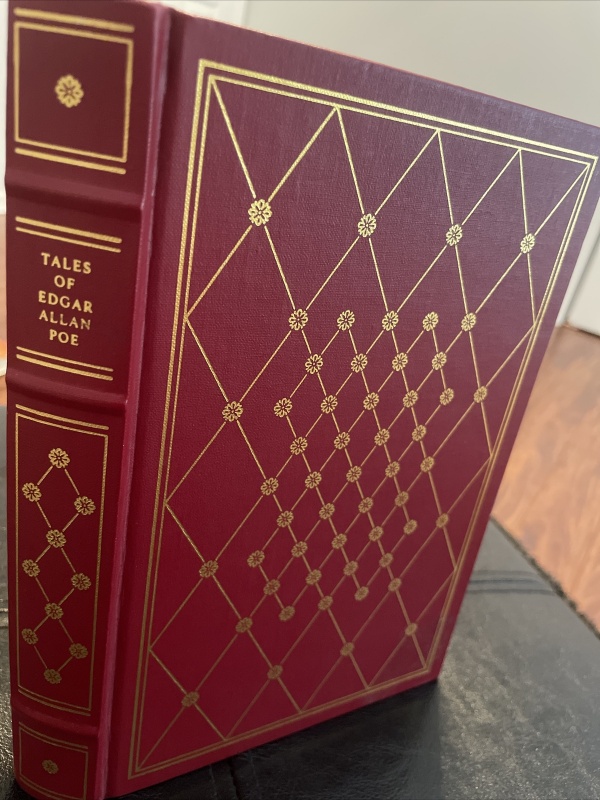
Tales of Edgar Allen Poe (Franklin Library Edition, 1979). I had not intended to go back to my Shelf-O-Classics quite so soon, but Halloween was approaching and with Poe next on the shelf, the suggestion practically made itself. This was another instance of the need to hop through a more complete audio version for the specific short stories in my paper volume, which were written in the late 1830s to the early 1840’s. Poe is said to be the first American author who made a living on what he published – though not a very good living.
This book included samples of various Poe genres, including macabre gothic fiction stories like Berenice, in which a man develops a fixation on the beautiful teeth of a young woman who is dying, all of which comes to a gruesome end with the teeth in a box in the house at the same time it is discovered that she had been buried alive. Poe was also an early writer of detective fiction, including his The Murders in the Rue Morgue. All in all, the stories were well-crafted, if sometimes dealing in unpleasant subjects. I discovered that many famous scary story tropes (such as the man bricked into his own tomb while still alive) have their source in Poe.
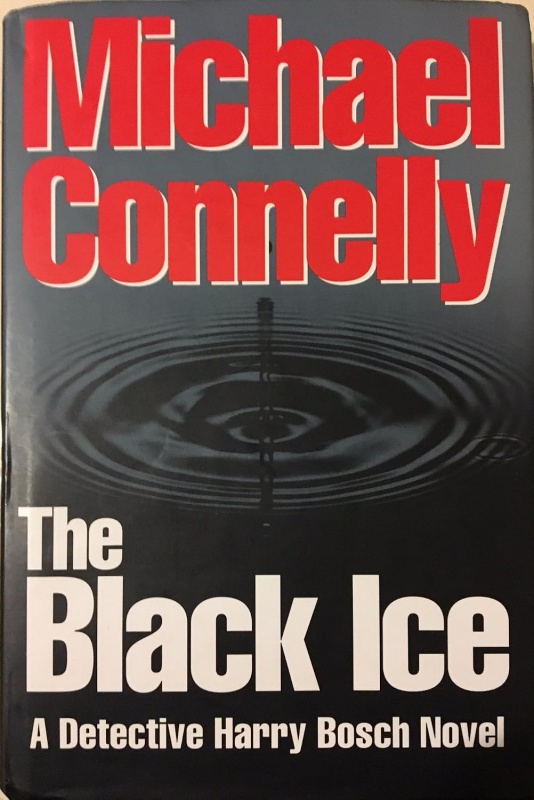
The Black Ice, Michael Connelly (Little, Brown & Co., 1993). After climbing out of Edgar Allen Poe’s world, I felt the need for some modern crime and mayhem as a palate cleanser. This is the second Harry Bosch novel and sees the LAPD detective working through the apparent suicide of an undercover Narco cop – one that the department is all too eager to smooth over and put to bed. If you like a good neo-noir story about a maverick police detective, this one will not disappoint.
I have already started on the books that I will share here a few months hence. Until then, my advice is to read something (even if you have to do it by listening). Because Reading Is Fundamental. It is also fun!
Postscript – My writing elsewhere. Not very many people remember the early days of American Motors Corporation, the result of a 1954 merger of independent automakers Nash and Hudson. Fewer still remember that American Motors made a legitimate performance car in 1957 – possibly America’s first sports sedan, the Rambler Rebel. Only 1,500 were built and only perhaps 25 survive. One of those 25 (or is it the 26th?) is currently for sale about an hour away from me, and I wrote about it at Curbside Classic (link here).


Winston Groom…I discovered him 25 or so years ago with his book “1942, The Year That Tried Men’s Souls”. If that’s not the exact title, it’s close. That book led me to reading other Groom books, such as Forest Gump (nothing like the movie), and some of his fiction works, one of which was about an actor who had fallen out of favor and was trying to reconcile himself with continuance of an ordinary life. Groom’s range is remarkably broad and always good.
Andrew Jackson…we visited his house, The Hermitage, earlier this year. Reading your account of his biography made me realize that of the vast amount of information presented about Jackson at The Hermitage, it often discussed his being president, but there was very little about his accomplishments as president. I can only speculate about why that would be. In contrast, I’ve been to Truman’s Home and his Presidential Library (they are about ten minutes apart) and there is little that doesn’t talk about Truman’s accomplishments.
Sounds like you found a very good assortment of books.
LikeLiked by 1 person
Thanks. You had suggested Groom as a good author some time back and I finally picked one.
Jackson was a fascinating figure. He was a great fighting General and commanded the love and respect of his men. But he was also headstrong and did not always follow orders himself. There was an interesting episode where Jackson invaded and attacked Spanish Florida. The Adams biography was clear that Jackson acted on his own authority and in contravention of prior orders, but Jackson’s biographer argued that those prior orders had been purposefully ambiguous. He became a lawyer, though not a terribly distinguished one, and as President he pushed hard into a kind of Jeffersonian democracy that had not really been envisioned in the Constitution as championed by both Hamilton and Madison before those two fell on opposite sides of the political schism between the Federalists and Jefferson’s Republicans.
LikeLike
Nice selection but the love of biographies still eludes me. However the three fliers one may be worth a peak. 🤣😎🙃
LikeLiked by 1 person
The book on the 3 pilots may have been my favorite of this batch. Living in Indianapolis, I knew a bit about Eddie Rickenbacker’s ownership of the Indianapolis Motor Speedway from the 1920’s through the end of the war. It was Rickenbacker (the old fighter pilot) who had suspended the Indianapolis 500 during the war as a way of supporting the Nation’s war effort. And he wisely decided in 1945 that it was time to sell, passing the Speedway on to Tony Hulman, whose family owned it for the next 75 years.
LikeLike