A Quiet Celebration Of Autumn – Three Classic Jazz Performances
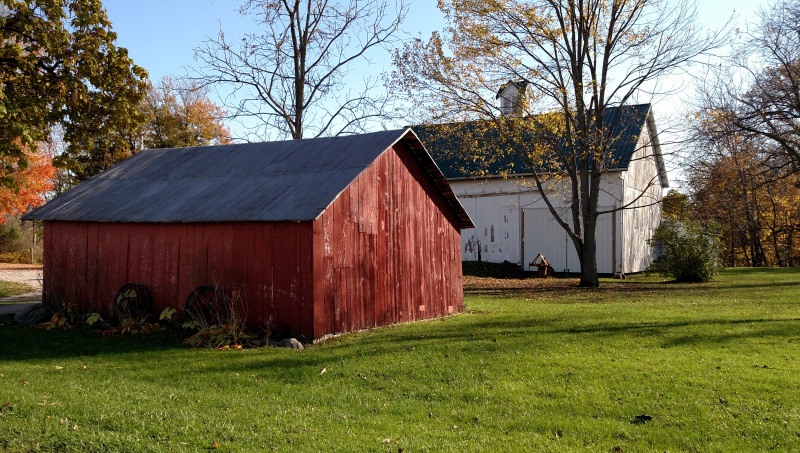
Here it is, mid-November. The leaves are raked and plans for Thanksgiving are in the works, but we still have a little time to savor Autumn, what has become my favorite season of the year. And what better way to do that than to sample some Autumn-themed jazz?
The music from my favorite era of jazz loved to celebrate Spring and Summer. The Fall, however, is represented too, even if you have to dig a little deeper through the stacks of shellac. I came up with a couple of selections a few years ago (here) and am trying hard to avoid that musical elephant in the room, Autumn Leaves – a song that has never done much for me. Fortunately, after a brief research dive, I can present three selections that will help anyone to enjoy some reflective downtime as we savor these last few weeks of Autumn.
What is it about the tail end of Autumn that brings out a quiet satisfaction. Could it be the lingerings of an agricultural heritage? It is not hard to imagine how satisfying it must be for all of the crops to be harvested and stored, giving the tired farmer a feeling of accomplishment and the time to relish the completion of the year. We modern suburbanites have something similar, where the last blade of grass has been cut and the leaves are all down and gone by whatever method you might choose.
Today’s featured songs, while having no connection to the agricultural life, bring out a quiet introspection and an appreciation for the beauties of the fall season. For many, jazz is an intimidating topic, or one that can sometimes seem like all noise and energy. Today is all about the other kind – the music that will appeal to almost anyone who appreciates beauty. Do I over-promise? Check out the three selections below and let me know.
Nat King Cole could make anything lovely by singing about it, and this season of the year is no exception. ‘Tis Autumn was a 1941 composition by Henry Nemo and was recorded by a handful of bands at the time, starting with Les Brown. Fun fact – Nemo is said to have been the inspiration for the 1961 creation of Charlie the Tuna in advertising for StarKist Tuna. (1) Nemo was evidently quite the hipster in his day, but this song proves that even the hippest of the hip could write a wistful tune about autumn.
It was not until March of 1949 when Nat King Cole and his King Cole Trio made this record. Cole had made his bones as a jazz piano player with few peers, and his King Cole Trio may have been the biggest small jazz combo in the land in the decade before this recording session. But Cole was nearing a crossroads – within the year he would make the transition from jazzman to crooner. This soothing recording of ‘Tis Autumn gives us the best of both of those personas.
Autumn In New York is probably the best-known song of today’s choices. And an interesting one. Vernon Duke wrote it in 1934 and it was picked up for a Broadway Musical called Thumbs Up! After one live recording and a single studio version, the song languished until Frank Sinatra recorded it in December of 1947. Or until Columbia Records decided to release it in 1949, when it became one of a dwindling number of hit records for that falling star. (2) It also seems that the song was not actually published until 1949, which may account for the lack of recordings before then. Afterwards, well, that’s a different story.
Starting in the 1950’s the song took on new life and can be found in a bazillion versions. After some struggle, I decided on this 1957 joint effort by Ella Fitzgerald and Louis Armstrong – two of the best jazz singers of their (or any) era. The 1950’s is, in my opinion, Ella at her peak. And though it was getting late in Armstrong’s long career, I have never heard either his voice or his trumpet in a warmer and more comforting sound.
At roughly 6 minutes, this is longer than most songs of this kind. But the technological advances of tape recorded masters and the long play record made room for these stars to do their thing. A vocal chorus by Ella, another by Louis, and a third that is partly Armstrong’s horn and partly the two singers sharing the mic – I have no idea what I could possibly cut from this performance, and 6 minutes is over before you know it.
This last selection is one that few will know, but one that more should. Autumn Nocturne is one of those compositions from the early 1940’s that it is virtually impossible to make into a bad record. And once again I struggled mightily to decide on the one version to present to you here. The first two recordings of the piece were lovely big band renditions, first released by Claude Thornhill (recorded October, 1941) and immediately thereafter by Charlie Spivak in a September, 1941 recording that featured an arrangement by a very young trombone player named Nelson Riddle. Each is both beautiful and charming, and it was only when I finally reached an impasse with myself between the two that I decided to go a different direction. (3)
Art Farmer is at the more recent end of my jazz sensibilities, and this recording of the song from November of 1954 is a lovely interpretation of a lovely song. Farmer came along at the tail end of the big band era and eventually developed into a player who could tell a melodic story much more effectively than most of his bebopping contemporaries. Not all trumpet players could get a mellow tone from that horn, but Farmer certainly could – and does here.
So, did I oversell? Many of you may be tempted to listen to these pieces on the commute to the office or while engaged in some other kind of multitasking. Might I suggest that you try again at the end of your day, as you relax in your comfy chair with your favorite beverage. You can enjoy that lull between the bustle of summer and the rush of the holidays with some quiet enjoyment of the close of another autumn.
Note 1 – What person over the age of 50 can forget Charlie the Tuna and his never-accomplished quest to chosen by StarKist on the basis of his good taste. The announcer said it all: “Sorry Charlie, StarKist doesn’t want tunas with good taste, StarKist wants tunas that taste good!” However, a mystery now occurs to me – what does a tuna have to do with the stars? Were they all caught at night? Really, I need to know.
Note 2 – Sinatra’s version of Autumn In New York released by Columbia Records in 1949 should not be confused with the much better known version that he included on his Capitol Records album Come Fly With Me. That version, recorded in the fall of 1957 and released in January, 1958, is a more mature Sinatra, and among my very favorite of his Capitol Records years.
Note 3 – Both the Thornhill and the Spivak records are featured in all their luscious detail by Mike Zirpolo at Swing And Beyond (which simply must be read (and listened to) here).
Tis Autumn, Nat King Cole Trio. Personnel: Nat King Cole (piano, vocal), Joe Ashby (guitar), Irving Comfort (bass), March 29, 1949 in a 6-song New York session for Capitol Records billed as The King Cole Trio with Pete Rugolo’s Orchestra. Although there is no hint of Pete Rugolo’s Orchestra anywhere in this record.
Autumn In New York, Ella Fitzgerald and Louis Armstrong on the 1957 Verve Records album Ella And Louis Again. Other personnel: The Oscar Peterson Trio, including Oscar Peterson (piano), Herb Ellis (guitar), Ray Brown (bass), with the addition of Louis Bellson (drums)
Autumn Nocturne, The art Farmer Quartet, recorded November 9, 1954. Personnel: Art Farmer (trumpet), Wynton Kelly (piano), Addison Farmer (bass), Herbie Lovelle (drums). Released on the album Early Art, Prestige Records, 1961. Trivia note – bassist Addison Farmer was Art’s twin brother.
Photos by the author

