JP’s Book Report – Summer 2026 Edition

Your faithful correspondent has continued his self-improvement program, which consists largely of listening to audiobooks while driving during his workdays. It has been four months since our last report, and as always, I have tried to stay out of ruts – both literally and in my choice of audio reading material. So what have been my summer reading choices? Let’s get at it!
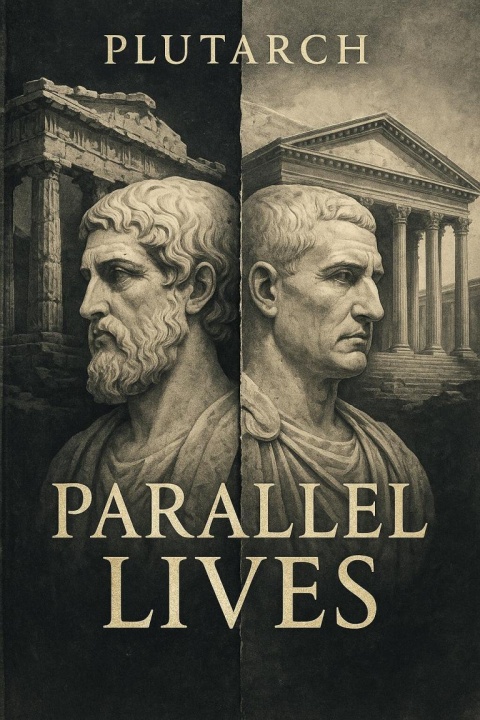
Parallel Lives, Plutarch (c. early 2nd Century, A.D.) This was the next-up on my bookshelf of classics, and must come with an asterisk. My own edition is entitled “Selected Lives” and is an abridged version. The original, first translated into English in 1579, is a collection of surviving biographies of 23 pairs of noted individuals, each contrasting a Greek and a Roman. My edition, which runs to 462 printed pages, covers only a dozen lives, or six paired examinations with a brief comparison at the end of each two. I decided that because I am going through the books on my shelf, I cherry-picked only the bios covered in my printed version. Or else this might have been the only thing I listened to all summer.
My edition covered these six pairs: (1) Theseus (founder of Athens) and Romulus (founder of Rome), (2) Lycurgis (lawgiver of Sparta) and Numa Pompilius (2nd king of Rome), (3) Pericles (Greek statesman) and Fabius Maximus (Roman Statesman), (4) Alcibiades (Greek general) and Coriolanus (Roman general), (5) Alexander (Greek conqueror) and Julius Caesar (Roman conqueror), and finally (6) Demosthenes (Greek philosopher) and Cicero (Roman philosopher). These bios were actually interesting, and serve as proof that human nature has neither improved nor degenerated during the intervening millennia. Bravery, cowardice, nobility and treachery are all there, and often in the same individual. Also interesting is an immersion into a pre-Christian world of gods, gods and more gods. This is not a beach read, but was highly educational. Will I go back for more of the 34 bios I skipped? I think I’m good.
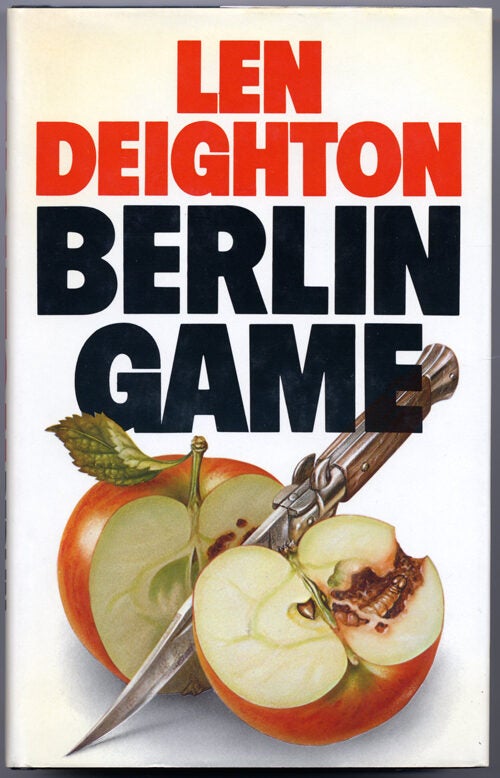
Berlin Game, Len Deighton (1983) This is a late Iron Curtain-era spy novel. Bernard Samson is an agent with British MI-6 who has been turned into a desk man. Until, that is, his help is demanded to bring a long-embedded agent out of East Berlin. Things are complicated by the belief that there is a Soviet KGB mole in his own organization.
Although the cold war premise is now quite dated, Deighton spins a good yarn. This is the first of a trilogy (which also includes Mexico Set and London Match. Deighton, who died in March of this year at the age of 97, made a career out of Samson, with two other trilogies and a prequel.
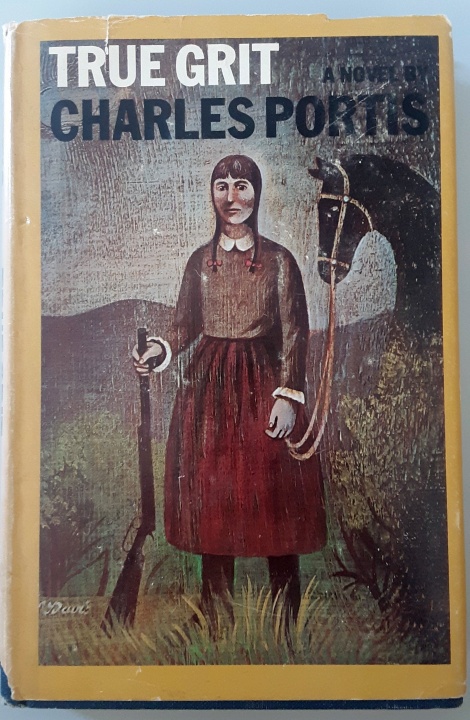
True Grit, Charles Portis (1966) Everyone has seen at least one of the movies made from this book, whether the 1969 classic that starred an aged John Wayne or the more modern Cohen Brothers film that featured Jeff Bridges in 2010. This novel was first published in serial form by The Saturday Evening Post magazine, and then as a traditional book. It is narrated by Mattie Ross, a young girl in 1878 Arkansas, whose rancher father has been murdered by a drifter-made-hired-hand named Tom Chaney.
The headstrong Ross is determined to see justice done. She goes to Fort Smith and demands to know the toughest U.S. Marshall they have, whom she intends to sic on Chaney. That man, she is told, is Rooster Cogburn – an aging, one-eyed, overweight man who drinks too much, but who is nonetheless the Marshall with the most grit of anyone in the territory. The story, being told some fifty years later, is of her struggle to get Cogburn to go, and then of the manhunt that ensues.
For anyone looking for a good adventure, this book would rank among my favorites. Even if you have seen one or both of the movies, this source novel is highly worth a read. The biggest question: will your mind fill Cogburn’s character with the face and voice of John Wayne or of Jeff Bridges? For me it was Wayne – something that is probably generational.
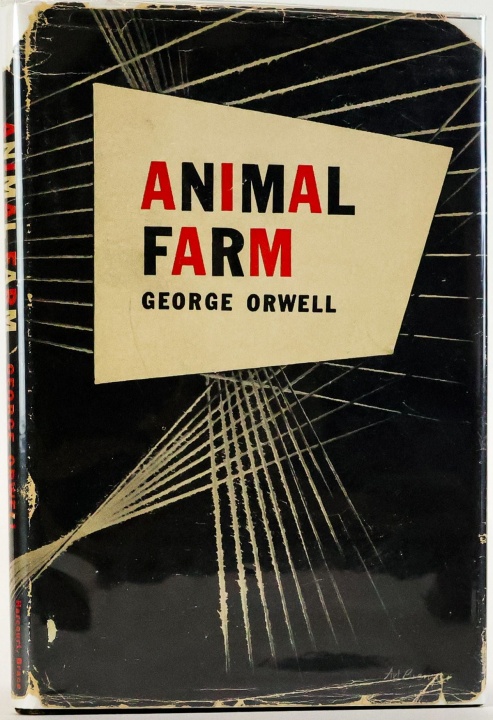
Animal Farm, George Orwell (1945) With new film version on the horizon, I decided that this would be a good book to re-read. I recall being assigned the book in a (long ago) high school social studies class, so remembered the basic premise. It was a story about how the animals on a farm conspired to take over and drive out the farmer who had been profiting from their labor. What begins as a seemingly perfect collective enterprise soon turns into something else, with the pigs (who are in charge) soon becoming indistinguishable from the old farmer (and the rest of the animals faring far worse than before).
The book is, of course, a clear-eyed satirical allegory based on the Soviet Union of that time, and a cautionary tale about how the collectivist experiments that were in vogue after WWII were sure to turn out. Orwell (who was no conservative) had observed how collectivism always seemed to turn into the many being controlled by the few. One of the book’s more famous lines is the 7th commandment of the farm, which began as “All animals are equal” but was later amended by the ruling pigs to add “but some are more equal than others.” With socialism becoming faddish again, Animal Farm remains a worthwhile lesson from those who saw it play out before.
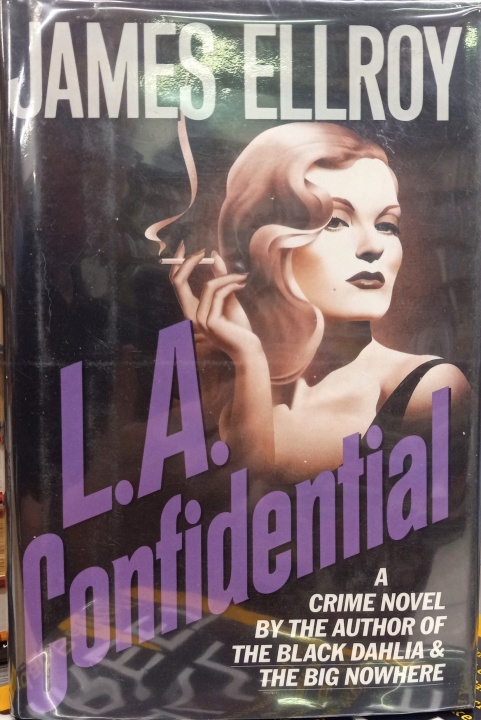
L. A. Confidential, James Ellroy (1990) This is the third novel in Ellroy’s “L.A. Quartet” series. I am on record as being a huge fan of the neo-noir film of the same name, and it was a desire to read the source novel that has brought me 3/4 of the way through Ellroy’s Quartet. Which is where I will stop.
The story takes place in the Los Angeles of the mid 1950’s, a place of vice, corruption and crime, both organized and otherwise. The three central characters are cops with three very different personalities, vices, and skillsets who become uneasy allies in unwinding the byzantine happenings that led to a multiple late-night murder in a coffee shop. As the book’s meandering plot(s) progressed, I found myself admiring the film’s script writers who created a much tighter and more compelling story than this author was willing or able to manage. Being such a fan of the film, I was disappointed.
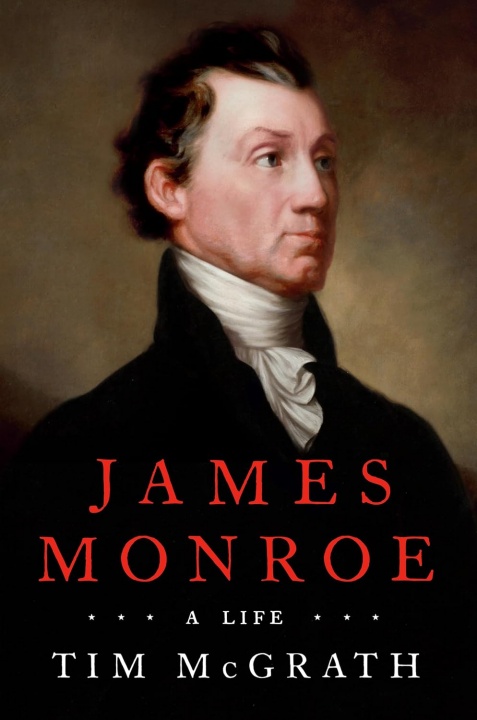
James Monroe: A Life, Tim McGrath (2020) This book continued my Presidential Biography project. Monroe, our 5th U.S. President, was the end of the line for Presidents who had some direct connection to the American Revolution. In Monroe’s case, he was a young soldier in the Revolutionary War before he entered political life. As a young man in politics, Monroe became highly partisan, following Jefferson and Madison in their acrimonious split from Federalists, whom they considered appeasers of Britain and closet monarchists. The non-partisan Washington (often lumped into the Federalists by Jeffersonian “Republicans”) appointed Monroe as Ambassador to France, but the two had an uneasy relationship despite their similar personalities and reputations as “doers” rather than “thinkers”. Monroe went on to assist Jefferson in negotiating the Louisiana Purchase and acted as Secretaries of State and War for James Madison.
Monroe’s two Presidential terms (following the elections of 1816 and 1820) were highly consequential. What I found most interesting was how this most partisan of political actors matured into one of the least partisan of U.S. Presidents. His 8-year association with Federalist John Quincy Adams (his Secretary of State) was a model of openness to cooperation, and the fruits of this relationship were (among others) the adding of the Florida Territory to the country.
Monroe continued the virtual monopoly the State of Virginia held on the Presidency. Although a slave owner personally, he was not in favor of that institution and reluctantly agreed to the Missouri Compromise, which admitted Missouri to the union as a slave state in exchange for limiting future slave states to those below the 36-30 parallel (roughly Missouri’s southern border). He is most famously known for “The Monroe Doctrine”, which marked the American continent off limits to future European colonization. I found Monroe to be a fascinating figure who grew into a successful presidency, and I can highly recommend this lengthy (738 pages in print, 29 hours in audio) book.
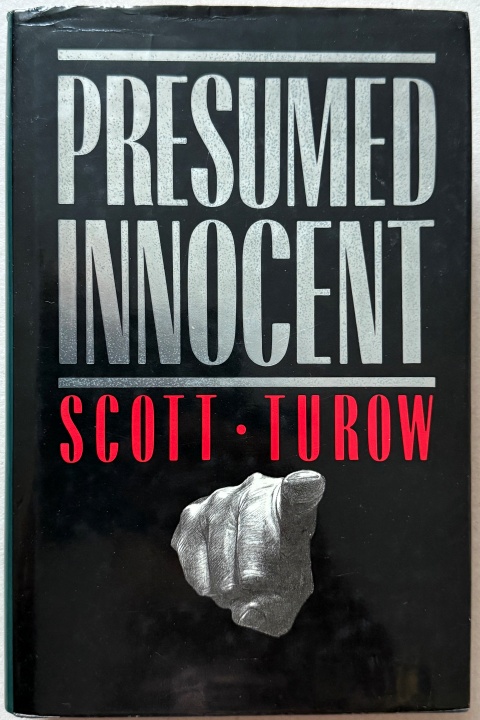
Presumed Innocent, Scott Turow (1987) After a heavy read like James Monroe, the literary equivalent to a popcorn movie was called for. Presumed Innocent was the first book from lawyer-turned-author Scott Turow, which spawned a productive new career for him. In it, Rusty Sabich is the lead deputy prosecutor in a mid-sized midwestern city within the fictional Kindle County. Rusty’s boss is doing poorly in the polling leading up to an election, when another deputy prosecutor is murdered. Rusty is put in charge of the investigation – which becomes a problem when it is learned that Rusty had previously had an affair with the now-deceased woman. After an ambitious opponent wins the election, Rusty finds himself out of a job and charged with the murder.
This is an exceedingly well-told story, with a true-to-life inside look at the preparation for and conduct of a jury trial. The 1990 film of the same name starred Harrison Ford as Rusty Sabich and stuck fairly closely to the book. But unlike with L.A. Confidential, the book is deeper, richer and better than the movie. Highly recommended!
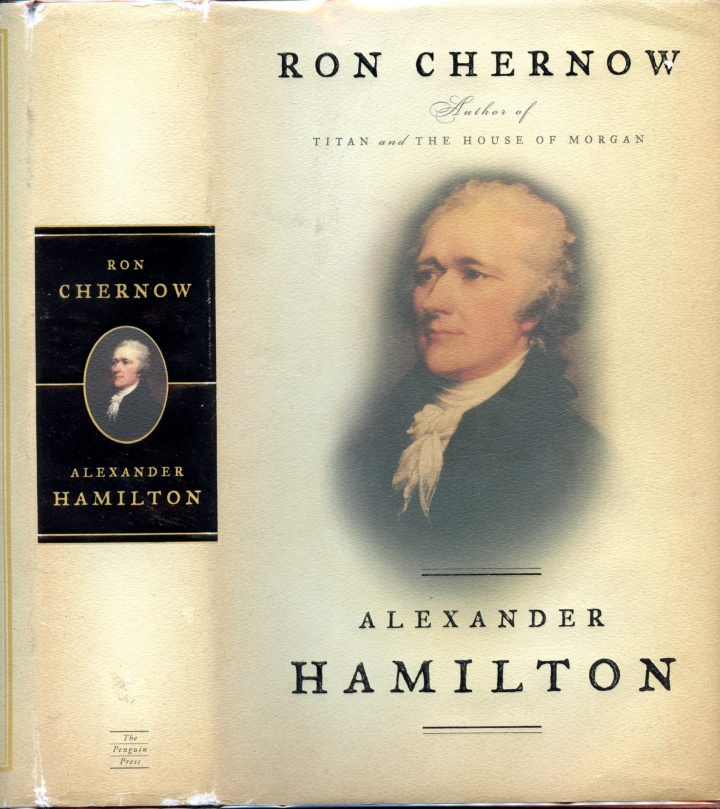
Alexander Hamilton, Ron Chernow (2004) After finishing bios of America’s first five Presidents (and the extensive study of the Revolutionary War era which they provide) it occurred to me that I simply had to fill a gigantic hole in my examinations of the principal characters of that time. The five presidential bios I read each made clear that a central (defining, even) figure in each of their lives was Alexander Hamilton. So I decided that one last dive into this period was a must.
Hamilton was a polarizing figure. Born into illegitimacy and poverty in the Caribbean, Alexander Hamilton’s personality, intelligence and work ethic brought him to the attention of a benefactor who sent him to King’s College (now Columbia University) in New York. An ardent supporter of American Independence, he became an artillery officer for a New York militia company, and ended up as George Washington’s aide-de-camp in the Continental Army, where he developed an extremely close relationship and status of trust with the General.
Hamilton became a lawyer and member of Congress before becoming a driving force in adoption of the United States Constitution in 1787. As Secretary of the Treasury in George Washington’s cabinet, he almost single-handedly created America’s modern financial system – including a mint, a national bank and the establishment of Federal sources of tax revenue. He also became the arch-nemesis of Secretary of State Thomas Jefferson, who found himself outside of that close inner circle relationship between Washington and Hamilton.
Hamilton was a brilliant lawyer and writer whose hyper-active style and blunt manner often got him into trouble. Although they had many similar policy beliefs, Hamilton never got along with the prickly John Adams, and was persona non grata once Jefferson became president. Hamilton’s other nemesis was Aaron Burr – a political chameleon of dubious trustworthiness who had burned enough bridges in his life that he was facing political, financial and reputational ruin. After he learned that Hamilton had made private statements to the effect that Burr should not be trusted with the governorship of New York, Burr challenged Hamilton to a duel with pistols. There are many who argue that Burr’s actions in that duel constituted an outright murder of Hamilton, who had not yet reached the age of 50.
This is the book that inspired the Broadway musical Hamilton and it tells the story in a way that is sympathetic to the man, who has so often been vilified by biographers of that era’s political Republicans1, most notably Jefferson, Madison and Monroe. Whether your sentiments line up with Federalists or Republicans from that acrimonious era of politics, everyone can agree that Alexander Hamilton possessed both impressive abilities and tragic flaws. What is not arguable is that Hamilton’s stamp on the earliest version of our government is still very much visible across our American landscape.
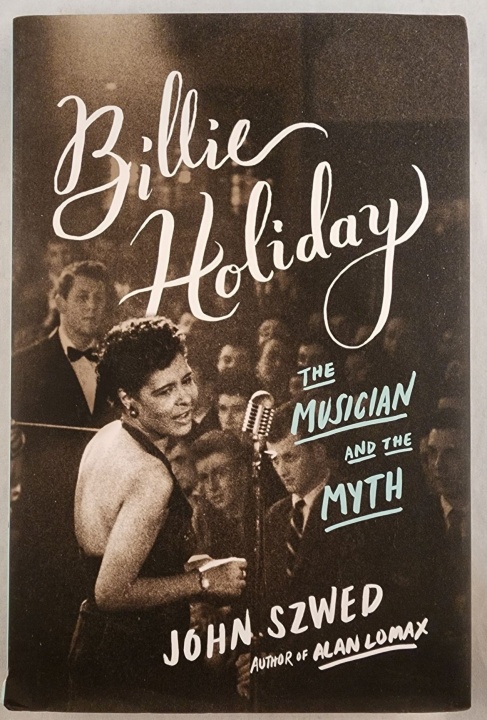
Billie Holiday, The Musician And The Myth, John Szwed (2016) I went into some detail on material from this book a few weeks ago in a post on Billie Holiday and the early part of her career as one of America’s quintessential jazz singers. Szwed is known primarily as a writer on jazz and so the book is more focused on Holiday the musician than on Holiday and her life that was equally troubled and fascinating. It was a read I enjoyed as I listened to her music in preparation of my blog post about her.
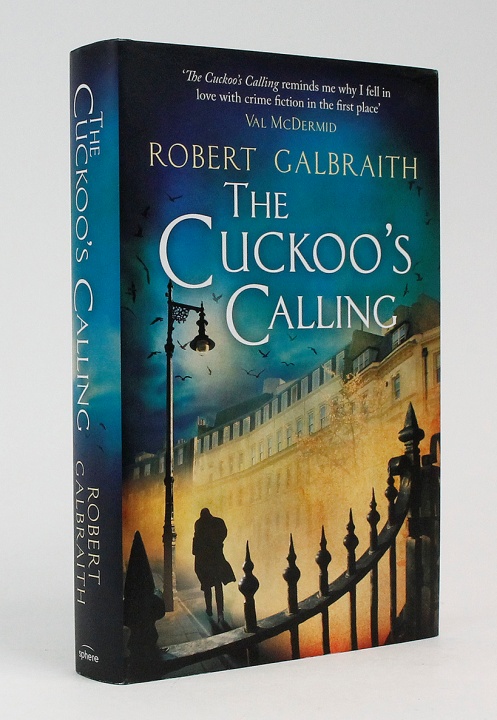
The Cuckoo’s Calling, Robert Galbraith (2013) I chose this book on a recommendation because of its notable author. You may not have heard of Robert Galbraith – but that’s OK because the name is a pseudonym for the author of the Harry Potter series, J. K. Rowling. The book is a modern British detective story. Cormoran Strike is a curmudgeonly down-on-his-luck private detective who is down to his last case when a new client knocks on the door. A high-profile fashion model’s death in a fall from her apartment balcony has been ruled a suicide, but the woman’s foster brother is not buying it and wants Strike to have another look. Strike and Robin, the temporary assistant who is assigned to his office, come together to unravel what really happened in a world of money and jealousies in modern high fashion.
My two sons were part of Harry Potter Mania when those books were being released, and I can see why. Rowling/Galbraith is a wonderful storyteller. In this book, which is the first in a series, she trades fantasy and magic for crime and investigation and comes up with a book worth reading. If you like detective fiction (especially the British variety), it will be worth your time.
The Magic Mountain, Thomas Mann (1924) We began this report with my Shelf Of Classics and will end there. Honestly, I was dreading this book. I read the print version in the late 1980’s when I was getting these books in the mail, and recalled it as a tedious slog. I could have skipped over it for this reason, but decided that a tedious slog for a reader beginning his adulthood might be something more enjoyable for one significantly later in life. But, uh, nope.
The book is about Hans Castorp, an empty vessel of a young man who goes to an Alpine sanatorium for a three-week visit to his cousin, a tuberculosis patient there. Castorp’s three week visit turns out to be much like the three hour tour that became Gilligan’s Island on television. Castorp is diagnosed with a mild case and slowly slips into permanent resident status. How permanent? My printed version runs to over 700 pages, which translates to a 37 hour audio version. And no, 37 hours is not a typo. How can you make a stay in a mountain center for convalescence run to that length? That is this book’s problem.
Part of the book’s sprawl is likely due to the twelve-year process of writing, a process that Mann began in 1912, following his wife’s stay in a similar institution. The parts of the story (possibly 1/3 of the whole) that deal with life in that sort of an institution are reasonably good reading, with a droll sense of observation about the personalities and processes that are part of the experience. The problems come when the author uses a pair of characters to launch into virtually unending monologues and dialogues about the Isms that sent Europe on a slow-motion collision course with WWI. It is possible that part of my bad mood about this book is the way I have pretty much lost patience with Twentieth Century European (and particularly German) mindsets of being the center of the universe. Really, is there a reason in 2026 to wallow in humanistic and Marxist/Hegelian philosophies that were germinating in the petri dish that was Germany in the three decades beginning around 1904? Let me help you with that – No, there is not.
I apologize for finishing this review with a bit more vitriol and bile than is normally seen in these spaces. Ok, a lot more vitriol and bile. But my excuse is that I only finished the book (again) a day before writing this. It is only my inborn “Finish what you start” gene (which is, ironically, the most German part of my psyche) that kept me listening instead of running my truck into a bridge abutment to make the whole thing just stop. (I am kidding, of course). My recommendation – instead of starting the book and wanting to do yourself in somewhere in the middle of it, just don’t start it. And for anyone out there who simply adores this book? I’m sorry, but I Just. Don’t. See. It.
OK, That (thankfully) is that! Reading is supposed to be enjoyable, and I hope to get back on that track with my next selections, and will let you know how well I have done so in another few months. But first, I think I need a few handfuls of French Burnt Peanuts. That will help.
- Political Republicans of early America have no relationship with the modern Republican Party in America. They called themselves “Republicans” and set themselves against those known as “Federalists”. In general, those early 19th Century Republicans favored France over Britain, favored strong States and a weak Federal government, and an economy dominated by agriculture and artisans as opposed to cities, industry and finance. During some periods of time they have been called Democratic Republicans, and have been more-or-less adopted into the heritage of the modern Democratic party (though this may not be strictly accurate either). ↩︎
 J. P.'s Blog
I reread – on some prompting from one of your previous posts mentioning it – LA Confidential, and I had similar thoughts. I’d read it a long time ago since I did enjoy the film as much as I did (it’s probably one of my favorite movies). I can wholeheartedly agree the movie is definitely told… more succinctly and interestingly paced… if not outright better.
LikeLiked by 1 person
I read somewhere that Ellroy was upset at how the movie had butchered his book. Having now experienced both, I have to disagree with him. More than once in working through the novel, I recall thinking how much more elegantly the storyline was crafted in the movie – and it is not a simple story even there.
LikeLiked by 1 person
No, it’s not. I can understand – maybe – why he might’ve felt that way. But the movie hit all the major points without getting bogged down in the weeds (like the novel did). It was also told in a far more succinct timeline. I’m rarely one to say the movie was better than the book… and I’m not sure I’d say that definitively now. But in this case…. It’s a hard call.
LikeLiked by 1 person
Re The Cuckoo’s Calling: JP, you call it British detective fiction. It is, but readers should know it’s not a “cozy” mystery like Dame Agatha’s Miss Marple, or even Hercule Poirot. I’d call it a “soft boiled” detective mystery: Strike is not nearly as cynical as Same Spade or Philip Marlowe, but he’s still a tough guy (former MP if memory serves). Good stuff from Rowling.
Also, a TV series was made from the Strike books, and is available on HBOMax.
LikeLiked by 1 person
It’s funny, but I have never really enjoyed the Agatha Christie style of British mystery. Or I correct myself – I have never really enjoyed the movies made from the Agatha Christie style of mystery. Now I guess I have talked myself into the need to actually read one of her books. I will know later whether to thank you or curse you. 🙂
LikeLiked by 1 person
Man, another thoroughly impressive accomplished reading list. I am envious of your attention span, and your having a job that allows consumption of hours of audiobooks. And thank you for tackling that Thomas Mann book…not something that I probably would have done; and now I definitely won’t.
LikeLiked by 1 person
What is funny – I have a fair amount of downtime as I sit waiting to be loaded or unloaded or between runs. And unless it is the exciting conclusion of a real page-turner, I simply cannot stay awake with an audiobook playing. Physical reading (as in other peoples’ blogs on my phone) I am fine with. But when driving, falling asleep is not an option and the audiobook is good for keeping me company.
Yes, the Thomas Mann book. I don’t know why, but I am constitutionally unable to just quit a book or a movie in the middle. Marianne has no problem turning to me about 20 minutes into a movie and saying “Do you really want to watch this?” In my world, that is simply against the rules. Once you start it you have to finish it, if only to say that you saw it. I will confess that in the last 1/3 of the Mann book I would alternate between zoning out during the long monologues or yelling impolite responses to the rhetorical questions that would be lobbed my way.
LikeLike
So, you’ve hit upon the reason why I don’t listen to audiobooks in the evening at home when presumably I should have the ability to just sit and listen. I fall asleep…and even if I have the timer in the app set so that I know I won’t be read to for more than 30 minutes after I become unconscious, I still have to scroll back to wherever I can last remember, and this just wrecks the reading experience for me.
I blame my parents – who read me to sleep – for this very deeply (VERY deeply) ingrained habit.
LikeLiked by 1 person
I salute the width and breath of your summer reading! I used to read about 50-75 books a year, but since my cataract operations, my eyes seems to fatigue faster and I can’t seem to concentrate the same way I used to. Maybe it’s just old age. Having said that, I’ve spent my entire summer wading through Andrew Sorkin’s 1929, a book that at 500 pages, can be equally used as a door stop. It’s probably going to be the definitive review of the entire market crash, and what led up to it. I’ve seen Sorkin interviewed a few times, the latest on Firing Line, and always found him to be a very interesting man, and the book has so far been the same. I originally got it from the library, who had multiple copies, and a waiting list a mile long, so much so, that I was not allowed to renew it! Too new and too many people waiting, so a purchase was in order. This book has a 9 page list of characters covered, so large, another friend of mine reading it made copies to keep next to him so he wouldn’t have to be flipping back to it! I couldn’t recommend this as a vacation/beach read, as your vacation will be long over before you get to the end of it!
LikeLiked by 1 person
That sounds like a fascinating book! I will have to add it to my list. It will be interesting to compare his conclusions to those of Amity Schlaes, whose books on Calvin Coolidge and The Great Depressions, that I have read (or at least listened through). The last four decades have seen some lively arguments over the causes of the Depression (including its severity and length) and I am always interested in a new take.
Your experience with the library has been my own getting audiobooks through the Libby app that links to my own local library. Anything popular (including things assigned for classes by area schools) has a long wait list, and an inability to renew if there are still people waiting. Which sends me over to Audible to buy the thing.
LikeLike
Wow, you’ve read a lot and some deep books there. A good selection. I’ve been going a little more light hearted, cozy mysteries lately. LOL
LikeLiked by 1 person
There is a lot to be said for lighthearted!
LikeLiked by 1 person
So true!
LikeLiked by 1 person
You sure are getting a lot of books “read” JP, especially considering it’s only been four months since your last report. I think I mentioned before that I have read more books this year, than I have in many years, since we have had such crummy weather, I had lots of house/car issues and the woman next door is now home all the time and I think the dog is gone, so I have unlimited peace and quiet now.
In your selection of books today, I am sorry to say I’m only familiar with a couple. I have never read “True Grit” nor have I seen either movie version. I did read “1984” many years ago, like you, for a school assignment. I did read and see the movie “Presumed Innocent” … back then, working in a law firm, it seemed whenever a new legal thriller book or movie came out, it gave everyone something to discuss while getting their morning coffee in the office kitchen. I’ve never heard of the author Robert Galbraith and I’m probably in the minority when I say I’ve never read any of the Harry Potter books, nor seen any of the movies.
LikeLiked by 1 person
I never read the Potter books, but Marianne or I was always at the store on the day of a new release, then the boys would argue over who read it first. We saw the movies in the theater at their insistence too, but will admit that I enjoyed the movies.
Somewhere between you and me there is some kind of life balance – I’m all media and no walking/exercise and you are my opposite. 😛
LikeLiked by 1 person
A former blogger, an elementary school teacher, was aghast I’d never read the Harry Potter books and said all adults would enjoy them – that surprised me.
You and I are polar opposites it seems, although I will admit today I just finished my 36th book for 2026. I could not put it down – I like books like that. Now if I could only catch up on movies/TV shows I missed through the years. My walking stats are not as good for 2026 and I’m hoping to catch up on my steps during this predicted long Fall and mild Winter due to El Nino.
LikeLiked by 1 person
I thought the book, True Grit, was good and different enough from the movie to be interesting. It was one of the few times we went to the drive-in and I remember being so shocked at Rooster’s challenge to Chaney. Let us not neglect, LaBoeuf, though. There is only one Rooster Cogburn, though.
I read Animal Farm as a teenager because I had to and then again as an adult because i wanted to and was not really disappointed.
LikeLiked by 1 person
It has been years and years since I saw the Wayne version of True Grit, but saw the newer one when it started streaming. It hews much closer to the book.
LikeLiked by 1 person
Wow JP….that’s quite a selection! I expect you to tackle the Odyssey next….and not cheat and see the 3 hour movie! I’ve yet to meet anyone who has read it and am curious. Myself, I’m more into beach reads lately….
LikeLiked by 1 person
Haha, actually I think The Odyssey is on my shelf, but quite a ways into the future for me. I’m not sure if the movie interests me much.
A good beach read is what I’m currently enjoying.
LikeLiked by 1 person
Impressive list of books. I remember reading Animal Farm in High School – and hope your country and mine remember the lessons before things go much further.
I read the Harry Potter Books as they came out – but had to wait my turn. Grandson 1, Grandson 2, daughter, son-in law – then it was my turn!
I think I have read all of Scott Turow’s books – he is one of my favourites.
LikeLiked by 1 person
I ought to try at least one of the Harry Potter books!
LikeLiked by 1 person
Your list always amazes me. I’m not saying the men weren’t amazing but biographies put me right to sleep. What I read is always on the light side. I’m truly only looking for escaping harsh realities. But keep going, I know you love it. 🤣😎🙃
LikeLiked by 1 person
Believe me, I love the fun, light stuff! But I guess I like learning stuff too. I will confess that I have occasionally come across bios or nonfiction works that are more work than fun. But then I think about how they are still more pleasant than exercise. 😛
LikeLiked by 1 person
“Things are complicated by the belief that there is a Soviet KGB mole in his own organization.”
In this instance I believe the appropriate spelling would be “organisation”. ;^)
LikeLiked by 1 person
🤣
LikeLike
I have Ron Chernow’s Hamilton book sitting on my shelf and haven’t got to it yet! I hope to before long, as I’ve enjoyed everything else of his that I’ve read!
LikeLiked by 1 person
I think you will enjoy it! But it is definitely a time commitment.
LikeLiked by 1 person
I’ve watched both versions of True Grit. I, too, prefer John Wayne’s version of Rooster Cogburn. I also like Kim Darby as Mattie Ross. But as for Glen Campbell…it’s a good thing he had that singing career as a back-up.
I’ve read James Monroe: A Life. It’s interesting that Monroe, just like Jefferson and Madison, died virtually penniless. The old-line Virginia planters were being ground to dust by a changing economy, and presidents were expected to foot the bill for a large portion of the entertaining done while they were in the White House. Meanwhile, the old Yankee John Adams left a considerable estate to his children.
LikeLiked by 1 person
I had forgotten about Glen Campbell having a role in that movie!
Washington struggled financially too, though he had the benefit of money and property coming through his wife’s side. I think the southern plantation style of agriculture was never really lucrative, even before industry took over in the north. It was a high-overhead system and the owners often lived beyond their means.
LikeLiked by 1 person
The old-line Virginia planters relied heavily on credit. They spent lots of money, but by the late 18th century, prices for their tobacco crops were falling. They weren’t, however, cutting back on their spending. Washington’s estate survived in part because he switched to crops that were more lucrative.
LikeLiked by 1 person