JP’s Book Report – Spring 2026 Edition

I drive a lot. And I like to read. When I listen to audiobooks while I drive, I kill two birds with one stone. Unless I swear off of cliches. In that case, I listen to audiobooks while I drive. Let me know which one you like better. But I digress. Miles are getting driven and books are getting consumed. Which ones? Read on. As always, there is something here for almost everyone.
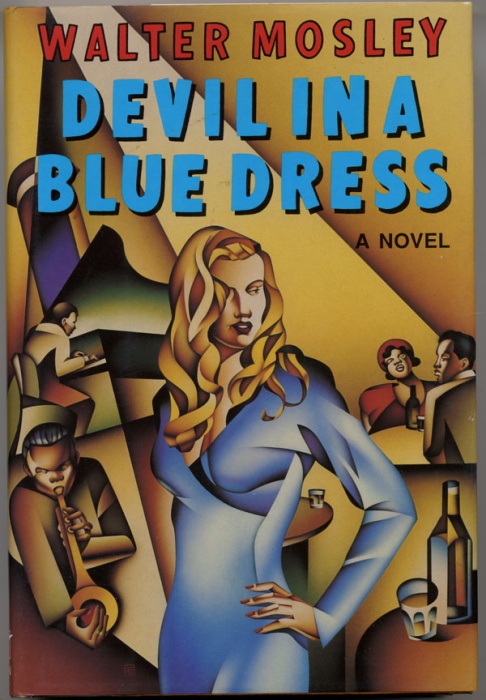
I am known in my circle as a lover of noir-ish mystery novels. One of my kids suggested this one – “Devil In A Blue Dress”, Walter Mosley’s first novel (1990). Ezekiel (Easy) Rawlins is a veteran home from the war and working in an aviation plant in 1946 Los Angeles. What makes this book deviate from a thousand others of its genre, era and location is that Rawlins in in the middle of a growing black community that stretches from his mortgage in Southern California back to a former way of life in the south. After Rawlins finds himself jobless, a neighborhood bartender with his fingers in a little of everything steers a little something Easy’s way. Along the way, Rawlins discovers that he has an aptitude for investigating. As you might expect, things get complicated.
I found the plot nicely done, with all the twists and turns this kind of book demands. What I found more interesting was the way this first-person narration takes us inside the old racial rules of the immediate postwar years. This one spawned a 1995 movie of the same title that starred Denzel Washington. Mosley has written several subsequent Rawlins yarns and I intend to come back to his tales in the future.
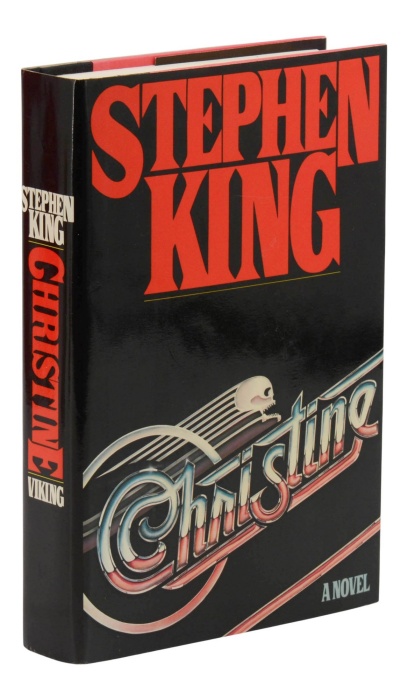
I love old cars, and realized that I had never read a Stephen King novel. So what better choice than “Christine” (1983)? I think everyone knows the basic story (probably from the 1980’s movie) – In the summer of 1978, Arnie Cunningham is the school nerd. He falls madly in love with a broken down 1958 Plymouth Fury. But somehow the car comes to own Arnie as much as Arnie owns the car. And to the car (which is named Christine), their relationship is “till death do us part.”
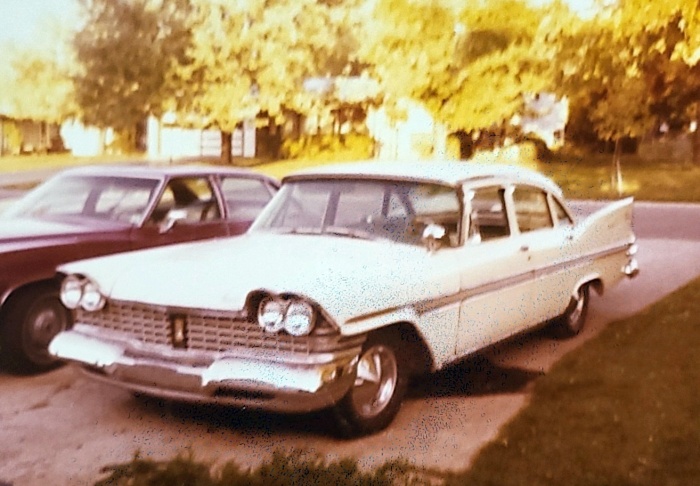
This book spoke to me in a way it will not to most of you. This book takes place in the late 1970s – a period when I fell madly in love with a 1959 Plymouth Fury. So I smelled the smells, heard the sounds and felt the same surfaces that Arnie Cunningham got to experience. The only differences in my experience was that my ’59 model was woefully deficient in its abilities to regenerate itself, and I was able to find a new owner for the car with no unusual drama.
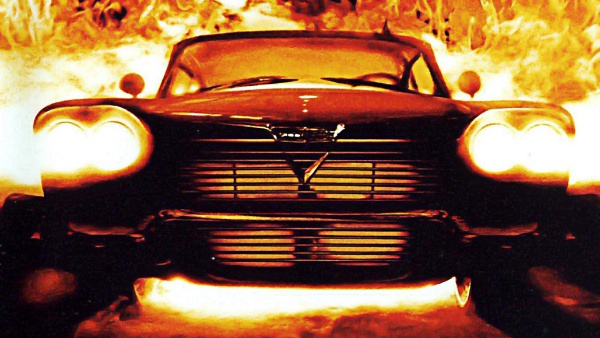
As we might expect, the story in the novel is more involved than that of the book. We get more of a backstory on the car and its former owner, who seems to retain his ownership of Christine even after his death. I will confess that there were some irritating factual errors for a guy who knows these cars (like references to the gear shift in a car whose automatic transmission was controlled by pushbuttons) but those were obscure enough that they would not bother most readers. Christine is a great read, and for those of my general age, a nostalgic trip back to a simpler time.
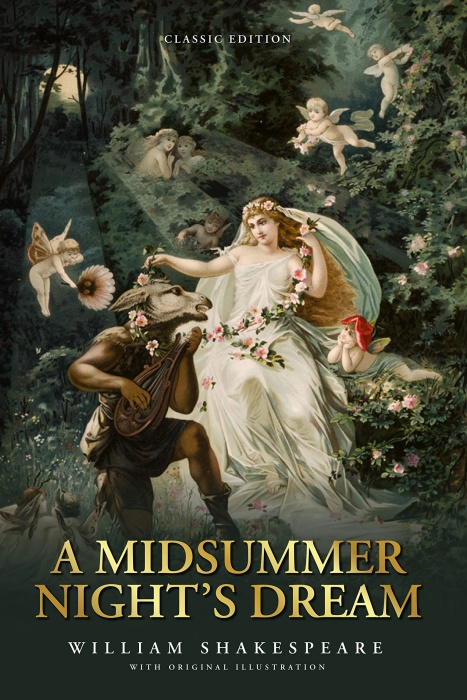
I struck out trying to find an audio version of the collection of Shakespeare’s plays that is found on the bookshelf of classics I am trying to work thorugh, so I have decided to throw one play at a time into the rotation. This time it was “A Midsummer Night’s Dream” (1595 or 96). It is a story of young people with relationship problems who run off into an enchanted wood, and all kinds of weird stuff happens. But it all works out in the end.
I have concluded that Shakespeare’s plays are probably better read from paper pages or watched as a play than consumed via audiobook because it would probably be easier to keep the characters straight. But I got the hang of it after awhile and can now check another box in the cultural enrichments I should probably experience.
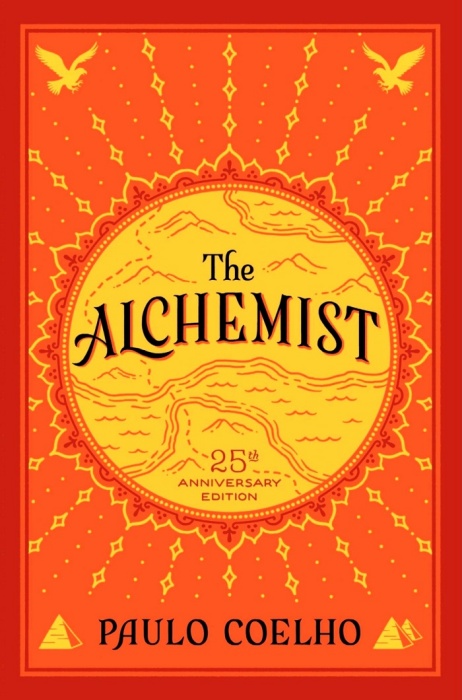
Another source of inspriration for things to read is a list of 100 books that one particular guy thinks I should read before I die. Number 4 on that list was my next selection – “The Alchemist” by the Brazilian author Paulo Coelho (1988). This book was a cultural phenomenon some years back, a strange combination of fable, inspirational text and travel adventure.
An Andalusian shepherd has a dream of finding a treasure. He sells his sheep and goes on the quest, learning along the way that the universe supports those who go off in search of a “personal legend”. Along the way, the shepherd boy meets a biblical figure (Melchizidek, King of Salem), and becomes immersed in Moorish/Arabian culture. The only plot spoiler I will offer is that the lad does, indeed come under the wing of an Alchemist, who encourages the boy’s mystical powers. Although “The Alchemist” was probably more to Oprah Winfrey’s tastes than to mine, the story held my interest.
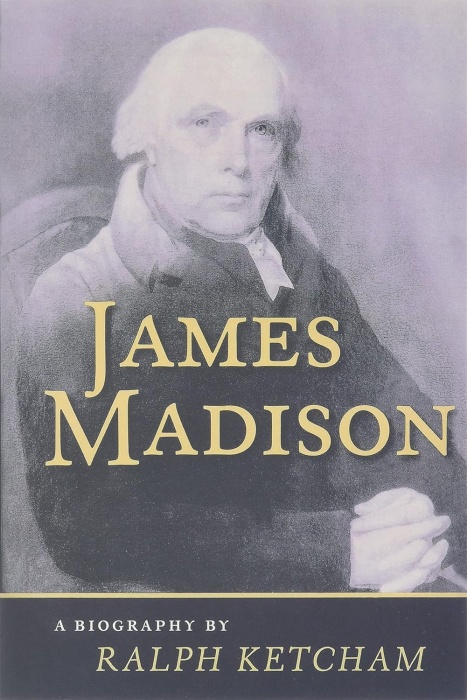
I continued on my own personal quest to read a bio of each of our American Presidents. This time it was “James Madison”, by Ralph Ketcham (1970). I knew going in that this was going to be a slog. Research indicated that there are newer, more readable Madison bios, but that this one remains the cornerstone on its subject. Madison, our 4th President (1809-1817) is best known as the primary author of the U. S. Constitution of 1787, and taking the lead in getting it ratified by the various States.
Madison was the first President (though certainly not the last) whose lifelong career was politics. And it was an interesting arc – from promoting a cause that the country needed a strong executive when pushing for the Constitution to joining Jefferson in railing against executive power during the Adams administration, to exercising plenty of executive power when he needed it in his own term. He was very much allied with Jefferson at the beginnings of partisan politics in America, where their Republicans (1) were pitted against the Federalists.
I could argue that Madison was our first failed president – policies like trade blockades created deep divisions among the States, and it was his lack of leadership in military affairs that led to the British burning the White House in the War of 1812 But it is also true that by the end of his term he had healed many of those divisions and became seen as one of the last of the generation who saw us through the Revolution.
A last point I found interesting is how the northern and southern states were at odds almost from the beginning of the Union, and not all of those differences involved the slavery issue. Madison was another of the southern aristocrats who argued the wrongfulness of slavery as an institution, but who seems to have been unable to muster the courage to do anything about it in his own personal affairs.
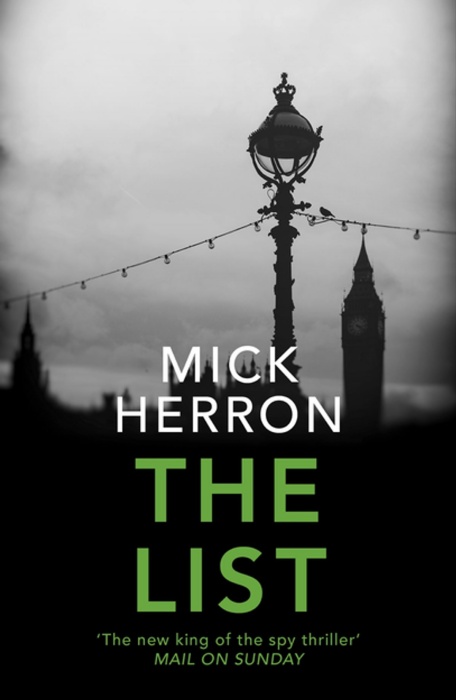
After the long trek through the life and times of James Madison (nearly a 40 hour commitment) I was ready for something light. I returned to the Slough House series of British spy stories by Mick Herron . Next up was an appetizer – a 2-hour novella called “The List” (2015). In it, a lazy handler of retired “assets” is in hot water when he learns that one of his newly deceased responsibilities may have been a double agent. It was a brisk read (listen?) that left me wanting more. So, on to . . .
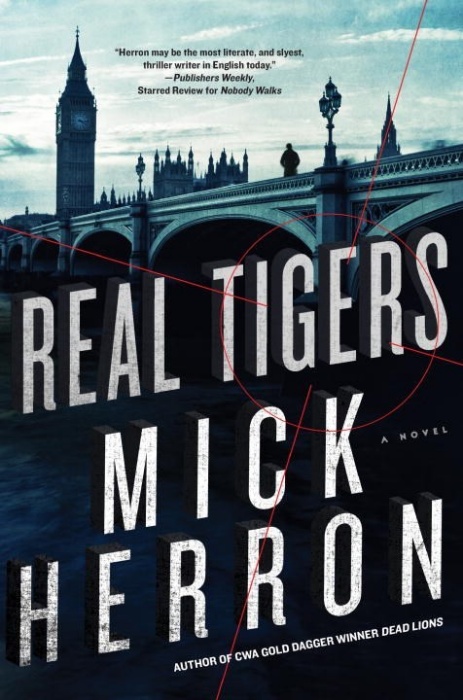
. . . the next Herron full-length entry, called “Real Tigers” (2016). This book took us back to Slough House, the place where London’s spy agency assigns its screw-ups who are, for whatever reason, “inconvenient” to fire. This has become one of my favorite literary series, and Herron’s writing never fails to entertain. Here, one of the sidelined agents (called “slow horses”) is kidnapped and another is caught trying to access official records. Plot twists and unexpected alliances are the order of the day as the slow horses of the agency prove to be better at the spy game than those on the inside of MI-5’s headquarters at Regency Park.
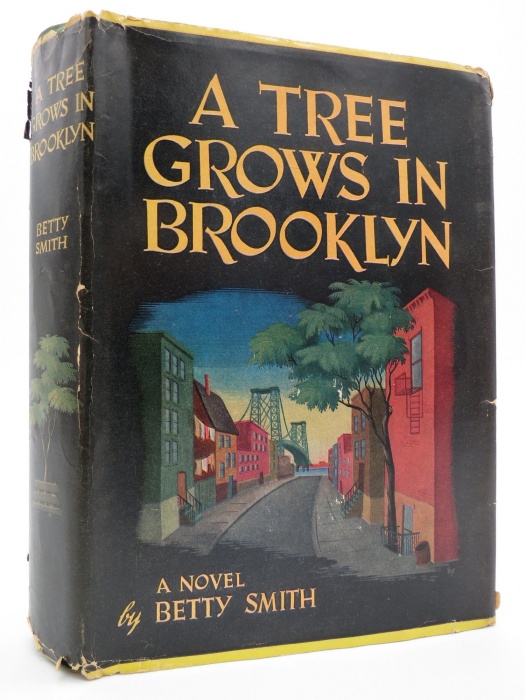
A blogger I follow who writes about classic films recently wrote about the 1945 movie “A Tree Grows In Brooklyn.” I have never seen it, but quickly learned that the 1943 book on which it was based was hugely popular, and decided that I would read the book first. This book, a semi autobiographical coming of age story by author Betty Smith, is a deep look into what life was like for kids in Brooklyn, New York during the first two decades of twentieth century.
I am a sucker for immersion experiences into a world that ceased to exist long before my time. For that matter, the world from this book was gone by the time my own parents were born. It was a world of the working poor in the big city. Family was everything then, even when the family was a mess. But even though the story comes from a world of gas lights and children who collect bits of junk all week to sell to the junkman for a few pennies on Saturday morning, these characters are very much like the people you and I know today.
The book follows Francie Nolan and her younger brother Neelie as they navigate life. Their father, Johnnie, is a lovable Irishman whose drinking gets further and further out of control. Their mother, Katie, is a practical woman with the grit to do what has to be done, even when it involves being a scrubwoman for three tenement houses so that she can live in one of the units rent-free. It was a tight-knit community with more social problems than you can shake a stick at, but one in which the bookish young Francie can thrive and get the education her mother will do anything to promote. Have you ever read a story that makes you wish had run longer than it did just because you love the world where it takes you? This was one of those for me.
This marks the cut-off on my reading for now. Maybe I have identified someone’s beach read for this summer? Although I can guess right now that it will not be that hefty Madison bio.
(1) Biographies of these early Nineteenth Century political figures uniformly refer to Jefferson and his political followers as “Republicans”. These Republicans broke from Washington and John Adams (who came under the label of “Federalists”) and tended to support France over England and be against anything that gave off the faintest whiff of monarchy. This party (sometimes called the Democratic-Republican Party) splintered and disappeared as a political force around 1825. The Republican Party of Jefferson’s and Madison’s day is wholly unrelated to the Republican Party founded as an anti-slavery party in 1852 and which backed Abraham Lincoln in 1860. It is Lincoln’s Republican Party that can trace a line to its modern descendant of the same name.


Plus One for “Devil in a Blue Dress”. Read it when in first came out, it’s the type of “private dick” novel I enjoy as a “palette cleanser”, but Mosley’s deep dive into black Southern California sociology with migrating southern blacks looking for work and a new life in California makes it so much more! A snap-shot of the era! Mosley has multiple books covering this character, but also other series of books with different main characters. Much to read from him, and I suggest checking on-line to read in the correct order, but I have skipped around without being confused. I DO recommend reading at least the first novel of each series before jumping tho…
I laugh when I see “A Tree Grows In Brooklyn”, and always intended to read it, but only because I remember as a kid, watching a cartoon where Bugs Bunny was being chased by a pack of dogs, and he whirls around and shows them a copy of A Tree Grows in Brooklyn, wherein all the dogs stop and the next scene is where they are all running across the Brooklyn Bridge. An inexplicable gag for a kid, and remembered into adulthood; proving the genius of the cartoonists of old!
LikeLiked by 1 person
A Tree Grows In Brooklyn was the most popular novel issued in an Armed Services Edition during the war. It is a really engaging read and well worth your time.
And I am right there with you on Mosley and what makes his writing unique.
LikeLike
Do you know if your ’59 Plymouth still exists?
LikeLiked by 1 person
That is a great question. I sold it to someone in the summer of 1980 and do not recall ever seeing it since. These have gotten reasonably valuable in recent years, but they weren’t then.
LikeLike
You don’t specifically state it but I’m going to assume you saw the Christine the Movie before you read Christine the Book. I experienced them in the opposite order and like most of King’s work, it was the wrong order.
The technical goof I remember is the mention of a “382” engine. I’m not sure if 382 was supposed to be 383 or 392, but neither was correct for a ’58 Fury anyway.
LikeLiked by 1 person
And there were a couple of places that back doors were mentioned in the book – the Fury only came as a 2 door before 1959. I think King also called the transmission a Hydra Matic. Which was a GM thing. Chrysler transmissions were called Torqueflite.
Book or movie first – often an unanswerable question.
LikeLike
For years and years I’ve considered reading A Tree Grows In Brooklyn. I definitely should read it, because I think about Brooklyn pretty often. I was born there in 1947, and lived there till I was almost eight. I have many Brooklyn memories.
LikeLiked by 1 person
If you have memories of the place, I’ll bet you would enjoy it. There are lots of descriptions of specific places which meant nothing to me, but probably would to you.
LikeLiked by 1 person
So glad that you enjoyed A Tree Grows In Brooklyn. It’s been ages since I last read Christine. One of King’s best for sure.
LikeLiked by 1 person
Thanks for suggesting (in a roundabout way) that I do so! Now to watch for the movie.
I need to sample some of King’s other offerings.
LikeLiked by 1 person
Here’s a few recommendations for other King reads.
It
Carrie
1922
Under The Dome
The Shining
Doctor Sleep
11/22/63
Dolores Claiborne
The Outsider
LikeLiked by 1 person
Thanks!
LikeLike
you have inspired me to read a tree grows in brooklyn and to look into the walter mosley books. thanks.
LikeLiked by 1 person
I hope you like them!
LikeLike
I got hooked on Stephen King in the years he really took off (starting with his short story collections), so it would be nostalgic to reread any of his tales. I’m not sure how they’d resonate with me all these years later, but The Shining, Pet Sematary, Christine, and so on were high-quality horror from someone I still consider to be one of the great writers of our lifetime. Maybe I’ll dive into one again and if it doesn’t take, I’ll know I can always give A Tree Grows in Brooklyn a try.
LikeLiked by 1 person
Sometimes revisiting a favorite author is fun. If the writing is any good, it will hold up.
LikeLiked by 1 person
I wonder what “A Tree Grows in Brooklyn” would’ve been like if King wrote it…
LikeLiked by 2 people
Well JP, I am behind the times as I’ve never heard of the movie “Christine” nor have I read the book, but I’m glad your own car had a nicer personality and was better behaved. I’ve never read any books by Stephen King to be honest. For years I listened to the “Mitch Albom Show” which was on WJR AM 760 from 5:00 to 7:00 p.m. weekdays. Mitch Albom and a handful of well-known authors, including Dave Barry, Scott Turow and Stephen King, are in a rock band called “The Rock Bottom Remainders” and occasionally those three authors called into the show after they had a weekend gig. Like “Christine” I have neither read nor watched ““A Tree Grows In Brooklyn.” I am not really an old movie buff – I never seem to have seen the movies you mention. I had to read some Shakespeare plays in college, but not “The Alchenist”. As to reading the classics, I decided since I have enjoyed all of John Steinbeck’s novels in the past, beginning with “The Red Pony” as a youngster, the synopsis for his “Travels with Charley in Search of America” looked interesting, so I ordered the book from Amazon. I just couldn’t get into it, but I’ve kept it – I’ll try again someday. I’ve not read any of the other books you have in today’s post, but I’m happy to report I’ve read 16 books thus far in 2026 and just started “The Widow” by John Grisham today.
LikeLiked by 1 person
You are undoubtedly in better shape than I am, with your frequent walking (where I spend more time than I should sitting, whether reading or watching movies on TV.
It’s been awhile since I read any Grisham and longer for Steinbeck. Both need to be on my list!
LikeLiked by 1 person
JP, I might have agreed about the frequent walking in the past, but our weather woes have kept me inside more than outside the last five or six months, so I’ve read more (and the dog next door is quiet as its owner is on a long medical leave, so its very quiet). I’ve not read a Grisham book since the “Pelican Brief” As to walking, I can’t seem to string more than one or two days together, lately due to wind, rain, storms. We had an EF-1 tornado in our city early Wednesday morning. The city is only five miles square and this was 2 1/2 miles away from me. I was in the basement for almost an hour. I know your state has been getting some severe weather too.
LikeLiked by 1 person
I love Shakespeare’s stories but you’re right about it needing to be presented as a play or read on paper. I think if there were a dramatized reading it might work.
LikeLiked by 1 person
Agreed. The ones I have tried are like plays performed for radio. Those are probably best for those who have read or watched them before.
LikeLiked by 1 person
Interesting list love the noir choices and will read. For me the others are meh. Thanks for the recommendations. 🤣😎🙃
LikeLiked by 1 person
The noir style is what I want to read all the time. The others help me appreciate them more. 🙂
LikeLiked by 1 person
I try to read a classic or biography every year. I rarely like them and most are difficult for me to get through. I did a post in February about this year’s entry. It was impossible. I need a solid story, not mountains of details.
Ps I forgot to add. Christine is wonderful. 🤣😎🙃
LikeLiked by 1 person
I should start reading the books on your reading list. I just finished Strange Sally Diamond by Liz Nugent which was too dark for me. My daughter-in-law from El Salvador just gave me Solito by Javier Zamora, so I am hoping for a better experience. I don’t think I ever read a A Tree Grows in Brooklyn but the movie made a big impact on me.
LikeLiked by 1 person
I know there is a never ending parade of newly published books, but I like to let time do its thing and separate those that stand up and become part of the culture and those that appear with fanfare but quietly slip into oblivion.
LikeLiked by 1 person
Excellent strategy!
LikeLiked by 1 person
Wow JP what a variety you have! I admire your dedication to reading the classics. The only Steven King book I have read was 11/22/63 about a time traveller who goes back to 1963 to try and present the assassination of JFK. It was good but was not targeting his usual creepy horror audience. I tried The Alchemist, which came highly recommended, but could not get into it. Ditto for A Midsummer Night’s Dream – I tried watching the Kenneth Bragath1999 movie but couldn’t keep the plot and characters straight, and mostly only watched as it was filmed in Tuscany. I read A Tree Grows in Brooklyn when I was a teenage as I had my mothers copy – I just checked the basement shelf and it was from 1945 third printing, so she would have been 19. I remember enjoying it but I didn’t have any alcoholic Irish relatives! I also have her 1943 edition of Gone with the Wind, inscribed by a friend for Christmas, as neither could afford the money to see the 1939 movie.
LikeLiked by 1 person
I will confess that The Alchemist was a little difficult for me to figure out. But I suppose reading is supposed to expand my mind – I kept telling myself so I would finish it. 😁
GWTW – there’s another novel made into a famous movie that I have never read.
LikeLiked by 1 person
GWTW was good but I read it when I was young and 12 year old me liked it very much. I remember it as being long, over 1000 pages, and basically a history of the south and the civil war, with a love story mixed in. I hated the ending though, even the author said she didn’t know what happened after? But after a 1000 pages she was just glad to see the end of it! The book was much better than the movie.
LikeLiked by 1 person
A lot of GREAT ones here. A Tree Grows in Brooklyn from from my childhood. Love the Alchemist and recently been listening to Mick Herron and his Slough House series, they’re great. I haven’t been on WP lately, so glad I kept scrolling through and found your book review.
LikeLiked by 1 person
Ah, good to find another Slough House fan! They have become favorites of mine. And I’m glad you found it too!
LikeLiked by 1 person
Absolutely, it was an accident. I was doing a search on the library database for a GOOD audio book. So many duds and THEN found Slough House. What a victory. Happy reading.
LikeLiked by 1 person
I read Christine when it was first published, and then saw the movie when it debuted. That is one case where the movie was an improvement over the book, as the inherent time limitations of a movie forced the writers to pare down the excess from King’s novel. The mistakes regarding the Plymouth jumped out at me as I read the book…those weren’t a problem with the movie.
James Madison is certainly an interesting subject, and his wife, Dolley, is just as fascinating. She was instrumental in shaping the expectations that surround the informal position of what we now call the “First Lady.” Her son from her first marriage – John Payne Todd – was a complete wastrel whose gambling and spending habits depleted the Madison estate and left his mother in dire poverty.
LikeLiked by 1 person
Very true about Mr. Todd. Actually, George Washington had a stepson whose life had a similar trajectory.
I need to see Christine the movie again, now that I have read the book.
LikeLike