
What’s Wrong With The World – Could It Be Efficiency?
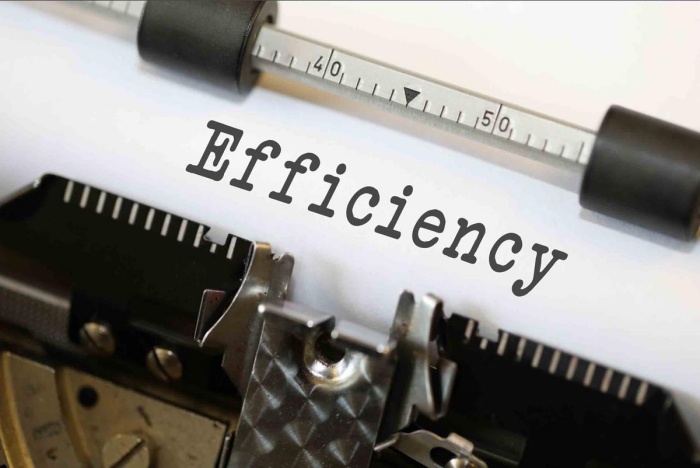
My college major was in the field of economics. And I was good at it – I can recall two of my professors who suggested that I would be a success pursuing the discipline at the post-graduate level. But at the time, I saw that going in that direction would fit me mainly for life as a college professor, and I was not interested in a lifetime of academia. 40-something years on, a cushy life as an academic economist has some appeal, but that ship sailed long ago when I chose law school and a legal career instead.
One of the things that I picked up in my education (and which became an article of faith with me) was that for all of the problems that a mostly-free market economy can cause, those things were usually fixable because the system tends towards efficiency. And it is that efficiency which creates a higher standard of living for everyone.
One of the reasons for that efficiency was the benefit of comparative advantage – where those things are done by those who are best suited for that work. We in the U.S excel in highly advanced fields like the design of microprocessors and complex machinery, while those in, say, Bangladesh (whose labor is worth comparatively little) excel in more basic industries, like the weaving of textiles. We will make the equipment for Lasix surgery and we can buy inexpensive clothing from Bangladesh. This way, everyone is better off. Or in other words, things are produced and distributed more efficiently.
Lately, I have harbored some frightening doubts about this. Including this one: “What if the drive for efficiency, not tempered by equally important concerns, is causing more trouble than it is solving?” Put more basically, is our American economy becoming so efficient that nothing works anymore?
I am at an age where I deal with the medical system more than I used to, and it is pretty clear that our medical system has never been more efficient. Hospital systems have taken over the independent medical offices and manage all of those back-office tasks like billing and record-keeping. The doctors move swiftly from patient to patient and tasks that don’t require an M.D. get delegated to lower-level workers. And, of course, the things that modern medicine can accomplish are amazing.
But have you tried to get a question answered? Different providers require you to log into different electronic portals, and even within the same group not everyone is accessible by the online system. It takes forever to get an appointment, and anything not part of the provider’s process stream is like trying to order meatloaf at a McDonalds (where all the ingredients are there, but it is just not something they choose to offer). Except that you are not going to McClinic, but to a real doctor in a real health system.
My mother spent most of her career as a nurse, including several years at a small family practice. The medical system of 1970 wasn’t particularly efficient, but you got plenty of attention from the doc, who even went to see his patients when they were in the hospital. Go into the hospital today and your regular medical team may as well not exist. The hospital will change your medications and replace your regular caregivers with their own. It is far more efficient, but the quality of YOUR care is far inferior to the old days if you have unusual conditions or needs.
Another favorite example from my own recent life is in warehousing and distribution. The company I drive for contracts with a large manufacturing company. That manufacturer has materials trucked in from local warehouses, which it uses to turn out finished products. I have experience with at least three major distribution groups that seem to have lost the ability to pull pallets of materials from their shelves and load them into trucks. The number of times I have arrived and then waited 3, 4 and even 5 hours to get a trailer loaded is something I have lost count of.
The common thread is that each of these warehouses is woefully understaffed. But they are efficient. They are not employing people who are not working. And they are paying those workers no more than they have to, so finding and keeping workers is a problem. So the system is highly efficient, but is not really very good at doing what it is there to do.
It seems that the modern world of commerce (and even the traditional professions) is built to optimize its ability to cut costs and make money more than it is built to actually do things. The big company doesn’t pay someone to answer a telephone, but you and I have to navigate cumbersome telephone menus that eventually get us to the person we need to speak with. Although getting to speak with someone at all is also a casualty of the modern system, which saves money by contracting customer service functions (if they offer them at all) to workers half a world away who staff chat sessions. Who does not expect that even the chat people will soon be out of jobs once AI chatbots reach the ability to do 80% of the job at 0% of the cost.
The wisdom of our elders has always told us that there can be too much of a good thing. Efficiency is certainly a good thing. But not when it becomes the only thing.
 J. P.'s Blog
Well said. Throughout all of this, I kept noticing your example of when the human element is removed in the name of efficiency, things take a decline. Perhaps not on paper but in actual experience the decline is there as the efficiency so often seems to be one-sided.
There are some tasks in which efficiency is good. A few years ago I talked to a gentleman with the Indiana Department of Transportation. He told me about the trucks driving the interstate loop around Indianapolis, pretreating bridges before winter weather. It was difficult for the driver (there is no room for a passenger) of the tanker truck (an 18 wheeler) to turn all the various spray nozzles on at the beginning and ending of bridges while also trying to drive and navigate traffic. Thus, AI was used to detect GPS coordinates so nozzles could be activated without human involvement.
That sort of efficiency makes sense. It’s also safer for everyone. But that is the exception to the rule, as it’s a very specific task.
My mother is ending her Missouri citizenship since her move to Ohio. The State of Ohio is wanting her to scan some QR code and answer a few questions. She was told this over the phone, by a person. When she pointed out she was on the phone with that person at that moment, and wondered why it could not be addressed then and there. Well, efficiency. But for whom?
I’m hoping this latest development of efficiency is simply a point along the swing of a pendulum and soon it will be realized things need to swing the other way, toward a sweeter spot.
LikeLiked by 1 person
I hope you are right about the pendulum swinging back. But with AI on the horizon, I fear that the pendulum isn’t done with its current direction.
The related thought that has occurred to me is that everyone seems to design things for best-case scenarios. When everything is working as it is supposed to, all is well and we get things done much more cheaply and efficiently than ever. But it is when something goes wrong somewhere in the process – the modern way of doing things simply isn’t equipped to handle it. Like at the supermarket where the only way to avoid long lines is to use the self-serve checkouts. But when half of the stations are down because an employee called in sick and nobody has had time to change the receipt tape, then we get stuck in long lines again (and have to check out our own groceries besides).
LikeLike
“The world has gone to hell with efficiency.” (Noteworthy quotation)
We have all these hi-tech communication devices–yet it’s harder to actually reach somebody. Say what you want about Mr. Potter in It’s a Wonderful Life–at least he picks up his (candlestick) phone and you can talk to him–a bank president!
I suspect auto manufacturers specify higher-than-necessary tire pressures so they can claim their vehicles are more fuel efficient (mostly to satisfy government regulations). So now your car rides hard and the suspension wears faster. All for maybe 1 MPG under certain conditions.
Speaking of the government, remember the Energy Policy Act of 1992 which required that new toilets use no more than 1.6 gallons of water per flush? The new toilets often clogged, requiring several flushes to clear them, thus defeating the whole purpose. Does Congress really have the expertise to design toilets? 🤔 Luckily, more recent toilets that meet the new efficiency standard are supposedly much better–so maybe the 1992 law was a good idea?
How often have you seen once-charming older houses slathered with vinyl siding–and have had original windows replaced with “efficient” new windows which are the wrong size and shape. Yes, it’s ugly–but it’s more fuel efficient, you see. And we don’t have to paint it.
You mentioned A.I. How many pastors these days are using A.I. to write their sermons? Hey, it saves time. And “the pastor has enough work to do.”🙄 Gives new meaning to the term “divine inspiration”!
Did I save time by writing this comment using A.I.? Actually, no. But if I did, would people realize they’re reading artificial slop that isn’t even my own words? I wonder…
LikeLiked by 1 person
Right after I wrote this, I received a shipment of some products that we ordered. The box was poorly packed and some items were damaged and unusable. But the cost was reasonable. Fortunately, there was a human being that answered the phone of the seller. They make the company big and sell the stuff cheap, but they hire order packers who don’t care and management that won’t provide appropriately sized boxes.
Just like your car tire example, when I bought my Charger, they squeaked by the EPA mandated MPG number by eliminating the spare tire (weight) and specifying thinner oil (friction). I’m hoping neither of these things will come back to bite me, but I shouldn’t have to.
LikeLike
There is so much that I agree with in your post. In fact, I read this first thing this morning, and quickly proceeded to dash off a response that turned out to be a little more than half as long as your original article. I decided that was inappropriate (and likely tedious), so I gave that a break and am now coming back with something a lot shorter.
What Jason said. 🙂
Well, to add just a bit more…It seems obvious to me that that human beings are inherently inefficient things. Our moving about the planet in society inevitably results in situations that are naturally chock full of one little inefficiency after another. While that isn’t rationally the best way to extract the maximum economic benefit from our endeavors, it nevertheless provides the psychological grit that delights, irritates, and just keeps things interesting enough to our brains such that we keep on keeping on.
So for example, when I ask a question, I don’t always want the “best” answer (which AI would purport to give me), but I almost always want an interesting answer that not only gives me information but then also leads me to additional thoughts and potentially other actions. Scaled up, this sort of human fumbling around ultimately benefits society and hence the economy as new things are found, developed, and grown almost entirely out of inefficient human happenstance.
Maybe that’s not important to the small handful of humans who increasingly are the primary economic beneficiaries of our economy, but that small handful doesn’t include most of us. And it’s most of us who all of this stuff needs to benefit. Otherwise, what’s the point?
LikeLike
I’ve worked in a business that does NOT rely on efficiency to be carried out correctly. I’ve watched over thirty years of “pencil-necked” efficiency expects and numbers people, try to somehow parse the creative system into a quantifiable methodology, only to have it fail miserably. Some aspects of it are still pushed, especially in smaller markets, in smaller agencies and with smaller clients; but it is rarely successful. They might get some kind of result, but it probably won’t be the best.
Back in the 70’s, when advertising budgets started to be attacked by clients, who decided in their wisdom, to start their own internal departments to “traffic” advertising (i.e. negotiate and place ads in print and broadcast media directly by the company), the “slush” disappeared in ad budgets, and companies trying to get advertising done started to push “fee for service”. Well, how does an agency come up with a tracking system and average times to brain-storm creative? It doesn’t. In the past, a creative director, art director, and copy director; could go out for maybe a week or twos worth of three martini lunches, and come up with “Tony the Tiger”, sketched on the back of a napkin; or maybe not. It might also include time lying in bed at night and thinking about it. There was zero way to put a time efficiency on creating ad campaigns, but they tried to do it, and they’re trying to do it today! It takes whatever amount of time it takes to do it and get it “right”. In the olden days, the ad placement fees and standardized rates generated by agencies who also placed the ads, created a slush fund that paid for the untraceable and untrackable “brain-storming”. Not now…
I read that one of the biggest agencies in the world has been working to scan-in successful advertising from WW2 until today, into their computer systems with AI, to try and automatically generate acceptable advertising at a moments notice from a list of parameters! Who wants any part of that world?
Not everything we do in the world, can be, or should be, parsed down to the same efficiency quotients as a widget manufacturer. Since Gen-X, we are creating a world of non-thinkers.
LikeLike
Watch shows from the 1970s, and there will be regular jokes and barbs about poor customer service and the lousy quality of products. We all know how bad domestic cars were by the late 1970s. I have issues of old Consumer Reports from the 1970s and early 1980s, and list of defects they found in the cars they purchased for testing is nothing short of shocking. The 1979 Dodge St. Regis was so bad that the magazine had to buy a second car to complete the test (the first one broke down completely during the test). These were brand-new cars…
The service people received often wasn’t much better.
Things began improving during the 1980s. Toyota and the other Japanese companies showed that better quality saved money and improved efficiency. The quality of products improved, and companies and even government bureaucracies did try to improve service. I worked for a major telecommunications company in the early 1990s, and it really did try to improve response time to customer inquiries, and make sure that the customer’s complaint was addressed (granted, not always in the way the customer wanted, but then the company couldn’t be expected to give away service, which was really what some customers wanted).
What has happened since about 2010 is that the drive for efficiency through better service has devolved into a drive that is focused solely on cost-cutting. Too many people believe that “low cost” is synonymous with “efficient.”
LikeLike