Charlie Barnet – “The Blackest White Band In America”
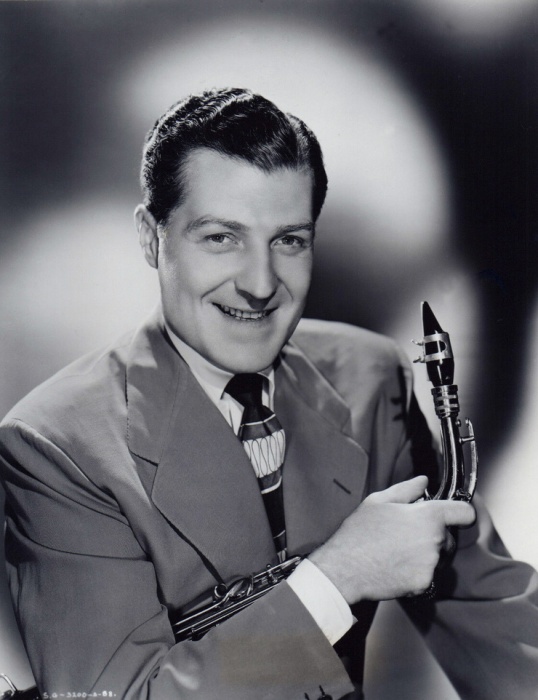
Charlie Barnet led one of those bands that came perilously close to the top tier of the big bands that once ruled music. Whether we measure “top tier” musically or by popularity among fans, Barnet’s band is one of the great stories of “almost”. But maybe this was what happened when a guy led a band because he wanted to and because it was fun. Most other bandleaders had to keep going even when it wasn’t fun, because that was all they could do. Charlie Barnet was the rare guy who got to the place where it was no longer fun and he stopped – because he could afford to.
Charles Daly Barnet was born October 26, 1913 in New York, and his parents divorced two years later. Fortunately for Charlie, his maternal grandfather was Vice President of the New York Central Railroad, in addition to being involved in banking and other businesses. His family would have preferred that young Charlie choose banking or law after being educated in boarding schools, but those were not his thing. Instead, he took up the saxophone and snuck out to see jazz performances every chance he got.
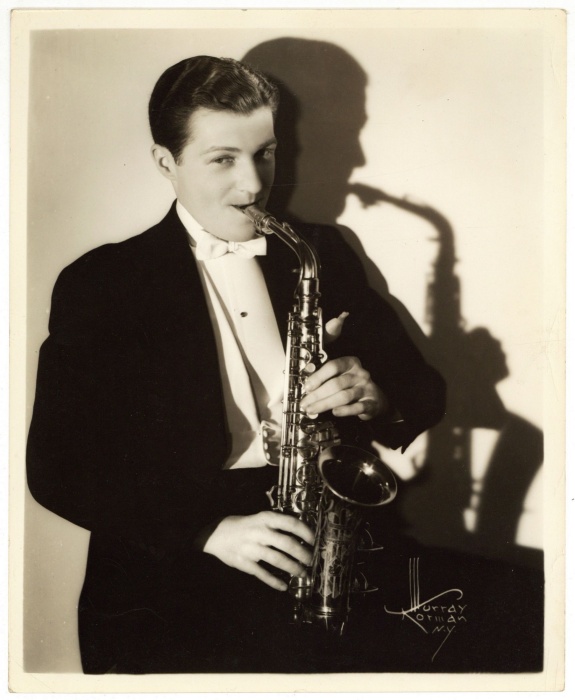
By age 16 he was playing professionally and by 18 he was getting his start as a leader. Like his contemporary Artie Shaw, Barnet didn’t so much lead a band as he led a series of them. And like Shaw, most of what he did before about 1938 didn’t get much traction. In a later interview, he confessed to turning down the song “In The Mood”, which helped catapult Glenn Miller to stardom. “I hated it. I still hate it” was his reason. But starting in 1939 things started to break his way.
In another similarity to Shaw, Charlie Barnet had no interest in being commercially successful if it meant playing music he didn’t want to play. His taste was for swinging instrumentals rather than the soft ballads for slow dancing. Barnet’s was sometimes called “the blackest white band in America”. This was partly because he hired more black players than was common at the time (Lena Horne was one of his first female singers) and partly because his band played in the more rhythmic styles favored among black musicians.
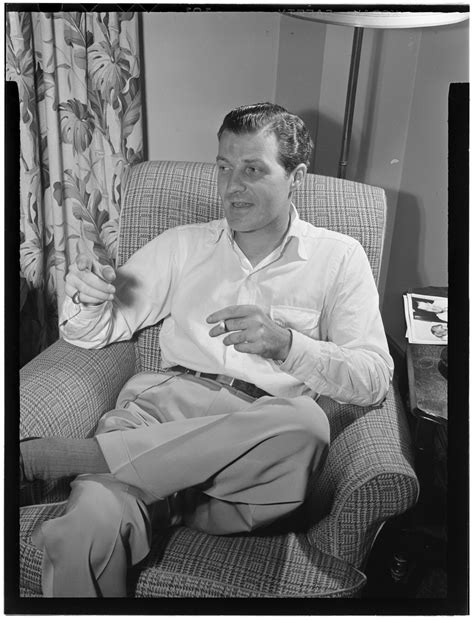
Barnet’s band may have been the only white band of that era to have multiple engagements at Harlem’s famed Apollo Theater. And when Charlie’s band lost all of its music in a 1939 fire at the Palomar Ballroom in Los Angeles, it was Count Basie who offered Barnet his band’s arrangements so that Charlie could perform his next show. It seems that everybody in the jazz world loved Charlie Barnet.
In deciding on a few Barnet performances to share here, I was drawn to his later years. The following three records (from 1943 to 1949) represent three separate bands, and also show how Charlie Barnet was one of those leading the way into adapting bebop influences to a big band. Bebop was a huge force after WWII, and while some bands ignored it altogether and others borrowed bits and pieces, Charlie Barnet incorporated bop into his sound as much of anyone of his (by then) older generation.
“The Moose” is a 1943 recording, a period when the Barnet band was riding at his highest. I find this record interesting because it is sort of a “proto bebop” arrangement. Bebop featured fast solo playing, and 17-year-old piano man Dodo Marmarosa put on a clinic for what an extended fast piano solo should sound like. The bebop style would also be known for short, punchy musical phrases, and those are there too. Nobody would have called this bebop in 1943, but in hindsight, we can see that some of the seeds were beginning to sprout in this band.
You would never know it from this record, but Charlie Barnet was a very good reed player, who could switch from tenor to alto to soprano saxophone, and even clarinet, often within the same song. He was not, however, the kind of leader who had to be the center of attention all the time. If Charlie dug a piece of music, he was happy to play it whether it featured his instrumental skills or not.
The next selection is a clip from a 1948 Twentieth Century Fox Movietone Melodies film, entitled “Charlie Barnet and his Band”. The tune is “East Side, West Side” (also known as “The Sidewalks Of New York”). The song was an old fossil from the 1890’s that was brought right up to date with a full bebop treatment. The vocal is by the largely forgotten Bunny Briggs. Briggs had been a popular tap dancer who started singing with bebop bands in the 1940’s. His vocal is in the style popular with beboppers of the day, and his motions in time with the music look like those I might make when I listen to something like this when nobody is watching.
Those old enough to remember The Tonight Show with Johnny Carson might enjoy watching a 21-year-old Doc Severinsen giving his all to a hot trumpet solo. And we get to hear a bit of Barnet’s full-bodied tenor sax sound, as well as a snippet of his abilities with the uncommon (for the time) soprano sax. (If you can’t get enough of this band, you can watch the number that precedes this one in the film here.)
Barnet broke up his 1947-48 band not long after the above film was made. He was becoming disillusioned with the music business, which he was not finding as fun as he used to. But he gave it one last try, forming what would become his last full-time band in 1949. Stan Kenton’s band had gone dormant and Charlie picked up some of Kenton’s men. Also, he must have taken a liking to Doc Severinsen because Doc was back in this group.
This 1949 Capitol recording of “Charlie’s Other Aunt” was a thoroughly modern arrangement that captured the very last days of the big band as a normal choice in instrumental jazz. Unfortunately, the economics of the band business were dire by this time and slim bookings could not pay the high expenses. Tastes were changing and modern styles were not bringing out the dancers as they had a decade before. When faced with the choice of adapting to chase an audience or quitting, Barnet chose to walk away – at age 36.
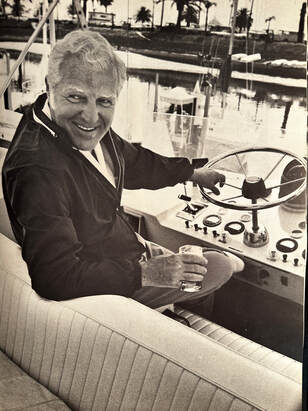
Being one of not very many heirs to his family’s holdings allowed him to live out his days in a comfortable life with the last of his 11 wives (to whom he was married for 33 years) in Palm Springs, California. Barnet would occasionally put together a group for a special occasion, but after the 1960s he was completely done with it. He lived a life of ease, broken up with outings on his 40 foot yacht, until he finally succumbed to Alzheimer’s disease in 1991 at the age of 77.
Charlie Barnet had been one of the wildest of wild musicians, living on a diet of women, liquor and jazz music. His restless ways showed up in his multiple bands and changing styles, and it was a more-or-less mature Barnet who made these records. Coming from money, he had the luxury of playing what he wanted to play and working when he wanted to work. These selections show that he had some pretty good musical instincts, and I am glad that he kept at his music for as long as he did.
 J. P.'s Blog
I agree with you: when a guy’s in it because he wants to be, it’s so much better.
LikeLiked by 1 person
There were musicians who did not relish a constant life on the road. Charlie Barnet was not one of those musicians. I think the constant touring was like a drug for him. He claimed that he was married more than 11 times, though several of them were one-night Mexican affairs that were not actually legal marriages. Once the economics got tough and managing involved more work and less travel, he was ready to be through. I had not realized that he was so young when he quit until I researched this.
LikeLiked by 1 person
I wouldn’t be surprised if it were exactly like a drug to him… and eventually, there was too much harshing his buzz to be worth it. Since he had a stable financial family to fall back on…
It’s usually better for the fans too: the music is still enthusiastic and exciting. There’s not this slow decline of Angry Artist Axe Grinding (The Wall or Final Cut come to mind as examples).
LikeLiked by 1 person
An excellent point!
LikeLiked by 1 person
Not sure if I had heard of Dodo Marmarosa before. But I really like his playing on The Moose.
LikeLiked by 1 person
I love his playing too. He was in a 1945 small group with Artie Shaw that I featured several years ago (https://jpcavanaugh.com/2015/09/18/three-minutes-well-spent/ )
He seems to have suffered from mental instability and couldn’t handle the life of a musician. He played less and less and was (I believe) institutionalized for the last several years of his life.
LikeLiked by 1 person
How nice that Charlie could pursue his passion without worrying about being broke, even if he disappointed the family. That is why he could enjoy being a musician so much. The third photo down of Charlie Barnet (kind of a sepia-toned photo) reminded me a little of a young Dick Van Dyke. “The Moose” recording has some talented fingers tickling the ivories … how fast they are playing, as well as Charlie playing the saxophone. I like how you hear the needle being placed on the record at the beginning, maybe a tiny speck of dust causing the crackle when the needle hits the groove. Sad that some people will never know that noise, having never used vinyl records, unless they hear a video on YouTube.
LikeLiked by 1 person
Yes, that particular YouTube channel always starts its old music bits with that little sound effect of the needle hitting the vinyl record. And I agree that we have to be a certain age for that to be so familiar.
Barnet was a good looking guy, and I can see a little bit of Dick Van Dyke, as you say. Barnet made a couple of half-hearted stabs (early in his career) at getting into the movies, but that didn’t go anywhere. Though I just checked the Internet Movie Database (imdb.com) and see that he was in 11 movies in the 1940’s, all in his capacity as a bandleader.
LikeLiked by 1 person
Oh, I wonder why I never noticed it before, or perhaps I have and remarked on it to you in the past? It seemed quite loud in that first YouTube clip. Just one of the benefits of being a certain age to identify with that noise. That’s too bad a movie career wasn’t fruitful for Barnet but 11 movies as a bandleader should have made his dad proud anyway.
LikeLiked by 1 person
Barnets “early retirement” and somewhat limited discography means that he doesn’t seem to get much airplay on the jazz stations, altho he surfaces fairly often on the “big band” shows I listen to. Walking away at about 1950 means he really didn’t seem to get a toe hold in jazz’s “fabulous fifties and early sixties” (the small combo and individual performers years) before rock really became the focus for the youths. The pinnacle of the era being Bert Sterns documentary “Jazz On A Summers Day” in 1959. I read a story about jazz man Rahsaan Roland Kirk in the February issue of the British jazz magazine “Jazzwise” (he was still hot when I started to listen to jazz in the mid 70’s: blind, and played multiple reed instruments at the same time!), and he only lived until 42, but had a huge discography that goes on for pages! What you’ve posted here seems like Barnet just scratched the surface of what “could’ve been”, but possibly the money made him “not hungry enough” to keep evolving (or maybe it was the eleven wives that wore him out!).
BTW, loved to see Doc Severinsen here, and always amazed that guys I watched on TV were alive, and old enough to play back then! After Carson, one of the things Doc did was have a 13 year stint as the principle “pops” conductor for the Milwaukee Symphony Orchestra until 2007, so he was always in town, but I think he also held the same position for the Minnesota and Phoenix orchestras as well, so it was a concurrent and traveling position. Our news stations always had stories about him and the amount of student seminars he did while in town.
LikeLiked by 1 person
I was completely unfamiliar with that 1949 band. The entire album (Capitol Big Band Sessions) is on YouTube and even the least appealing cuts are, to me, pretty good. And the best ones are really great. I think this band got caught in a hole. When people talk bebop, nobody thinks of Barnet, and when the subject is the big bands from a few years earlier, nobody thinks of this late stuff because it sounds so different.
I came across a review of a performance from maybe 1937, written by jazz writer George T. Simon. The gist of it was that Barnet could have a great band, if only there had been some more discipline and effort. But Barnet ran a never-ending party that was a band some of the time. I have always been kind of so-so on his earlier stuff, but maybe I need to revisit it.
And I agree, the Doc Severinson bit was really cool. He had an amazing career.
LikeLike
Not to very off track here, but while looking Doc Severinsen up, I ran across the story that when Johnny Carson died, David Letterman had Doc, Tommy Newsome, and drummer Ed Shaughnessy from Carsons band, on with full orchestra to play Johnny’s favorite song: “Here’s That Rainy Day”. Can I say…stunning?
https://www.youtube.com/watch?v=BDJ0sNFsSsU&list=RDBDJ0sNFsSsU&start_radio=1
LikeLiked by 1 person
That was great! I really miss comics like Johnny Carson.
LikeLike
I really enjoyed this post which I saved for a leisurely Saturday morning. Thankfully you unforgot Bunny Briggs. Even my unsophisticated musical tastes can appreciate your selections. And who doesn’t like a post with twists like “eleven wives.” You make it difficult and dangerous to just skim your posts, including the comments!
LikeLiked by 1 person
Haha, mucho thanks. Yes, that 11 wives thing was new to me. And how someone married 11 times can flip a switch and stay with the last one for over 30 years, suggests that miracles do indeed happen!
LikeLike
Yeah, I would have given up long before 11!
LikeLiked by 1 person
interesting story. I love to hear about stars you never heard of.
LikeLiked by 1 person
I think this guy qualifies!
LikeLiked by 1 person
Interesting background – but 11 wives? I guess he could afford the alimony. I listened to some Lena Horne today on my walk – It’s All Right by Me.
LikeLiked by 1 person
Every day is a good day for Lena Horne!
LikeLiked by 1 person
If you can pull off anything close to Bunny’s dance-to-the-music moves, even where nobody’s watching (I trust you) that’s even more impressive than the insane pace of the piano solo in “The Moose”! I listened to “In The Mood” just before the Barnet recordings. Indeed, he sure liked things “up-tempo”.
LikeLiked by 1 person
Maybe I look like Bunny only in my own mind. 🥴
I love that piano bit. It combines blazing speed and some adventurous chords with a simple elegance. That is a hard balance to achieve.
LikeLiked by 1 person