Red Norvo And Mildred Bailey – Mr. & Mrs. Swing
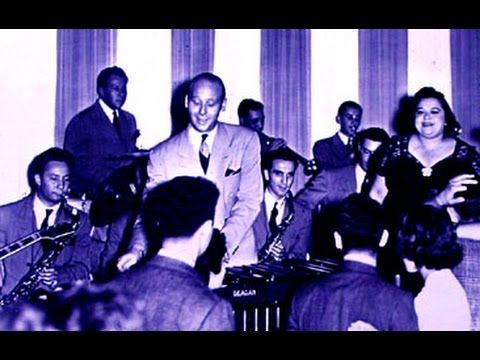
It is a known fact that the life of a jazz musician in the first half of the 20th Century was not fertile soil for marriage. So how unusual was it when two jazz musicians were married to each other and worked each other into their separate careers? For about a decade, vibraphonist Red Norvo and singer Mildred Bailey managed to do exactly that. It is an old cliche that people in love make beautiful music together, but a rare thing when they make actual great music that they shared with the rest of us.
Marriages between movie and television personalities have always been fairly common, but marriages between working musicians have been less so. We looked at one notable exception a few years ago, that of singer Peggy Lee and her guitarist husband Dave Barbour. Today we get to look at another musical couple, Mildred Bailey and Red Norvo. Both of these performers (Mildred in particular) should be better remembered than they are. Unfortunately, this is something that happens all too frequently with the passage of time.
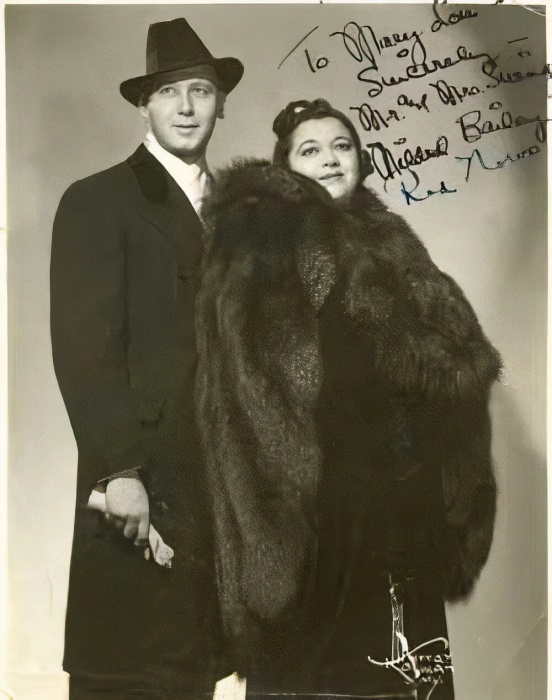
I struggled with how to present the stories of these two artists. Both Bailey and Norvo deserve to be featured on her/his own, but I found their decade or so of work together to be both musically charming and such an unusual story that it deserves a look restricted to just these parts of their careers. There is plenty of material for a deeper look at the broader career of each, so hopefully I can come back to them at some point in the future.
Another compelling reason to feature their work together is that during the course of their decade-long marriage (1933-42), they were often known among their contemporaries as “Mr. & Mrs. Swing.” I should note for younger readers that to swing in the 1930’s was an entirely different thing than the kind of wife-swapping adventures that later came to use the term. Swinging in the 1930’s was all about the rhythm of jazz that differed from the bouncy 1-2 beat of the 20’s. A swing beat was smooth and, while light and understated, was propulsive in a way still makes you tap your foot. We shall demonstrate, but after some brief introductions.
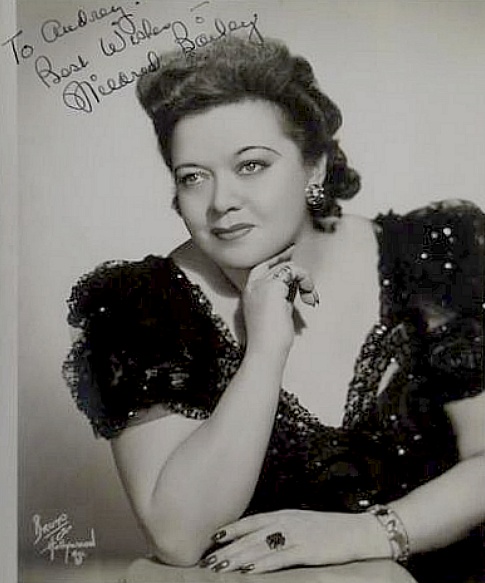
Mildred Bailey has one of the most unusual backstories of any jazz musician I have come across. She was born Mildred Rinker on February 27, 1907 in Tekoa, Washington. Her father was of German origin, and her mother was a member of the Coeur d’Alene tribe of native Americans (and a devout Catholic one, at that). Both of her parents passed a love of music to Mildred, but things took a bad turn when her mother died of tuberculosis and her father re-married. That new marriage had no room for Mildred and she soon moved to Seattle to live with other relatives.
At age 17 she was singing to demonstrate sheet music at a Woolworth’s store. She married and divorced a guy named Bailey and kept the name because she liked it better than Rinker. She got a job singing with a review that took her to California, where she got experience in clubs and speakeasies and spent her off-hours listening to all the Louis Armstrong, Bessie Smith and Ethel Waters records she could. She made enough contacts that she was able to find work for her brother Al Rinker and a friend of his (named Bing Crosby) in California. Those two soon became 2/3 of Paul Whiteman’s “Rhythm Boys”, and they got Mildred hired with that band in 1929 – making her the first female singer to accompany a big jazz band. That was the year she cut her first record (which is surprisingly good) with some members of the Whiteman band, under the leadership of guitarist Eddie Lang.
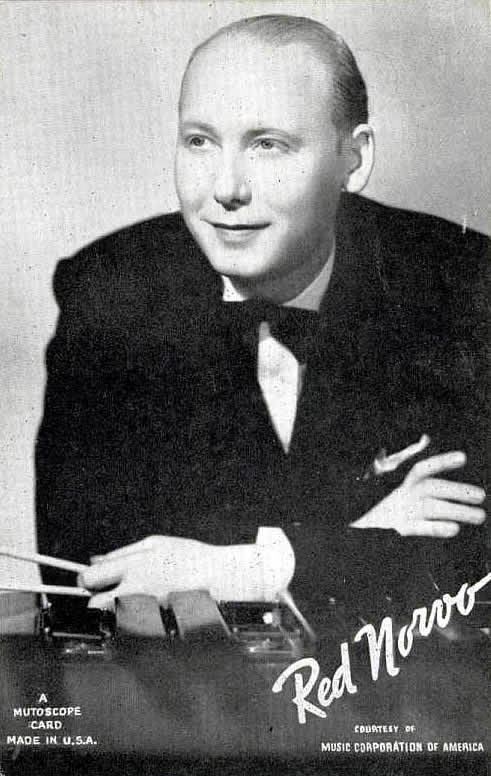
It was when Bailey was singing for Whiteman that she met another band member, xylophone and marimba player Red Norvo. Born Kenneth Norville on March 31, 1908 in Beardstown Illinois, Norvo had started as a piano player, but switched to the xylophone and marimba. His first professional gig was with a Chicago all-marimba band called “The Collegians” in 1925. He played xylophone with a couple of other bands, then enrolled at the University of Missouri to study mining engineering. That didn’t last, and in the early 1930’s he got hired by Whiteman.
After a couple of attempts to get a small group off the ground in 1934-35, Norvo formed a big band patterned more-or-less on that of Benny Goodman, who had popularized swing music for white audiences. Norvo’s idea for how a big band should sound, however, was different.
Take this track from October, 1936, called “It Can Happen To You”. This is a great example of the unique sound Norvo got from his group. It was subtle and relaxed, but at the same time had a swing rhythm as strong as any of the louder and more powerful bands that were in vogue.
Red’s marimba (a little lower in range and more mellow than a xylophone) provides a great background as Mrs. Swing takes the lyrics. Then Mr. Swing takes a couple of more solos after the Mrs. finishes. And speaking of Mildred, what is it that defines “a jazz singer”? I don’t think there is a good definition, but just from listening you can hear how she rolls with that swinging rhythm and how she takes small liberties with both the beat and with the melody as she goes through the lyrics.
Those vocal jazz traits show up better in this up-tempo record from January 8, 1937. “Slumming On Park Avenue” is a lesser known Irving Berlin tune and another great matching of Red’s relaxed band and Mildred’s ability to match it with her lyric delivery. There were a few other women who could swing a lyric like Mildred in 1936-37, but they were younger and had not come out of the musical tradition of the 1920’s like she had.
And as for the band, well I will wager a fiver that you cannot listen to that record all the way through without moving some part of your body to the music. Start to finish, Norvo and the rest exhibit a rhythmic pulse that swings both easy and completely.
Here is something that sets Mr. & Mrs. Swing apart from almost everyone else of their (or any other) era. We have featured a couple of records of Norvo’s band where Bailey gets vocal credit, but there are also several records credited to “Mildred Bailey and her Orchestra”. Though it wasn’t always the case, on a good number of those records “Bailey’s” band was actually Norvo’s. Like this one, a ballad recorded March 23, 1937 called “Never In A Million Years”.
I find Bailey’s voice fascinating – there is almost a little girl’s quality to it. That sound, along with the tight vibrato and the perfect diction is a combination found in nobody else I can think of. And note that on records under Mildred’s name, there is more singing and less band – as it should be. But unlike with some singers, she leaves some room for Red to have some solo time too.
I usually like to stop at three selections in an attempt to avoid either boring you or drawing you too deeply into my latest rabbit hole. But I think that Mildred deserves equal time with Red. And also because I like this record so much. Really, I had trouble paring these selections down to four and could have easily chosen several others. Anyway, here is another of Mildred in front of Red’s band. “I Go For That” is the latest of this bunch, dating to December 8, 1938. This is another mid-tempo piece that shows just why this musical couple was called Mr. and Mrs. Swing.
Norvo broke this band up in 1939, but both he and Bailey worked regularly, both separately and together. Sadly, their marriage ended in 1942. They had been opposites in many ways, with Norvo being quiet and reserved while Bailey was loud and the life of any party. Her losing struggle to keep her weight under control, her difficult temperament and bouts of drinking are often blamed on the scars of her childhood. But as we know, these things are unknowable to all but a few who were close to them all those decades ago.
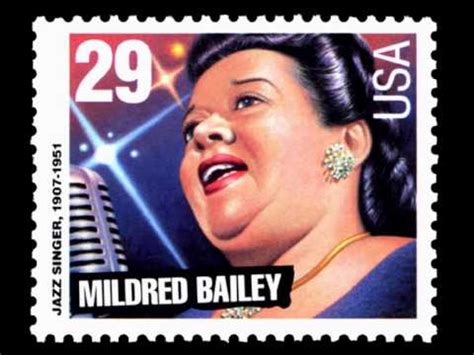
Mildred Bailey suffered from diabetes and was hospitalized multiple times in the 1940’s, and finally died December 12,1951 at only the age of only 44. It has been reported that Bing Crosby underwrote many of Bailey’s medical bills towards the end of her life, so it is clear that he felt a debt to her for her help at the start of his career. Also, she and Norvo remained friends after their divorce, and continued to perform together from time to time. (Like on this V-Disc from 1945, for those of you who have not yet been musically satisfied.) She was eventually recognized by the U.S. Postal Service as deserving her own commemorative stamp.
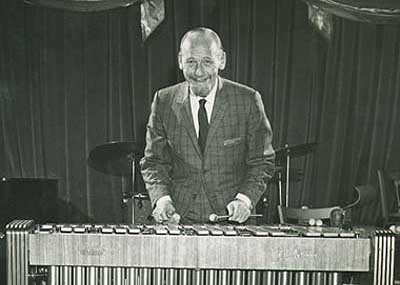
Red Norvo became far better known in his later years than he ever had been in the 1930’s. He switched to the vibraphone in the 40’s and played for a time with the Benny Goodman band before leading a long series of small groups until a stroke forced his retirement in the mid 1980’s. One note of trivia – you may have seen Red Norvo perform and didn’t know it. It was his quartet that backed a Dean Martin musical number (“Ain’t That A Kick In The Head”) in the 1960 Rat Pack film “Oceans Eleven” (clip here). Norvo finally died at the age of 91 on April 6, 1999.
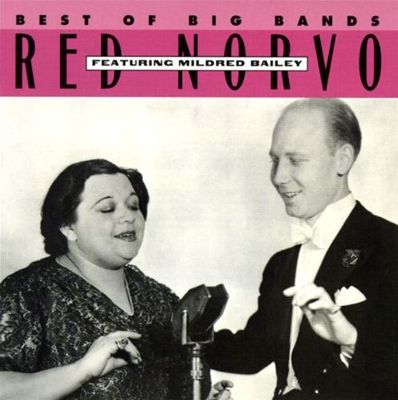
But in the 1930’s, both Bailey and Norvo were forces to be reckoned with in the world of jazz, even though neither got the widespread fame or acceptance they each deserved. That both of these under-appreciated giants made their music together was an extra bonus for those of us who are willing to take the time to listen to them today. They are worth it!
 J. P.'s Blog
Terrific essay. I know of these two musicians, but never heard much of their music. And I didn’t know they were married. It’s sad that Mildred made it only to age 44.
LikeLiked by 1 person
Thanks! I was the same way – I had heard of them (more Norvo than Bailey) but their work together in the 30’s is a fairly recent discovery for me. And I am never happier than when I am digging away in some obscure musical tunnel that is new to me. 🙂
I think Mildred Bailey compares relatively well with Billie Holiday during this era of the mid 1930’s, especially when we consider that Bailey was 8 years older – a long time in musical styles and trends.
LikeLiked by 1 person
All new to me. I really enjoyed it and it helped me goof off and relax this Friday morning.
LikeLiked by 1 person
My work here is done! I’m glad you liked it. I have been spinning these for several days and have not gotten tired of them yet.
LikeLiked by 1 person
I am impressed how good the music sounds from an era where technology was more primitive than it is today,
LikeLiked by 1 person
By the mid 30s, sound recording had come a long way, and modern tech can extract a lot of sound from those old sources.
LikeLiked by 1 person
I’m not a huge jazz guy, but I enjoy reading these write ups; unsurprisingly, I’d never heard of these two.
LikeLiked by 1 person
I’m glad you find something interesting in these. I only got significant exposure to them a few years ago. I love that even after decades of listening to music from this era, there are still new discoveries to be made.
LikeLiked by 1 person
With anything — but maybe especially with music — you can gain an appreciation for something you don’t really like by listening to what other people like about it.
Rick Beato’s series on YouTube “What Makes This Song Great” was really interesting for this reason.
What’s possibly more sad to think about is there were probably hundreds of really talented musicians in the era whose work never got cut, and are lost forever.
LikeLiked by 1 person
This is very true!
LikeLiked by 1 person
Plus one for Rick Beato!
LikeLiked by 1 person
That’s sad about Mildred’s youth and feeling unwanted as sadly it tainted the rest of her days and finding true happiness, but at least she and Red made good music together which you showed us here in this post. You are right, “Slumming on Park Avenue” did make me want to do a little toe tapping. 🙂
LikeLiked by 1 person
I knew it! And I agree, there was a lot of tragedy in her story. I wonder if she might have had more success if she had been blessed with a trimmer figure, something that was common for female singers in the days when big bands were fussy about their appearance.
LikeLiked by 2 people
Her weight might have been complicated by her genetic background, native Indians being prone to diabetes as well.
LikeLiked by 1 person
Yes, what was the line … “it’s got a catchy tune, I’d give it a _____.” I’m sure her weight had something to do with her success – she reminded me a little of Kate Smith in her appearance.
LikeLiked by 1 person
Excellent entry this week, and I have to admit, I’ve heard far more Red Norvo than Mildred Bailey, and never knew they were married. Excellent stamp of her as well; I have some of those post office jazz stamps laying around here and some of the documentation from the series, and possibly even a CD they did to support it; it was a nice series for the sometimes bland post office offerings. Interesting that you “hit” on writing on this married couple in the music business, because I’ve been doing a deep dive on Lani Hall, from the Sergio Mendes band, and her husband Herb Alpert, from the Tijuana Brass and A+M Records. Lani has always been a favorite of mine, and in the early Brazil 66 vids on Youtube, she looks every bit the 19 year old Chicago “neighborhood” girl, discovered and grabbed by Sergio. The jazz and music “couple” thing might be a great entry for future columns!
LikeLiked by 1 person
Thanks, both the angles of jazz stamps and other married couples are interesting ideas. I have not known anything about Lani Hall or that she was married to Alpert. Both he and Sergio Mendez put out stuff I should listen to more.
LikeLike
I liked It Can Happen to You, both vocals and music. Interesting backgrounds, but I find her voice thin and lacking in volume.
LikeLiked by 1 person
I think we have all become used to sounds and styles from after WWII. Those early singers can be an acquired taste, that’s for sure.
LikeLiked by 1 person
Maybe it was that her voice should have been louder on the recording, but maybe they didn’t want to to overpower the instruments. I saw part of the Olympics opening ceremony, and Mariah Carey just murdered the Volare song….way too slow and not loud enough. I love that song when it’s sung by Dean Martin.
LikeLiked by 1 person
I found a new Canadian jazz singer, Barbra Lica, whose distinct voice reminded me of Beverly Kenney. I was watching a Carol Sing on TV on Christmas Eve, and she was singing this song with a jazz group in a church. “On Christmas Eve.” https://www.youtube.com/watch?v=9e2V_tL-NqU&list=RD9e2V_tL-NqU&start_radio=1 She’s not very well known here, after a promising start. I think there are lots of people with good voices who only hit the spotlight briefly or not at all.
LikeLiked by 1 person
I’ll have to investigate!
LikeLiked by 1 person
She has a Wikipedia page but there’s not much on it after 2017, and her own website with small venues…
LikeLiked by 1 person
https://barbralicamusic.com/ here’s her website. I had never heard of her.
LikeLiked by 1 person
Beverly Kenney was completely unknown to me until I read a story about her in the British jazz magazine Jazz Wise about a year ago. Died at 28 years old! Well known in Japan as well, of course, where high quality jazz discs are issued like popcorn!
LikeLiked by 1 person
She is a fairly recent discovery to me too. I wrote about her a few years ago. https://jpcavanaugh.com/2022/02/04/beverly-kenney-the-short-but-melodic-life-of-the-lincoln-singer/
LikeLike
Grumble, it looks like my music links have gone bad and I will have to fix them.
LikeLike
Listened to a little bit of Barbra Lica, interesting, but she has an uphill battle in that she sounds a lot like Kat Edmonson. What she has going for her is that she writes many of her songs, and I’m on record saying the world doesn’t need another jazz chanteuse singing the standards everyones been singing ad infinitum, so plus one for Lica.
Of course, when it comes to Beverly Kenney, there was your own coverage a while back as well. A lost soul.
LikeLiked by 1 person
JP, can you expect your review of “Bad Bunny” next week? I don’t even know who he is, and don’t watch the Super Bowl anyway…
LikeLiked by 1 person
I am afraid I know nothing about Bad Bunny either. I’m sure I’ll be in bed asleep when the halftime show starts.
LikeLiked by 1 person
I was going to make the same comment about Bailey’s voice before you beat me to it. Just listening to her sing wouldn’t have me picturing the woman behind the voice. Also, having played the piano myself I find it interesting a pianist would choose to move on to hammered instruments. It’s almost like a table tennis player switching to tennis!
LikeLiked by 1 person
Yes, there are lots of little things to be intrigued about here.
LikeLiked by 1 person
Very interesting. Another couple I’ve never heard of until now. They have a nice swing. 🤣😎🙃
LikeLiked by 1 person
They do indeed!
LikeLiked by 1 person
JP I think you’ll like this radio program “Hot Jazz Saturday Night”:
https://wamu.org/show/hot-jazz-saturday-night/
A treasure of my home town!
LikeLiked by 1 person
Oooh, there goes my spare time! Thanks for this.
LikeLike
Pingback: The Incredible Jazz Guitar Of George Van Eps | J. P.'s Blog