JP’s Book Report – Winter 2026 Edition

Time flies – I have not shared my latest audiobook update since mid September. Well, I guess today is the day. Have I ever mentioned that I hate the word “eclectic”? But as usual, I’m not sure how else to describe my reading (ok, listening) choices.
For newer followers, I switched careers late in my working life and now drive for a living. I cannot seem to find time for ink-on-paper books, but audiobook versions while I drive is (as we say in Indiana) a whole ‘nuther thing. So, here they are in order of completion.

“Dark Sacred Night”, Michael Connelly (2018). This is the 21st novel in Connelly’s “Bosch” series, and the inspiration for a series of the same name on Amazon’s Prime platform. I had previously read and enjoyed the initial installment and thought I was going for the follow-up. But there are several confusing sub-series’, and because I was out of credits on Audible and perusing my local library app, here we are.
Harry Bosch is a no-nonsense Los Angeles police detective, whose Vietnam war service left him jaded long before going into his LAPD career. This novel picks up with Bosch retired and working for a small city police department, and introduces Rene Ballard (who is also the subject of a television spin-off on Prime) who reluctantly works herself into the older detective’s orbit as they work a murder and an unsolved heist that turn out to be related. Now two books into this long series. I am a fan of the neo-noir atmosphere of detectives who have to buck the system in order to close cases.
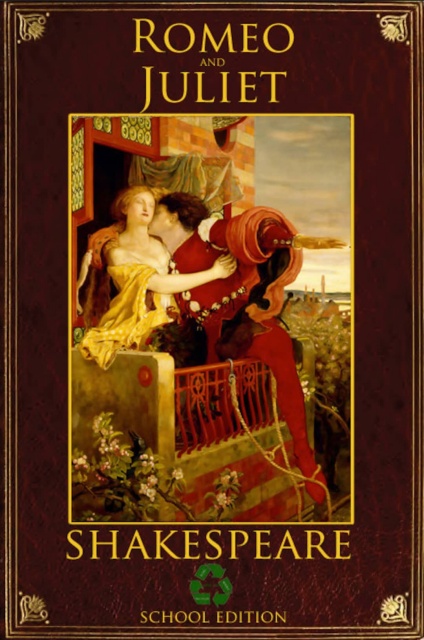
“Romeo And Juliet”, William Shakespeare (c. 1597). After a popcorn detective novel, I forced myself back to my “shelf of classics”. For personal improvement, of course. “Selected Plays” by Shakespeare was the hardcover that was next in line. And which, of course, is not available in audio. But the individual plays are. R&J was the first one in my book and thus my first go here. You know the story. Their families hate each other, they fall in love, and both die because of poor communication. There, I saved you three hours.
OK, here is the problem. I am not a Shakespeare guy and was looking for an introduction. But each of the three audio versions I tried were difficult to follow in the noisy environment of a truck (for a guy whose hearing probably isn’t as sharp as it once was). These people are not reading text, but were doing their best Shakespearian acting. (Or Awk-Ting!). In their best Elizabethan English, through laughing, sobbing, yelling and whispering. Being plays, of course, I cannot blame these sources for being “dramatic productions” rather than an audio version of a written play. I got through it (with the aid of a new open-ear headset) and maybe if I had read it in ink-on-paper first, I might have gotten more out of the BBC-produced version I got through.
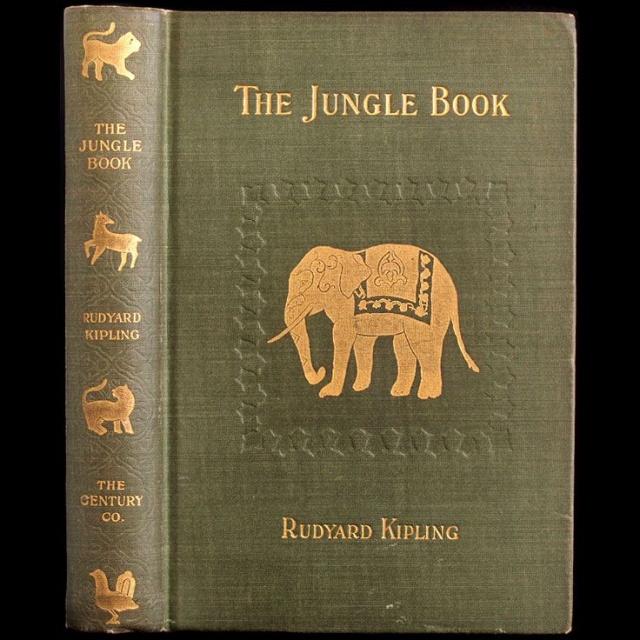
“The Jungle Book”, Rudyard Kipling (1894). I have always been curious about this one from the time I saw the Disney adaptation as a kid. The first three stories from the book were familiar from the 1967 animated film, but the other four were not. Although Riki Tiki Tavi, about a mongoose who keeps a family’s home free of snakes, was a story I remembered from grade school
All of the stories involve animals who live by the laws of the jungle and who strive to demonstrate the kinds of virtues celebrated by British society around the turn of the last century. Which are virtues that were also celebrated here in the U.S. until not so many years ago. Frankly, we could do a lot worse than to rediscover some of them. “The Jungle Book” is one old classic I wish I had read to my children when they were young.
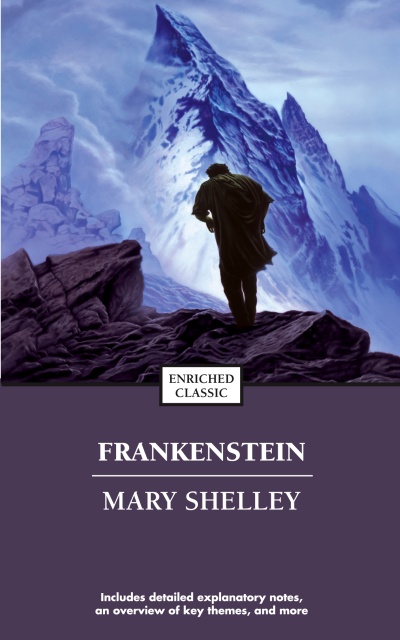
“Frankenstein”, Mary Shelly (1818). I was looking for a seasonal book as Halloween approached, and thought of this one. Frankly, I found it maddening. Everyone knows the basics- Dr. Frankenstein sparks life into a form stitched together from parts, and soon regrets it. As I think about it, this could be the story of the people who invented the internet. But I digress.
I have a theory that authors of one sex struggle to create realistic characters of the other. The Doctor seems to have been Ms. Shelly’s idea of a male. He talks and talks and talks about the horror of his murderous monster, but never actually DOES anything about it until it is far, far too late. Yes, by all means, leave your bride alone in her room early on your wedding night after the monster has told you he will kill her. Spending that time elsewhere in the house and in anguish over what to do about your rogue creation rather than protecting your bride is the kind of thing that makes this male reader yell back at the the speaker emanating from my phone. You can tell that men wrote the screenplay for the 1931 film adaptation because there is at least a mob with torches and pitchforks. Which may or may not have succeeded in killing the monster, but it was more effective than merely talking about it.
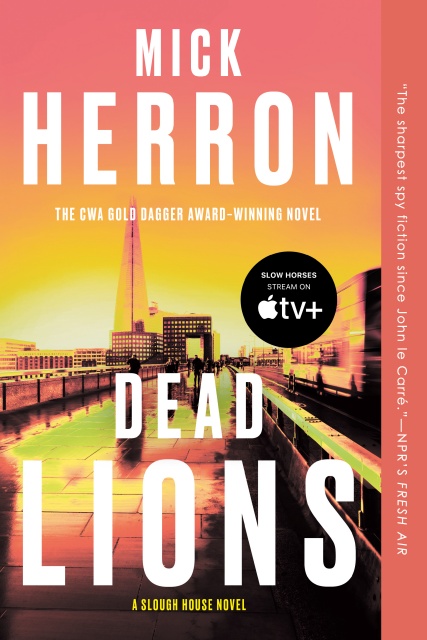
“Dead Lions”, Mick Herron (2013). This was the follow up to the author’s prior novel, “Slow Horses”. The plot involves mostly the same group of men and women that Britain’s MI-5 has (rightly or wrongly) branded as misfits or screwups. In this tale, a too-clever “real” agent tries to use the “slow horses” as pawns in a plan to burnish his credentials with his higher-ups. But the slow horses have skills that go beyond the kind of political hackery that seems to rule in official circles. Like when one notices that the death of an old cold-war spy on a bus was not the accident it was intended to look like.
I am really loving this series and look forward to several more books. As in his prior book, Herron creates colorful characters which he writes with the kind of English wit that occasionally makes me burst out laughing.
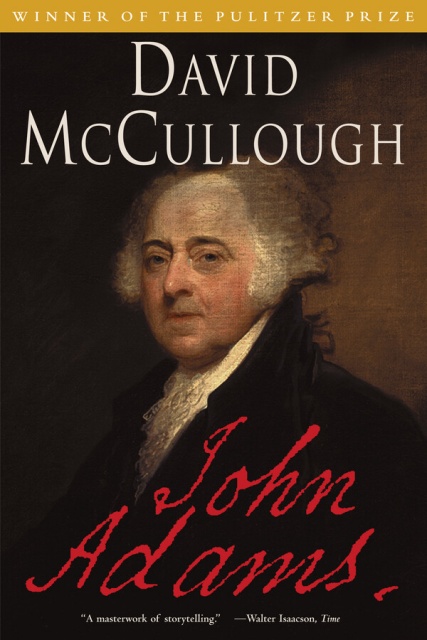
“John Adams”, David McCollough (2001). This long (19 hour) bio, winner of the Pulitzer Prize in 2002, is the second in my new quest to read a bio on each American President in order of their terms. John Adams was, of course, our second U.S. President, and the first to serve only a single term. He began as a farmer and lawyer in Massachusetts and became one of the most consequential of the original band of patriots. If Thomas Jefferson was the one who wrote the Declaration of Independence from Great Britain, it was Adams who was more responsible than anyone for getting it passed in the Continental Congress.
I came away from this book with a much higher appreciation for Adams than I had possessed going in. Adams could be prickly at times, but he carried all of the old New England virtues that are associated with that people – thrift, modesty, industry and stubbornness. Adams was principled, to the point of defending British soldiers in court after they had been charged with crimes during the Boston Massacre.
As President, Adams tried to preserve what George Washington had started, but without the benefit of a Vice President who supported him. In that era, the VP was the one who got the 2nd highest vote total in the Presidential election. Thomas Jefferson, who disagreed with Adams on almost everything, became Adams’ VP. I look forward to a good bio of Jefferson, because this book lowered my respect for him and I will await another biographer to present his case.

“The Big Nowhere”, James Ellroy (1988). I am clearly in a streak of sequels or book series’ and this is another – the second of Ellroy’s “L.A. Quartet” of neo-noir stories set in Los Angeles in the years following WWII. The two main threads of this story set in 1950 are a L.A. County Sheriff’s detective who is trying to solve what looks to him like a series of murders and a politically ambitious prosecutor who is pushing a grand jury investigation into communist influence in the movie industry. As you might imagine, the two threads eventually come together.
I liked this book better than the first installment (“The Black Dahlia”). For one thing, “The Big Nowhere” is pure fiction and not based on a real unsolved case, so the ending is more satisfying. This one is also less salacious, although a story about the dirty underbelly of 1950-L.A. cannot avoid that sort of thing altogether. I will confess that I read this mostly to set myself up for reading the third in this series, L. A. Confidential (which was the source material for a favorite movie of mine). Hopefully I will get to that one in the next few months.

“Monkee Business”, Eric Lefkowitz (2024). I touched on this one a couple of weeks ago when I wrote about the band and television show called The Monkees. All I will add here was that it was a thoroughly entertaining read, both well researched and well told. If you have any interest in pop culture of the 1960’s, I highly recommend it.
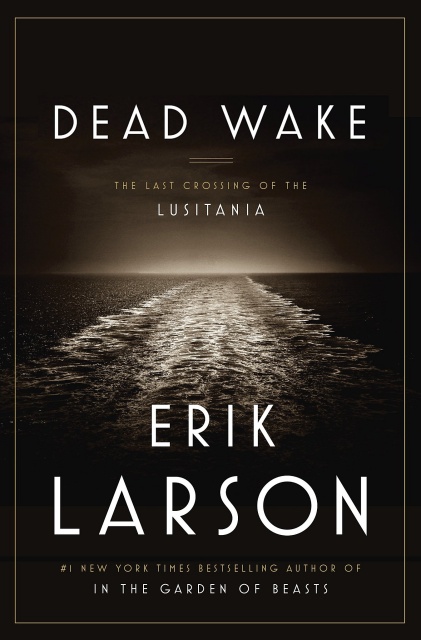
“Dead Wake, The Last Crossing of the Lusitania”, Erik Larson (2015). A little over a year ago I reported on an earlier Larson title, “The Devil In The White City”. In this volume, Larson proves that his ability to write non-fiction with the presentation of a natural story-teller was no fluke.
The RMS Lusitania was a modern marvel when it was launched by the Cunard Line in 1902, a decade before the White Star Line’s Titanic. It was the first passenger liner powered by steam turbine engines. The steam for those four turbines was generated through twenty-four boilers, and the ship could sustain a cruising speed of 25 knots, a speed that got the ship nicknamed as a greyhound of the ocean. It was believed that the ship’s speed would be a protection against early German U-Boats that had begun to patrol the north Atlantic and sink ships after the outset of WWI. On the afternoon of May 7, 1915, a single torpedo from the U-20 caused the Lusitania to sink about 10 miles off the southern coast of Ireland in 18 minutes. Out of the 1,960 passengers and crew aboard, 1,187 lost their lives in one of the greatest tragedies of the 20th Century.
Larson’s book follows the intersecting stories of the ship itself and of the German U-boats in general (and U-20 in particular). The tale also takes us into the outbreak of WWI and inside the British Admiralty and German military authorities, as well as into the Wilson Administration as it desperately attempted to keep the U.S. as a neutral country. The result is that multiple things had to go wrong for a single torpedo to sink a ship with the Lusitania’s size and capabilities – and all of them did. It is a fascinating telling of a tragic story.
There you have it, a little something for almost everyone. Now to get to work on some more books for the next installment, which will come along in, well, I have no idea.
 J. P.'s Blog
I read Frankenstein two or three years ago. Liked it pretty well. But I thought it’s way too long. The same types of contemplations and events keep happening over and over. Have you seen the new Frankenstein movie? I haven’t, but maybe will. It’s on Netflix.
LikeLiked by 1 person
We did see it, and it follows the book more closely. Though neither seemed to explain the superhuman abilities of a being composed of human parts. It’s worth a watch, especially if you have read the book and are not looking for a remake of the Boris Karloff movie.
LikeLiked by 1 person
For some reason “Riki Tiki Tavi” had me thinking of the catchy song (by Donovan, 1970), which maybe I knew in my childhood but it’s not familiar now. More to the point, I didn’t know RTT was a Rudyard Kipling character, let alone a mongoose. I’m guessing Donovan’s interpretation is the same as Kipling’s – more than meets the eye. I’m not really a fan of the classics or neo-noir, but “Dead Wake” certainly got my attention. Larson’s “The Devil in the White City” was a fascinating, well-researched story. (Helps that my college degree was in architecture). Thanks for the recommendations!
LikeLiked by 1 person
Happy to oblige! Dead Wake may have been my overall favorite of the bunch as a really engaging non-fiction work.
LikeLiked by 1 person
Wow, you triggered a memory of my Mother reading installments The Jungle Book to my brother and me before bedtime back in the mid 1950’s. Riki Tiki Tavi is the strongest memory. I really enjoyed the The Devil in the White City, so I guess I need to learn a little more about the Lusitania now!
LikeLiked by 1 person
I think you will like Dead Wake. And in a way, there’s even a serial killer involved (though it’s a U-boat).
LikeLiked by 1 person
A good list in which I have read none of them. At least I know the story of a few of them and your ability to successfully listen to Shakespeare while driving a truck is nothing short of remarkable.
My latest (completed) read was “How To Test Negative For Stupid” by Senator John Kennedy. It’s not political so much as a memoir of his journey through life and he has a very good story to tell.
LikeLiked by 1 person
That Kennedy memoir sounds interesting, he is certainly good at entertaining sound bites. I only wish he didn’t sound exactly like Mr. Haney on the old Green Acres tv show.
LikeLike
This is quite a diverse collection of books JP; kudos to you for getting so many books read/listened to. I read “Romeo and Juliet” in college when I had to take a Shakespeare class and I know I saw “The Jungle Book” as a Disney movie, but also, I remember reading the book. I do remember the character of Riki Tiki Tavi from all those years ago.
LikeLiked by 1 person
I am finding myself getting more into series’ and sequels, and therefore need to branch out in some new directions.
LikeLiked by 1 person
A great Winter’s collection. The David McCullough John Adams book has been in my Audible library for some time although I haven’t yet listened to it. It was the basis for the HBO series from 2008, which I did watch and very much enjoyed. I should really listen to the book though as I love McCullough’s voice.
Your selection of The Jungle Book raises for me what has always been a fascination with how Disney chose to mine the IP upon which most of its famous animated features are based. Nearly all of those films – The Jungle Book, Bambi, Winnie the Pooh, Alice in Wonderland to name a few – were based on novels and story collections that went far beyond what Disney chose to build the film around; and what’s notable (Bambi in particular, but I think The Jungle Book too) is that the books in their original forms went well beyond something that you’d think would make a good kids’ movie. I don’t know enough to have any historical insight into their process, but it’s kind of fascinating. The 2013 Tom Hanks film Saving Mr. Banks touches upon this subject a bit in relation to Mary Poppins (which admittedly is much more child-friendly than Bambi).
I love that Erik Larson book, and will read/listen to anything that he writes.
LikeLiked by 1 person
All really good points. I think Disney was a genius at telling stories and understanding how to cut from or pad source material when either would make for a better story.
I highly recommend the Adams book!
LikeLike
Bosch is great, also the Lincoln Lawyer novels–hes Bosch’s step brother.
My dad recently turned me on to the Lucas Davenport novels by John Sandford. HIGHLY recommend.
LikeLiked by 1 person
Thanks for the tips, I will have to give them a try!
LikeLike
Never read Romeo and Juliet, but you couldn’t get out of high school English lit without reading something by Shakespeare. I went to an all boys trade and tech high school, so we read Merchant of Venice, probably because teen boys were fascinated that someone actually was going to take a pound of flesh! Had a much remembered, and regarded, older Italian lit professor that walked around the classroom, book open, reading some of the more difficult passages and talking about them. Possibly the best way to learn. Of course, being a boys school, it only took a second to start referring to it as “Merchant of Venison”.
Sort of a fan of James Ellroy, but admit to not have read more than a few things. Your selection looks pretty interesting. Also like Erik Larson, but again, once I read “Devil”, it’s been hard to get back to him…
LikeLiked by 1 person
I think I was forced to read something by Shakespeare early in high school, but I promptly forgot it.
I really have liked the 2 things by Larson I have read. I’m trying to not be one of those readers who finds an author and then drills down to read every book.
LikeLike
I’ve read several of these as well. Nice mix of classic and modern. 🤣😎🙃
LikeLiked by 1 person
I’m trying to mix things up. Then they’ll match me, who is mixed up too. 😛
LikeLiked by 1 person
The library AI hates me. I read so many different books, it has trouble making suggested reading. 🤣😎🙃
LikeLiked by 1 person
Quite a variety. I’ve always enjoyed Jungle Book.
LikeLiked by 1 person
I have no idea how I avoided exposure to it before now!
LikeLiked by 1 person
I don’t either, there are even movies on Jungle Book!
LikeLiked by 1 person
Great selection. I plan to get the Monkees book, now.
LikeLiked by 1 person
I highly recommend it!
LikeLiked by 1 person
What an interesting selection. I would like to read Dead Wake…because I like history and to see how the survivors survived. And Dead Lions, as it won the CWA Gold Dagger award, which is very competitive so it must be good. I read the Disney abridged version of The Jungle Book to my little brother, when the movie first came out in the 1960’s, and suffered through it a second time with nieces and nephews, so so I will skip that. Frankenstein has been recommended to me as a good Halloween read, just this past year in fact, so I will put that on the list for next year. We took Romeo and Juliet in Grade 10, so I’ll pass on that too….once was enough. It’s okay as a movie though, but only if there is a cute Romeo. But come on JP, no Pride and Prejudice yet? I fear you may be procrastinating…
LikeLiked by 1 person
I always appreciate the feedback from one who reads as much as you do. If it helps, I read P&P when I first got my set of classics, but that has been uncomfortably close to 40 years ago. I think I would prefer it to some others on the shelf in front of it.
LikeLiked by 1 person
It’s always interesting seeing what other people are reading. Re P&P I thought you had never read it…I’ve only read it once myself….same with Emma….and no to the rest of Austen’s work. I much prefer biographies about her life. I can’t believe both Netflix and the BBC-PBS are remaking P&P again- but her work remains a cash cow so every 20 years we must endure another version with miscasting…..
LikeLiked by 1 person
I remember an animated version of Rikki Tikki Tavi but hadn’t realized it was from the Jungle Book.
As a Neo-Noir fan, are you familiar with Loren Estelman? He’s written a lot of things, but other than Westerns (which I have not read) most of them are some sort of crime story, usually in the Detroit area. His longest running series features a PI named Amos Walker.
LikeLiked by 1 person
Thanks, I’m always looking for a good tip for something new!
LikeLike