JP’s A to Z Challenge – V is for Vertical Eight

Indianapolis was once home to three small, but truly great, automobile manufacturers – they were Duesenberg, Marmon and Stutz. Although the great Duesenberg stands in a class by itself, Marmon (which we featured a few weeks ago) and Stutz also built some legendary vehicles. Today it is the Stutz Vertical Eight that gets a turn in the spotlight.
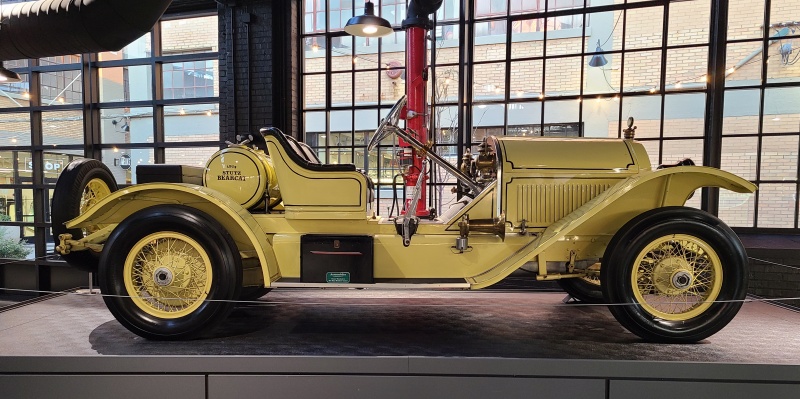
In 1911, Harry C. Stutz entered a car in the first Indianapolis 500 mile race. Although Marmon’s Wasp won that race, Stutz’s Bear Cat (two words) placed 11th. Stutz began building cars at retail, with the slogan “The car that made good in a day.” The Stutz Bearcat roadster was the Corvette of its day, desired by anyone who wanted to look good while going fast. And has there ever been a better name for a big bruiser of a fast car than a “Bearcat”? I think not.

Harry Stutz left the company in 1920 before some stock speculators crashed it into a financial ditch. Charles Schwab had been a major investor and rescued the company, bringing in new management.

One of the fruits of that rescue was a new engine that powered a new line of cars that debuted in 1926 – the Stutz Vertical 8.

The Vertical 8 was a configuration that is common today – an overhead camshaft – that coaxed a lot of power from those 8 cylinders, and the cars sold well (at least for their expensive price class). The Vertical 8 was eventually developed into Stutz’s final model, the DV-32 (which stood for a Vertical 8 with dual camshafts and 32 valves). Unfortunately, this time Stutz got driven back into the financial ditch by the Great Depression, and that was that.
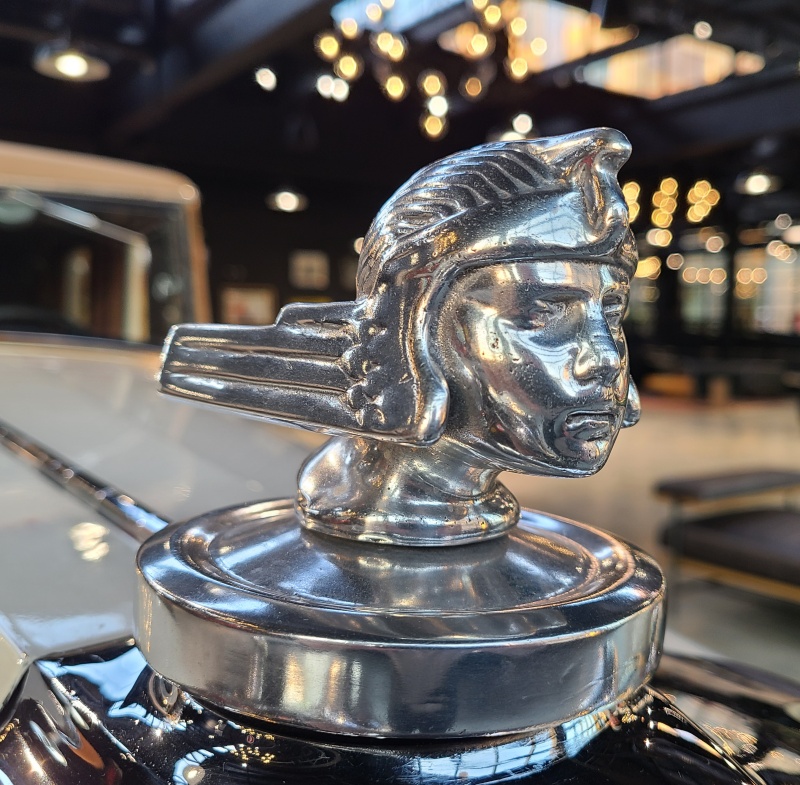
I photographed these cars at a small museum located in the old Stutz factory building, which has been redeveloped into a place for small businesses that are mostly engaged in the arts. At least one reader/commenter will remember this place when we met there during a trip that brought him to Indianapolis.
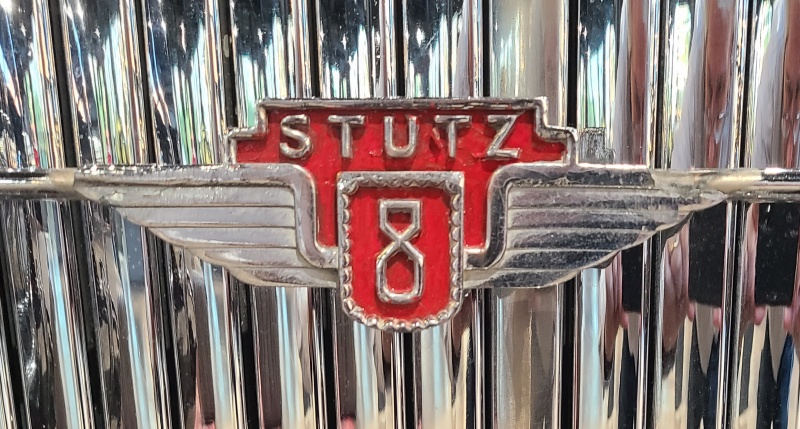
Although I had some good photos of a Plymouth VIP and a Pontiac Ventura, Stutz’s Vertical 8 gave me the excuse to throw a little love to another of the great old cars that were proud products of Indianapolis, Indiana, USA.
Photos by the author at the Stutz Building Museum, Indianapolis, Indiana, October 12, 2023
 J. P.'s Blog
Great choice for the letter “V!” The older I get, the more I appreciate cars of the 1920s and 1930s. They have many interesting engineering features, and some were quite advanced for the day. When these smaller companies died during the 1920s and the Great Depression, our auto industry lost some of that innovative spirit…which would come back to haunt it in the 1970s.
I would love to own one of these prewar cars, but the problem is that they really aren’t well-suited to modern traffic. Their brakes and handling, in particular, can’t handle modern highway speeds.
LikeLiked by 1 person
Thanks! I also love the names they applied to things. In one sense, virtually all engines of the day were vertical, but Stutz decided that this basic descriptor made a great name. And I agree!
LikeLike
Works of art that earned the right to be housed in a museum!
LikeLiked by 1 person
Agreed!
LikeLiked by 1 person
Every time I see cars like this, especially in “real life”, I think about how they were designed with human ergonomics in mind. Even up into the 60’s, getting in and out of a car wasn’t a big deal. Now I can barely get my arthritic leg into my Kia Soul, and I recently looked at KIA’s inexpensive offering, the K4, and I’m not sure I can even get into it? Even standard sedans of the 30’s and 40’s were so easy to get into, you could get in on the curb side and slide across the bench seat. A lot of cars today look the same because they’re all designed in a wind tunnel, which also makes them low to the ground. Cars like these really made a statement in design looks! I’m also amazed that the weight of some of these, easily into the two to three ton range, were held up by wooden spoke wheels! It says something about wood, and helps me understand those wood framed Morgans!
LikeLiked by 1 person
I will say that some of these old ones were tight on front legroom, with no “stretch out” room at all. Also, the front of the seat bottom often came very close to the front of the door opening, so getting feet through required some aiming. Really, it was the back passengers who had it best!
LikeLike
I always thought the name Stutz Bear Cat was one of the best names for a car! The Great Depression did a lot of collateral damage.
LikeLiked by 1 person
Agreed on both counts!
LikeLiked by 1 person
The Stutz Vertical Eight is a very classy-looking car and, at a glance, if I were to see that long car with the whitewalls and the hood ornament going down the street, I would assume it was a Rolls Royce and I’d be looking for the guy asking for some Grey Poupon.
LikeLiked by 1 person
They were beautiful old cars, that’s for sure. A Rolls Royce may have been more luxurious, but I suspect that each of the old Indianapolis triumverate was more athletic.
LikeLiked by 1 person
I guess the shape is what is reminiscent of the Rolls Royce (to me anyway – too many Grey Poupon commercials I guess). But, at any rate, something that anyone would definitely notice as it is rolls along the street.
LikeLiked by 1 person
Wow, I did not know about these. They look really good.
That said, I would have sworn the red one in the first picture was a Duesenberg. It simply screams it. The green one is obviously something unique.
This was a good choice.
LikeLiked by 1 person
I don’t know as much about these as I should – I am better versed in Marmons and Dusenbergs. I need to do something about that, because there was some impressive engine and chassis engineering in these, and they were legit race cars in their day. I had a minute to do some noodling around online and learned that Stutz even built a few with a Rootes-type supercharger, which upped power significantly.
LikeLike
Wonder if the “oil rectifier” in the ad is just a set of screens for filtering the oil, or an actual paper or porous element type oil filter?? And a worm drive rear axle?? I guess that would make the car lower, but i thought generally the worm can drive the gear, but not vice versa…
LikeLiked by 1 person
Good questions! I understand that the worm gear in the differential allowed for a dramatically lower stance. This chassis did pretty well in racing, and a lower center of gravity surely didn’t hurt.
LikeLike
Wow! Very sharp looking cars. I did not know the Indy 500 dated back that far.
LikeLiked by 1 person
Yes, 1911. Other than 3 or 4 years off during WWII, it has run every year since.
LikeLiked by 1 person
I saw the time trials in May/June 1979 – it was loud!
LikeLiked by 1 person
A bit behind on my reading and commenting here, but I do indeed remember and am glad to see that these photos got put to good use for the letter V! 🙂
LikeLiked by 1 person
Ooooh, I wish I had captured this view! I love the way Stutz made the “U” shorter than the “T” on either side of it.
LikeLike
After attending the Old Car Festival at Greenfield Village, I have been somewhat immersed in prewar cars for a few weeks. It really is mind boggling just how many car companies there were in the early days. I did not see any Stutzes but one certainly would have fit in with some of the other now obscure makes that were there.
LikeLiked by 1 person
I find the prewar stuff endlessly fascinating. There was another Indianapolis company, Cole, which was known for a V8 engine in the early 20s. Its factory building is being gutted and rehabbed, probably into condos or something. I should document it.
LikeLike