JP’s A to Z Challenge – T is for Tempest
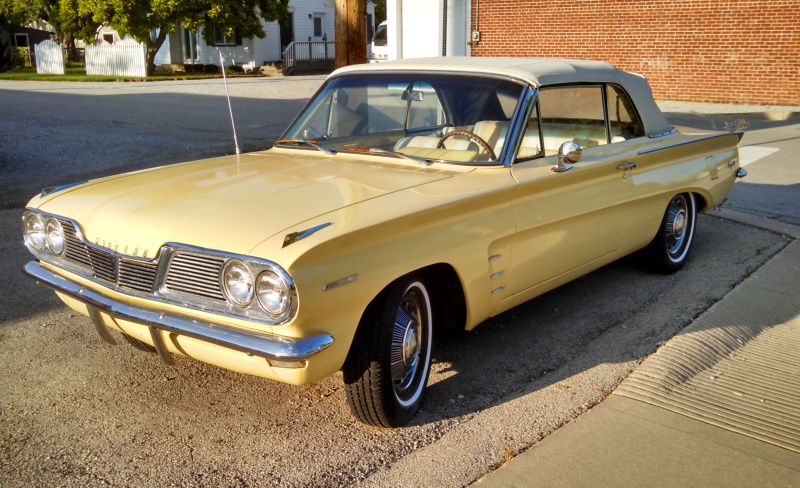
Last week’s yellow Ford Fairlane Sunliner was such a popular choice for “S” that I decided to keep the yellow convertible party going for a second week. But this time with a Tempest. Not one that is in a teapot or that has anything to do with a Shakespeare play, but one built buy Pontiac as its first “compact” car in the early 1960’s.
The Tempest was an oddball from the very beginning. Pontiac was supposed to get a Pontiac-ized version of Chevrolet’s 1960 Corvair, but Pontiac’s engineers balked. The rear-engine Corvair was not very compatible with Pontiac’s other cars and they were unlikely to see the kind of volumes that would make it pay. The solution was to get a version of the “senior compact” cars that Oldsmobile and Buick were introducing as 1961 models.
But while the Olds F-85 and Buick Special were relatively conventional cars (albeit with a new, small aluminum V8 engine), Pontiac opted to saw it’s big cast iron V8 in half to create what it called the “Trophy Four”, a big bruiser of a 4 cylinder engine. It would also get a version of the Corvair’s independent rear suspension that also combined a transmission with the rear axle. It was joined to the front engine by a flexible driveshaft that was more like a big cable than like a conventional stiff steel tube.
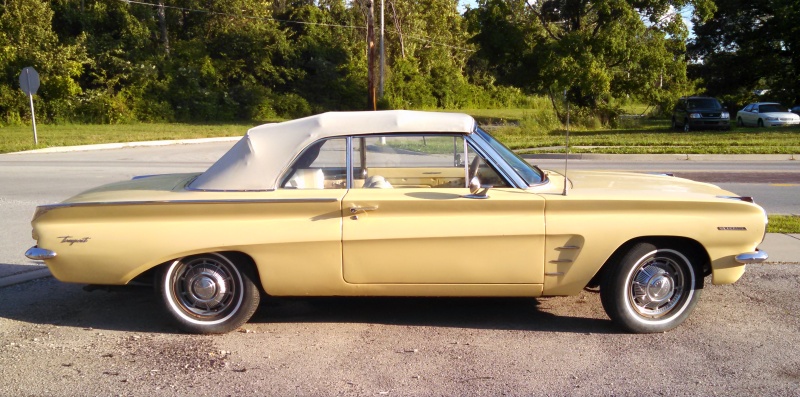
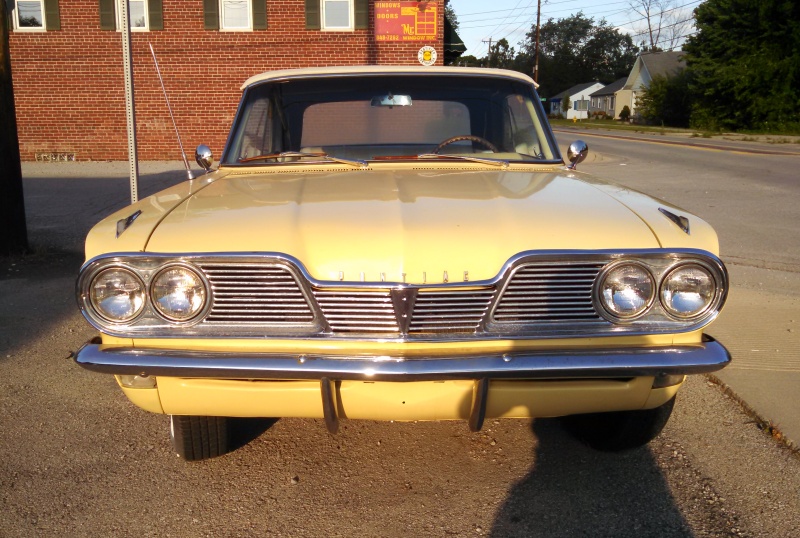
Do the wheels look a little big to you? That is because they are. Pontiac’s engineers detected some squirrely handling and calmed it down using large (for the time) 15 inch wheels instead of the 13 inchers that were common on compacts of the early 1960’s.
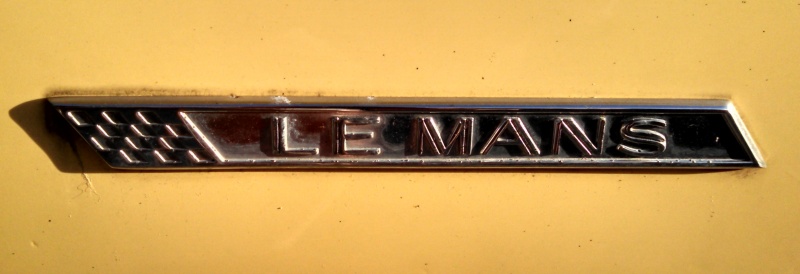
Sporty cars were in demand in the early 1960’s and by 1962 all of GM’s compacts had developed a version. There was the Corvair Monza, the Oldsmobile Cutlass and the Buick Skylark – all names that became quite familiar. Pontiac did sporty as well as anyone then and added the LeMans that year.
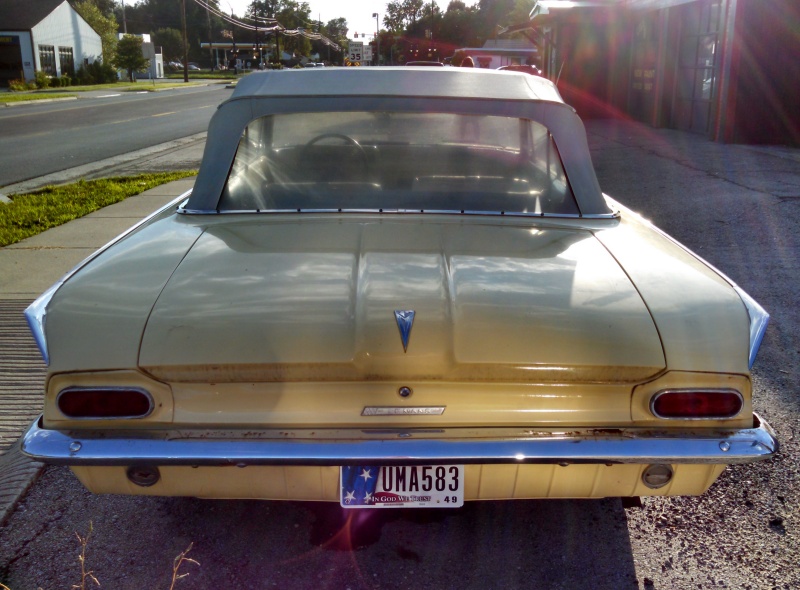
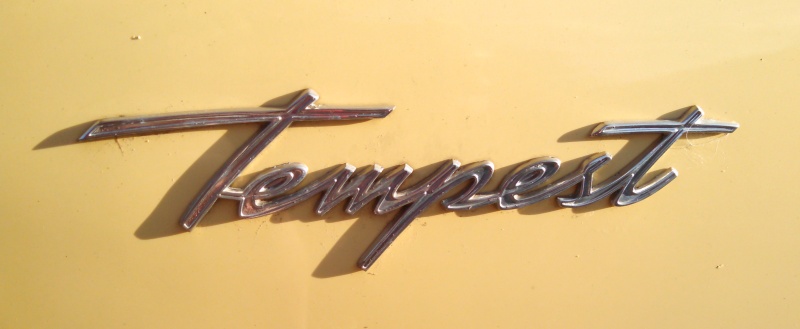
This 1962 version was still called the Tempest LeMans and sported both names on the car. It had plenty of “show”, being offered as a convertible with bucket seats. However, it was a little short in the “go” department, with the big performance news being a 4 barrel carb being fitted to the 194 cubic inch (3.2L) four cylinder engine. That situation would be remedied in 1964 when Pontiac stuffed its big 389 cubic inch V8 into a LeMans and called it a GTO.
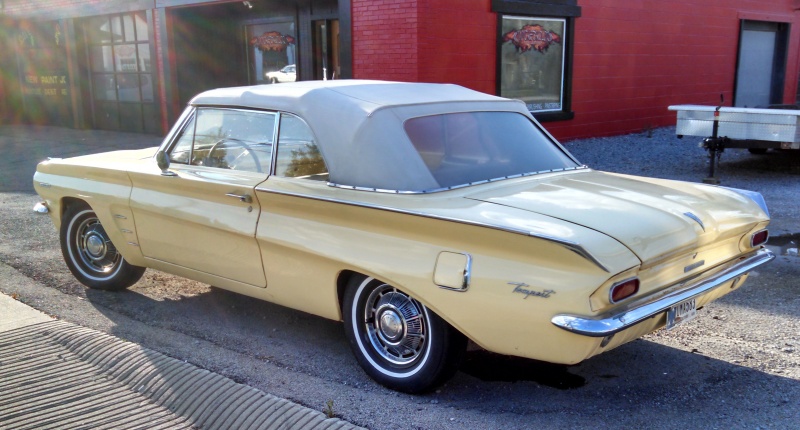
These were curious cars that did not sell that well and have never really been fully embraced by fans of 1960’s Pontiacs, who prefer their cars to be far more powerful and better looking. But these have a certain cuteness about them, especially as a convertible. And for the purpose of this A to Z challenge, this Temperst suited me to a “T”.
Photos by the author, Carmel, Indiana, July 27, 2014


When my parents moved to our new house in 1967, one of our neighbors had a 1963 Tempest four-door sedan. I don’t believe I’ve even seen one of those at a car show! They were a Pontiac family, as their other car was a 1965 Catalina four-door sedan, and their oldest son drove a 1963 Catalina hardtop coupe.
Interestingly, Popular Mechanics surveyed owners of the 1963 Tempest, and roughly 66 percent chose either the two-door coupe or the convertible. These sold to people looking for a sporty, small car.
In 1978, our high-school shop teacher restored a 1962 LeMans convertible. I rode in it one time, and what sticks in my mind is the strange sounds the drivetrain made, combined with a rather rough four-cylinder engine.
LikeLiked by 1 person
When I was a kid, the next door neighbors who later owned a string of GTOs and Firebirds had a baby blue convertible that was probably a 63. I think it’s the only one I ever saw before this one.
LikeLiked by 1 person
Convertibles always give me a thrill, although Seattle is not a good place to own one.
LikeLiked by 2 people
I have owned a couple of them. I enjoyed them during the right times – summer mornings and evenings, and spring/fall days. But much of the rest of the time they are not that appealing. But those times can be enough in my Midwestern climate.
LikeLiked by 1 person
I really like this size car, and was always eyeing them up when I was a kid, from all the different manufacturers. Just seemed perfect. This isn’t the first time I’ve heard about that flexible drivetrain and rear transmission, but I’d love it if someone who actually owned one would tell us how dependable they were!
LikeLiked by 1 person
My understanding was that these proved to be pretty robust. It was the Buick Special/Olds F-85 that were less so. Both used a new design small aluminum V8 that became known for cooling system problems. My family had one of the Oldsmobiles when I was really young, and I still remember my mother pulling over and opening the hood to let things cool off for a few minutes when the engine would overheat in the summer. On top of that, the Olds used one of GMs worst automatic transmissions, another short-lived design not shared with the others. This is probably why my general experience is that in recent years I have probably seen the most Tempests of those 3, with a few Buicks too. It has been decades since I saw one of the Oldsmobiles. They were never common and were not really long-lived.
LikeLike
Now that our motorcycle years are over, a convertible is a great alternative!
LikeLiked by 1 person
Miata is always the answer! 😛
LikeLike
Love convertibles, too ridiculous for an only car in wintery Wisconsin, BUT, up until a few years ago, you could easily rent a Miata for the day in my town! Used to rent one on my birthday for years.
LikeLiked by 1 person
I remember friends of the family had a turquoise T-Bird in the mid-60s and when I saw your fourth photo with the side view of the Tempest that showed the “fins”, I thought it looked similar to that T-Bird, sporty but elegant. I didn’t notice the bigger tires until you mentioned it and then I noticed it in the last photo. I do like the yellow color and those whitewalls.
LikeLiked by 1 person
I don’t think these are bad looking, but I will pick a Thunderbird over one, myself. I do miss whitewall tires.
LikeLiked by 1 person
Maybe whitewall tires will return one day … classy all over again!
LikeLiked by 1 person
P.S. – JP, for some reason, your post did not appear in my Reader today. After I got unsubscribed from your blog the last time, this time I subscribed to get your post in Reader AND in Notifications, so I accessed it from Notifications.
LikeLiked by 1 person
Arrrgh, I wonder why this is.
LikeLiked by 1 person
I don’t know – hope it didn’t happen to any of your other readers.
LikeLiked by 1 person
Glad you mentioned the Corvair early in the post, because it was on my brain from the first photo without remembering the name of it. My uncle had one in the 1960s and unlike the Tempest it seemed like a small car. Am I remembering right or maybe they’re both on the small side? Regardless, I always liked the look of the Corvair with its round headlights and smooth lines.
LikeLiked by 1 person
The Corvair was definitely somewhat smaller, though this was still on the small side.
LikeLiked by 1 person
Might the people who purchased these Pontiacs be classified as tempestuous?
Visually, it’s the back of these that I find to be the weak spot visually. It’s almost like the designers lost interest by that point as the front works and I rather like the 15″ that fill the wheel wells.
LikeLiked by 1 person
I agree on the tail end, and it is worse for someone who grew up familiar with an Oldsmobile F-85, because the Tempest shared a lot of the Oldsmobile’s body stampings. The worst part of the back for me is the way they kludged a bolt-on taillight piece to work on the Oldsmobile butt.
I think this car and the Studebaker Lark were the only compacts in the early 60’s that used 15 inch wheels. Both always kind of reminded me of puppies of large dog breeds, the kinds with small bodies but big paws.
LikeLike
The ’61-62 LeMans could be had with an aluminum 215 V-8 from Olds, although some sources say it was Buick-built. And the new ’63 326 (actually 336 that year) was designed specifically for the LeMans. But the 195 was still installed in most Tempests, and in the early ’60s there were actually some speed kits for it.
And that’s not even getting into the competition side of things. The ’64 GTO didn’t just come out of nowhere…
LikeLiked by 1 person
Thanks, it’s been awhile since I researched the early Tempest engines. I know that the 215 was a Buick design but Oldsmobile insisted on making some tweaks to it, so they are a bit different.
LikeLike
I just looked it up, and had completely forgotten that the 215 had been offered. In 1961 it was only offered as a 2 bbl carb/regular gas version that equaled the 155 horsepower of the 4 bbl carb/premium gas Trophy 4. In 1962 the V8 was offered as a 4 bbl version only, which offered about a 20 hp jump over the top Trophy 4. Thanks for the reminder!
LikeLike