JP’s Book Report – June 2025 Edition

Since my last report, I have managed to plow through 8 audiobooks. As always, I have worked hard to stay out of the ruts that I tend to find myself in, and have kept things fairly well mixed and varied. Here they are, with a little something for almost everyone.

First up: The Devil’s Chessboard, David Talbot (2015). The rest of the title of the book is descriptive: Allen Dulles, the CIA, and the Rise of America’s Secret Government. I had read virtually no history about the Central Intelligence Agency until I stumbled across this one. It is a fascinating look at the man who was as identified with the C.I.A. in its early history as J. Edgar Hoover is identified with the F.B.I. Dulles, the brother of Eisenhower’s Secretary of State John Foster Dulles (for whom Washington D.C.’s airport is named), is the main subject of this treatment that is not at all flattering. The book is a fascinating look inside multiple Presidential administrations (from FDR to Nixon) as they navigated a world often manipulated by Dulles. The author also presents a convincing case that Lee Harvey Oswald was a dupe used by Dulles (following his ouster) and a rogue faction of Dulles loyalists at the C.I.A. to take the blame for Kennedy’s assassination.
Talbot writes as a man of the political left, and what made the book particularly interesting to me is his outlook from the BDT (before Donald Trump) era. Talbot’s 2015 views of the intelligence community (it is too strong and commits much abuse) and of Presidential unwillingness or inability to rein it in (which he sees as failures) track quite closely to many of the views that are now anathema to those who share Talbot’s politics because they are views common in the current administration. I found it an interesting and thought-provoking read on multiple levels.

The Magician’s Nephew, C. S. Lewis, (1955) & The Lion, The Witch And The Wardrobe, C. S. Lewis (1950). C. S. Lewis wrote a series of 7 books, generally lumped together under “The Chronicles of Narnia”. I had read Tolkein’s “Lord Of The Rings” series, and the Narnia books seemed to me of the same general fantasy genre, only aimed primarily at children, and therefore simpler. Having never read them, I dipped in. (1)
The story is of a parallel fantasy world called Narnia, which is visited by children from modern day England. Lewis is well known for his religious writings, and the Narnia books are full of Christian symbolism and themes. I found both books to be an entertaining fantasy read with all the things we look for in a good, old-fashioned story. They are not as ambitious as Tolkein’s works, but then they are not meant to be. I have the other five books in my Audible library, and perhaps I will go back and try them.

The Bomber Mafia, Malcolm Gladwell (2021). This book came on the recommendation of a friend (DougD who has occasionally commented here) and was quite interesting. It is not the typical story of the development of bomber aircraft as the story about how those aircraft could be most effectively used.
The main arc of the book compares two competing ideas of how aerial bombing should be conducted. One was was the precision aerial bombing as championed by General Haywood Hansell. The idea is that with a high quality bomb sight, relatively few bombs can be dropped with great accuracy. This way, strategic targets are destroyed and other (mainly civilian) areas are left alone. The other idea is to drop as many bombs in as many places as you can, to make the enemy’s life so costly and unbearable that they will give up. This was the idea pushed by General Curtis LeMay. It turns out that because of difficulties with weather and technology, precision bombing was not as effective as its proponents had hoped, with “carpet bombing” taking its place as the war progressed.
One section of the book went into a topic I had not read about previously – the large-scale nighttime firebombing of Japanese cities that occurred late in the war, which led to great losses of civilian lives and property. I have to wonder if the people behind that strategy might have been the ones in the dock at a place like Nuremburg had the war against Japan gone the other way. Gladwell is best known for a podcast (“Revisionist History”) and has taken some arrows for his presentation style, but the book was interesting nonetheless and I am glad that I read it.
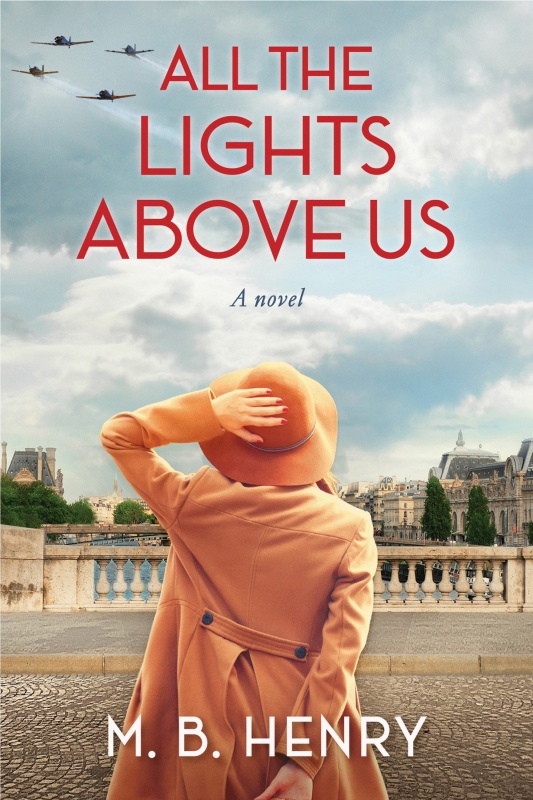
All The Lights Above Us, M. B. Henry (2022). Another blogger wrote about some historical fiction she had read, and it occurred to me that I have avoided this genre quite effectively. But I decided to give it a try, and remembered that blogger and historical writer M.B. Henry (whose blog I read and who has been known to comment here occasionally) has published a couple of them. This one is the intertwined stories of five women in Britain, France and Germany during WWII, who are strangers to one another and who deal with the fallout from D-Day in their own situations and their own ways. I found it to be an engaging story (or five of them, actually).
The book reminded me of an idea that has been floating around in my head for quite awhile now – with rare exceptions, male authors write the best male characters while female authors write the best female characters. I found M.B.’s five primary characters to have a depth beyond those in the male-authored books that I have gravitated towards. The five women who are the centers of these stories seemed highly authentic to me, and made the book one that I enjoyed. I must confess that historical fiction is still not a go-to genre for me, though it was far from the hard slog that followed this book.

Candide, Francois Voltaire (1759). I went back to my shelf of classics for this one, in my long-delayed campaign for literary self-improvement. Candide is a work of satire by a French philosopher of The Enlightenment. I guess we could call this a different kind of historical fiction. The title character is a simple fellow who has been taught the optimistic philosophy that everything is for the best in this best of all possible worlds. The author, of course, goes on to show the stupidity of our hero’s view, by a nonstop series of catastrophes which befall him, and which finally convince him that this is probably not the best of all possible worlds.
The book was considered subversive in its day, no doubt because of the nonstop derision of tradition, authority and religion – both generally and of the Catholic Church in particular. Like Swift’s book, Gulliver’s Travels, this book is best appreciated by those with a deep knowledge of history and events of the period. I am not among that group, and was happy to reach the end of this volume.
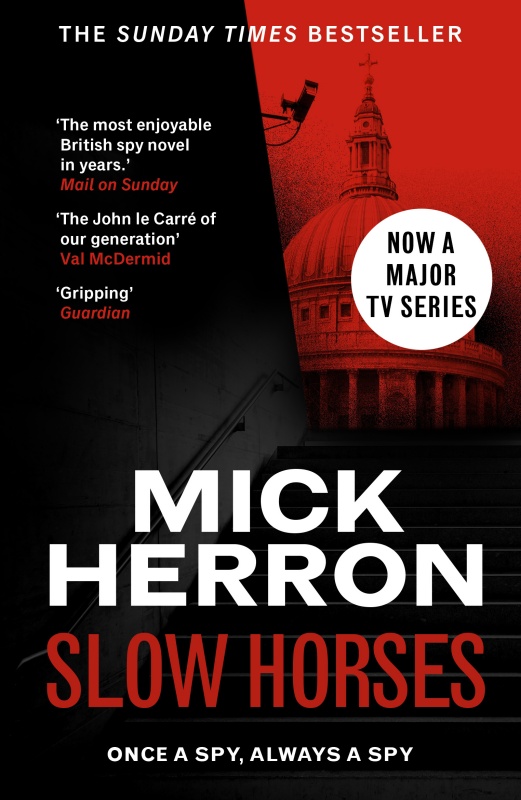
Slow Horses, Mick Herron (2010). This was, without doubt, the high point of this group for me. I was given a paperback of this one by one of my kids, and finally cheated by going with an audio version. This was a thoroughly enjoyable spy novel, but an atypical one. Instead of being about the James Bonds and the Ethan Hunts of the spy world, it is about a collection of British MI-5 agents who have been cast into a purgatory maintained for screwups, drunks, and misfits of various kinds. The title comes from a line early in the book, which describes how there comes a time when the race horses are separated from the slow horses. These misfit spies are the slow horses, who are tasked with busywork, if tasked with anything at all.
This was the first of a series of books, which generated a television series on Apple TV (and which I have not seen). I cannot recommend this book enough. The plot involves one of the slow horses who is assigned to the place they call Slough House for an error he doesn’t believe was his own, and who wants “back in the game”. An unlikely set of circumstances brings this disparate group together for a chance at redemption. In addition to an intricate, well-crafted plot, the writing simply sparkles in the way that only an author with a dry, British wit can manage. If you like a good spy novel, this is a must-read.
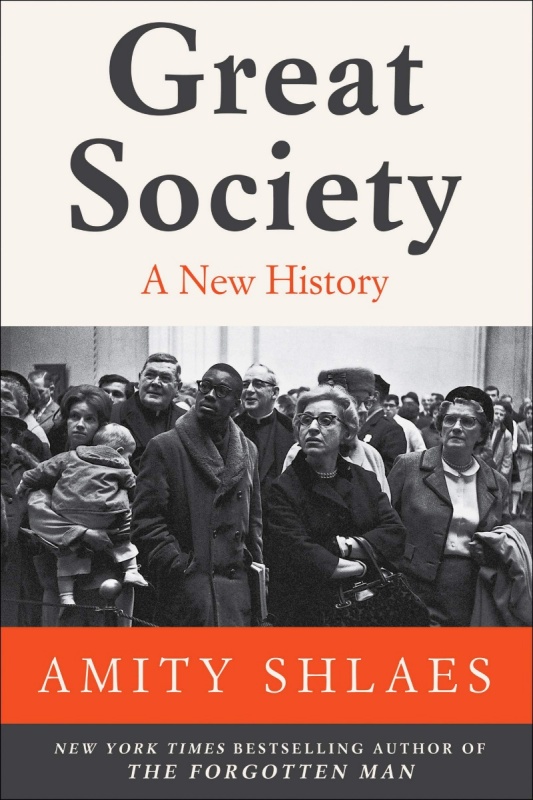
My last book for this installment was Great Society, A New History, by Amity Shlaes (2019). I had previously reported on two of Shlaes’ earlier books – an excellent bio of Calvin Coolidge and The Forgotten Man, a fresh look at the Great Depression which questions the conventional wisdom about the effectiveness of Franklin Roosevelt’s New Deal. This book follows up on the latter with an examination of the anti-poverty initiatives that blossomed under Lyndon Johnson and Richard Nixon.
This book is a great look into the history of that time, including the inner workings of both the Johnson and Nixon presidential administrations. Johnson believed that New Deal-style programs (if they were big enough) could solve any problem. Nixon, on the other hand, acted on a core belief that he could be most effective if he kept others off balance by pursuing unexpected policies. Of course, both of these Presidents had one thing in common – they were both bare-knuckle politicos who were far more interested in electoral successes than in good or effective policy. The book also looks at some other important characters who played roles in this long saga – UAW president Walter Reuther, activist Tom Hayden, and Federal Reserve Chairmen William McChesney Martin and Arthur Burns.
Schlaes thesis is that despite mushrooming Federal agencies, initiatives and (especially) expenditures, the targeted poverty turned out to be a difficult foe, which has remained with us despite (mostly) good intentions and ever-increasing gobs of money being thrown into the effort. And without “solving” the poverty problem, many new problems were created along the way. I was, however, disappointed in an ending that seemed abrupt. It was almost as though the author had waded so far into the swamp of failed policies that despair led her to just throw up her hands and call it done. But then, I suppose there really is no good stopping place when writing about a process with failures and disappointments that have continued to the present day.
Whew – that was a lot, wasn’t it! What a great life I lead that allows me to listen to a steady stream of audiobooks while I work. It sure beats lawyering!
(1) There is evidently a dispute over the order in which the Narnia books should be read. Some prefer reading in an order that is chronological by publication. Others argue for an order that follows the order of the events in the books. Lewis did not intend a series when he wrote the first book, and some later volumes are like “prequels” to Star Wars fans. There is some evidence that Lewis preferred the latter order, so I decided to try this way in which the original book comes second in the order.
 J. P.'s Blog
You have a beautiful library, JP! (1st photo)
The Chronicles of Narnia had a big effect on me when I was 7 or 8. I didn’t read the book, but saw a TV special (called The Lion, The Witch, and the Wardrobe) which was very well done. I was like, totally into it. I actually believed that such a portal to a fantasy world was real, if only I could find it! (This is easy to understand since I was a big fan of In Search Of… with Leonard Nimoy telling me that UFOs, bigfoot, and ghosts are real!) My grandmother had a large old house with a finished attic that had “secret passages” (storage areas under the eaves) and a mysterious trap door in one of the closets and I thought “This must be it!” Sadly, it wasn’t. And WHY DID THEY LEAVE NARNIA at the end?! You’re a prince now and everything in Narnia is wonderful–and you go back to soggy, boring old England? Dumb! Let me tell you, if I ever find the portal to Narnia, I’m not coming back!
As for Candide, I learned about it in college–not sure if we read it or just discussed it. The Apostle Paul’s answer to Candide is Romans 8:28: “And we know that for those who love God all things work together for good, for those who are called according to his purpose.”
LikeLiked by 1 person
I loved your reaction to the Lewis story on TV! And yes, that enlightenment philosophy has become quite tiresome to me. It seems so small.
LikeLike
Interesting, you’ve read all sorts of books… even Narnia!
LikeLiked by 1 person
I tend towards ruts, where I find something I like and then dig deeply. I’m trying to do my reading differently by touching on a lot of things. There will be plenty of time for digging later. 🙂
LikeLiked by 1 person
The C.S. Lewis books are the only ones on this list that I’ve read and they were a lot of fun.
LikeLiked by 1 person
I agree, I enjoyed them a lot. I will probably go back to the rest of them before too long.
LikeLiked by 1 person
I love your reviews. They remind me to read. Luckily, my wife always passes on her Book Club’s selections. I just finished Grandma Gatewood’s Walk and am starting The Edge of Lost. Not exactly Voltaire but I am not exactly a Rhodes Scholar!
LikeLiked by 1 person
I hope anything you pick is more enjoyable than Voltaire!! I am only reading stuff like that out of that “raised by Germans” bit of forced discipline that gives me imaginary beatings every time I walk past my shelf of unread books. “Finish what you start” and “Who owns books they aren’t going to read?” ring in the head in the voice of my mother (using that tone when I would exasperate her).
LikeLiked by 1 person
Wow, JP that’s quite a diverse list. And I didn’t know you read other bloggers books. I’ll send you my trilogy!
I’ve read Malcolm Gladwell’s early works, The Tipping Point (I see he has Revenge of the Tipping Point out now) and Outliers, but gave up on him after his book about Talking to Strangers which meandered about so aimlessly that I could not even tell you what the book was about. I haven’t read a spy thriller since I was a teenager and would read whatever was lying around the house, but I enjoyed them. As for Voltaire, wow, you really are dipping into the older classics, I don’t know anything about it other than it is French. I wonder how many of those classics would even get published in this day and age when everyone is a writer. Back then if you were a rare man of letters, and had the means and connections, it was a done deal. I read The Lion the Witch and The Wardrobe when I was a child, but was not impressed enough to read the rest of them. I was a serious practical child who thought Alice in Wonderland was silly. It was too nonsensical for me, but the YA market is full of those fantasy books now.
Your comment on M.B. Henry’s historical fiction is interesting. I read Kristen Hannah’s The Nightingale in 2015 and the whole WW2 genre exploded after that bestseller. I read a ton of historical fiction during my 3 months surgerical convalescence, mostly because the librarian picked them out and that was her favorite genre. I enjoyed them all. I must have read 50 or 60 books during that time, as it was all I could do, and had 7 or 8 books out at a time, finishing one off every few days. When you can’t do anything else but read, you read!
I mostly read female authors, with a few male exceptions, John Grisham being one for his legal thrillers. but I find women writers in general to be more character driven, whereas men are more plot driven. You get to know the characters emotionally, whereas with men it’s more action, just the facts mamn. My bookclub did Sooley by John Grisham in Feb. It’s the only JG novel I had not read, because it’s about basketball. It’s about a Sudan teenager who is scouted from a refugee camp to play in the college draft, so really it’s about immigration. I really enjoyed it, but the observation I made at book club about JG novels is that you can spend 3-400pages with a character and never really get to know them. (This sailed right over most people’s heads as they are a weird bunch). It’s because he never dives into the emotional aspects, it’s just he did this and then this happened, etc. It’s just telling a story, nothing wrong with that, just a different style of writing. Hemmingway would be another example, hardly any adjectives, other than fine and good. Have you read any Hemmingway? I consider him a man’s writer, same with Scott Fitzgerald. I follow a New York blogger, LA, who delves into this a bit in her discussion blog on adjectives.
One big gap in historical fiction today would be a novel from a man’s point of view – I guess because they were all away fighting the war, versus left at home. I can’t even think of one – other than Bridge on the River Kwai – which I think every boy in my high school English class did a verbal book report on!
LikeLiked by 1 person
That’s an interesting observation on character vs. plot. I will probably start noticing this all the time now. I have kind of gathered that historical fiction seems to be mostly a genre aimed at female readers by female writers, though I’m sure someone will point out 50 well known exceptions. I chose MBs book only because I happened to think of it when I decided to try a HF novel.
The Gladwell book was interesting because it was created as an audiobook in the first place. It sounded like an extension of his podcast. One criticism I have heard of him is that he grabs onto a “big idea” and ignores complexities that don’t support it.
I have a couple of things on my shelf of classics that I am not looking forward to. But I plan to take my medicine and slog through them. Maybe one of them will surprise me.
LikeLiked by 1 person
That’s the thing I watch the new releases a lot on indigo/chapters, and I don’t recall ANY historical fiction books of any era by male authors, and it is a very popular genre. I wonder what percentage of authors are female, in general, or perhaps men gravitate more to non-fiction which is not as popular? PS. I was only kidding about reading my trilogy! Maybe someday….when it gets written! There’s a retirement project for you – write a historical fiction book from a male point of view, maybe something to do with the early days of cars…..Henry Ford perhaps? I read a biography of the Wright brothers about ten years ago and the history of flight and found it fascinating, even though I initially had no interest in the book. https://www.amazon.com/Wright-Brothers-David-McCullough/dp/1476728755
LikeLiked by 1 person
Actually, I think some of what Clive Cussler wrote might be considered historical fiction, though it was usually classified as mystery/detective stories that took place in earlier decades.
LikeLiked by 1 person
I agree with Joni on a couple of points, J P. Your list can’t get more diverse when you shift directly from C.S. Lewis to Voltaire a couple of books later – ha. But it’s the M.B. Henry novel that gets my attention (and I’ll download a sample now). Like Joni it was either “The Nightingale”, “The Storyteller”, or “All the Light We Cannot See” that got me hooked on WWII fiction, not just for the engaging stories, but for the perspectives of a world war from countries the history books don’t always focus on. There is enough truth in these fictional accounts to make me think I’m learning as I read.
LikeLiked by 1 person
I am such a non-fiction nerd that I feel like historical fiction is kind of like cheating. 🙂
LikeLiked by 1 person
JP, as usual, you leave me in the dust with your book reviews on a wide variety of subjects. Once again I have to confess I’ve read none of these books, nor books by any of these authors, which is sad since I graduated from university with a minor in literature (major was journalism). I have seen the book “All The Lights Above Us” by M. B. Henry at Meijer and it looked interesting as I leafed through it, but then I spotted Prince Harry’s book “Spare” in paperback and opted for it instead. It remains on my To Be Read list. I’m probably going to stop my French lessons soon as learning vocabulary and phrases was simple memorization, but the grammar is just a pain. After eight months, I’ve come to the realization that the hour I devote to the lessons daily, with no real expectation of traveling to France, could be better spent enjoyably, like reading. I had squirrelled away a link to a list of the “100 Best Classic Lists to Read Before You Die” and sadly I had only read about 20 of those books. Many of them are available as free books on the Project Gutenberg website.
LikeLiked by 1 person
Yes, I would pick reading for pleasure over learning a language any day – especially if you don’t expect to go somewhere you’ll use it.
LikeLiked by 1 person
As I get older I figure I ought to be more and more protective of my “me time” and not fritter it away frivolously. 🙂
LikeLiked by 1 person