“Presumed Guilty” – A Legal Novel And A Rush Of Jury Trial Memories
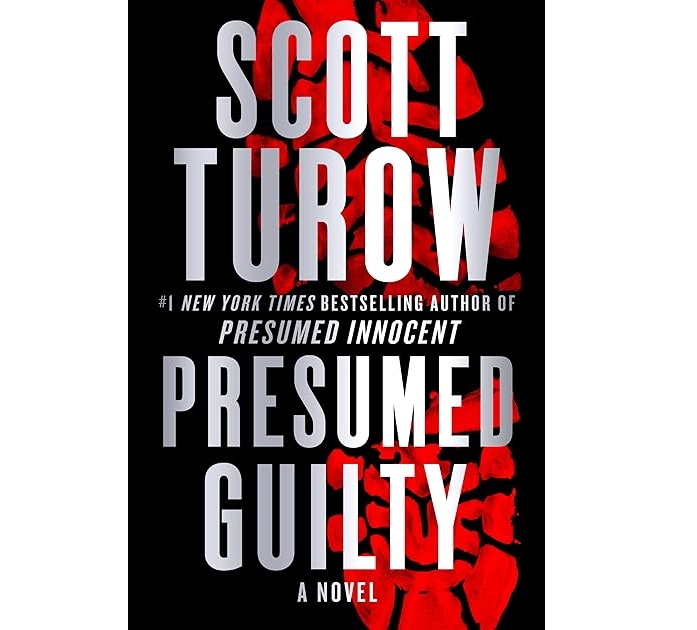
I just finished an audio version of Scott Turow’s latest novel: Presumed Guilty. I was looking to try something by Turow, and chose this one at random, having no idea that it was hot off the presses with a January, 2025 publication date. I also had no idea that it would do double-duty. Not only was it a really good legal yarn, but it also transported me back to the days when I was trying jury trials myself.
The story brings back the protagonist from Turow’s first book from the late 1980’s – “Presumed Innocent”. Rusty Sabich is now a 70-year-old semi-retired lawyer living in Wisconsin’s lake country. He has been a prosecutor and a judge, but now tends a low-stress part-time mediation and arbitration practice. Until his fiancée’s 20-something son is charged with the murder of a young woman, and then he is (against his better judgment) talked into defending the boy. The book is worth a read (or a listen) on the merits of the story, but what really grabbed me was Rusty’s 1st person narrative of the jury trial, which makes up a good portion of the story.
During my career as a lawyer, I tried several jury trials. I wrote about my first one here, where I defended against some poor schmuck who thought he could represent himself. It turned out that he couldn’t, at least not successfully. All the other times, probably about a dozen, were against attorneys of varying degrees of skill and experience.
Most times I watch a trial scene in a movie or on television, poor Marianne is stuck listening to me either shout objections that the on-screen lawyers are failing to make, or grousing about the awful questions being asked. This book provided a respite from that kind of thing, with the narrator describing many of the things I experienced at one time or another.
In one chapter, Rusty has prepared in ways the prosecutor has not, and eviscerates a pompous prosecution witness with proof that his testimony could not possibly be true. Most of the time, a cross-examination is not how it looks in the movies. No witness has ever dramatically admitted that they were lying, and the best you can hope for is to poke some holes in their narrative or cast doubt on their credibility. I can tell you that there are few things as thrilling or as satisfying as conducting a triumphant cross-examination that leaves the opponent’s witness almost in pieces. I vividly remember one of those times.
A client had sued a former employee who had started doing side jobs with the client’s customer and keeping the fees for himself. The former employee counter-sued, claiming that my client had interfered with (who he now claimed was) HIS customer. I had spent time poring over the opponent’s tax returns, and after his lawyers guided him through his testimony it was my turn to go to work. In a series of step-by-step questions I got him to acknowledge that he filed tax returns, that he had signed them, and that his signature was a verification that the figures were true. He seemed totally surprised as I walked him through the numbers which showed that the revenue he was claiming as his own was not listed, leading to the conclusion that 1) the money from the client was not really his or 2) that he was a tax cheat who was not declaring income. When I finished and sat down, my client excitedly whispered to me “He was ashen!” I still have the paperweight that the client made for me afterwards, a reduced copy of the judgment in our favor encased in a 3×5 inch block of clear acrylic.
At another point in Rusty Sabich’s murder trial, he filed a Motion to dismiss the case for lack of evidence. I would routinely prepare one of these in the civil trials I defended. These are filed at the close of the Plaintiff/Prosecutor’s case, and the argument is that even if everything proved is true, the proof did not check off every necessary element of the case. Rusty’s Motion gets denied (which is what almost always happens), but I got one granted.
In my case, I was defending a self-serve car wash, the kind where you get out of the car, insert some coins, and use the spray wand. The plaintiff drove into the bay on a cold winter day, and claimed that she slipped on ice that had accumulated over the drain trough, the only un-heated area of the floor. At trial, her attorney presented her entire case, including that she had slipped. To my astonishment, he never once got his client to utter the words ice or snow. When the plaintiff rested, I made my motion. The judge took probably an hour listening to testimony being replayed and eventually concluded that without actual proof that there was something other than water on the floor of the wash bay, he had no choice but to issue judgment for my client. This is one of those things that happens once in a litigation career (if you are lucky) and I never felt better than the night I walked out of that courtroom.
Rusty Savich also rues his occasional mistake – as have I. I remember an early cross-exam of the plaintiff’s doctor, in which I asked one question too many. I had walked the doctor through his report, emphasizing all of the points that could theoretically undercut his opinion. It was all going fabulously until I let my ego and inexperience get the better of me and tried to push him that extra few inches in my favor. At which time he smacked me with an explanation that was so perfectly reasonable that I should have seen it coming. The senior partner I was working with was understanding. He said to me afterwards: “That was almost a perfect cross. You had the ice cream. You had the chocolate. You had the whipped cream. But then you went for the cherry on the top and everything went to hell.” That was a bad feeling, but one that everyone who has ever tried a jury trial has experienced at one time or another.
Another experience Turow and I shared was doing or saying something that would not sit well with the jury. In my second jury trial, I was still quite inexperienced. The senior partner I reported to hired “local counsel” from the small town where the case would be tried. This used to be common practice when we tried a case outside of our own county, and it wouldn’t hurt that the guy’s experience would guide me. It was a serious case in which my client drove a car that hit and killed a child who ran out in front of him on a country road. I had presented evidence that the kid and his older sister were playing a game where they hid behind a bush in their front yard, then took turns running out in front of the rare car that came along. That verdict came in against us. That time it was my local counsel who said the wrong thing. He was more experienced than I was and we were in his county, so we agreed that he would make the final argument to the jury. He suggested that sometimes it is God’s will when a child is killed. I didn’t like the way it came out when he said it. And I’m pretty sure that the jury didn’t either, because the other side got a significant verdict. It was not a good feeling for a young trial lawyer.
I will confess that I really enjoyed the thrill of accompanying Rusty Savich in that murder trial. And I remembered why I am happy that I am not doing them any more. People used to ask me if I enjoyed trying cases. My usual response was: I only enjoy them after the trial is over. Trials are exhausting. Most of mine lasted 3 or 4 days, but I had one that lasted for 7. Turow accurately describes the sensation as being like that of a fighter pilot constantly on the lookout for incoming threats, ready to react or evade at any moment. It was really hard for me trying to think two or three steps ahead while having to be hyper-focused on what was happening in the moment, when every single thing matters. When you are in the last days before or during a jury trial, you don’t have the mental bandwidth for anything else – that case is all there is.
Some lawyers really love trying cases. And I will admit that there are few times that lawyering can be such a high-wire thrill. But I was not one of those lawyers. I was pretty good at it, and won more than I lost, but I took on too much stress. A client (even if it was an insurance company with lots and lots of cases in litigation) was relying on me to make the best of a case, and I always felt like the client expected a perfect defense. In truth, they probably did not but that doesn’t really matter when I would take on that responsibility anyway – and always fail because the perfect defense is impossible in the way a perfect anything is impossible.
But I am now retired from that life, and find an occasional seat at counsel table (through a good novel) a treat. “Presumed Guilty” gave me the chance to re-experience the soaring highs and the crashing lows of a lawyer during a jury trial. And it was great fun – because I was not the guy who had the responsibility to reel in the win.
 J. P.'s Blog
When I read this, for some reason it reminded me of my years living in Washington D.C. I was surprised to realize at most places that the “law degree” was the defacto degree of most of my business associates, much like the B.A. in liberal arts was what everyone got 40 years ago in my college. Practically none of them ever took the “bar”, and none of them ever actually practiced law or went to a court room. I always wondered if the actual process of court room law was more interesting and exciting in movies and literature than it was to people when they actually got their law degree and got out of school? Even one of my “temp consultant” positions I held, negotiating rights usages for running completed documentaries for broadcast (which I had extensive experience doing in the Midwest), I was eventually replaced with a full time, on staff, person who was a non-practicing degrees law person. Maybe people just wanted to hire people with a proven background in wading through minutiae?
LikeLiked by 1 person
Sitting at a desk poring over boilerplate contract language all day was always my personal idea of hell. Though it turned out that the people who went that direction often wound up in really high-paying gigs with big corporations or with the big firms the corporations hired. I always viewed my civil litigation work as being part of the crew that cleaned up after society’s messes so that everyone else could get on with doing their jobs and making money. I got to learn lots of interesting stuff from my cases like the physical dynamics of car crashes, how the human body reacts to such things, or even good vs. bad practices in electrical wiring or plumbing that were issues in fire or water loss cases. It makes for a pretty good education in the way stuff works in life, which always interested me anyway.
The big divide for those who actually went into courtrooms was civil vs. criminal. There tended to not be a lot of crossover there – people either did criminal work (prosecution or defense) or civil (plaintiff or defense). The criminal folks got to try a lot of jury trials. We on the civil side tried fewer and fewer as the years went on. Jury trials are expensive and insurance companies would much rather settle if they can get it done for a reasonable figure. Mandatory mediation came in by the late 1990’s so fewer and fewer cases went to trial.
LikeLike
Great explanation, and additional information!
LikeLiked by 1 person
Hi. I just took a look at Turow on Wikipedia. He has been writing novels at an admirable pace. His first novel came out in 1987. His newest is his 14th.
LikeLiked by 1 person
He writes a very engaging story, and one very accurate to real life.
LikeLiked by 1 person
Enjoyed hearing about some of your cases. So glad to hear Turow has a new novel. I have read twelve of his!
LikeLiked by 1 person
Thanks, and I plan to try more of his stuff. And it’s good that I avoided too many plot spoilers!
LikeLike
Very interesting story and perspective. I’m not sure how I would have handed that situation with the local counsel basically suggesting in closing argument to the jury that God directed your client to run over a kid. Something along the lines of my head exploding would likely be the case. And he was on your side?!
Maybe one of the things that this points out is that trial law (or I guess law in general) is a collaborative enterprise. You’ve got to work with people to achieve outcomes, and sometimes that doesn’t turn out well…as is the case with any collaborative enterprise.
LikeLiked by 1 person
I think the guy was trying to express the idea that sometimes people die in accidents and it’s nobody’s fault, but it didn’t come out that benignly.
And yes, I always had to collaborate with other lawyers, witnesses and plenty of others, right down to court staffs. Sometimes it was easier than other times.
LikeLike
I love detective and crime books and have read hundreds of them because I usually never solve them. I may guess the killer but I cannot tie up the loose ends…with two exceptions. One was an Agatha Christy where an offhand remark from a celebrity about having measles in the past cued me in. And Scott Turow’s earlier Presumed Innocent I had from beginning to end. I try to tell my wife when I have something mid book but usually that just advertises how wrong I was!
LikeLiked by 1 person
I am better at predicting the bad guys in TV shows that I am in books, probably because the TV writers are lazier.
LikeLiked by 1 person
So true!
LikeLiked by 1 person
I didn’t know Scott Turow had a new book out and I liked the Rusty Stabich character from the first book. I never cared for John Grisham’s books after the first one. As I commented on the other post, there is a lot of excitement, or maybe adrenaline is a better word, that is expended while doing trial prep and trying a case and yes, trying to get phone calls answered or other work done in the pendency of a trial was impossible.
I can remember when Michigan passed the Tort Reform Act which made every Plaintiff lawyer file all their lawsuits before there was a cap put on judgments. We did a lot of insurance defense for a client that insured homes and autos, so there were back-to-back trials for months and one judge got nasty about my boss showing her his actual calendar (the old-fashioned calendar in those days) and she pointed her finger at one week and said “so that’s a motion day so you can come here for one day, then go back to that courtroom and try your case there until the next motion day.” What a hard stance to take! We were exhausted and I had to work many weekends in an 18-month period, which I did NOT care for. That’s an awful thing to suggest that sometimes it is God’s will when a child is killed, very cringeworthy to be honest.
LikeLiked by 1 person
Dealing with difficult judges is one of the things I don’t miss at all!
LikeLiked by 1 person
I don’t blame you JP – my boss was pretty angry at her and to be honest, he did not fare well in those somewhat simultaneously tried cases, losing both of them.
LikeLiked by 1 person
Sounds like a good read. I like audio books.
LikeLiked by 1 person
Highly recommended! I thought the audiobook narrator did a great job.
LikeLiked by 1 person
This sounds like a good one.
I can easily envision you critiquing trials in movies and television shows!
LikeLiked by 1 person
Haha, yes, I occasionally become that character known as “old man who yells at the television”.
LikeLike
Not my normal genre but you have made a compelling case for reading this book.
LikeLiked by 1 person
I enjoyed it quite a bit.
LikeLiked by 1 person
Also, you would probably enjoy the small-town Wisconsin vibe.
LikeLiked by 1 person
I’m sure I would. 🤔
LikeLiked by 1 person
I’ve been waiting for sometime to call a person a “schmuck” since I put down my final Mad Magazine. Kudos.
LikeLiked by 1 person
Haha, happy to help!
LikeLike