JP’s Book Report – May, 2024 Edition

This continues (after a slight delay) my recent series of reports on what your humble scribe has been reading recently. Or, more accurately, listening to as he racks up windshield time. That thing about windshield time has had some new developments, for which readers will have to stay tuned. They are good developments, but ones which might keep audiobook time to a minimum in the near future.
Chronologically, this period was opened by 1984 (or is it Nineteen Eighty-Four?), by George Orwell (1949). I had remembered reading this one in high school, and it has remained a sort of cultural touchstone. It was a story which took place in the future – a grim future in which there were only three countries, each of which constantly rotated into and out of war with each other. The protagonist, Winston Smith, was a middle-aged government functionary whose job was to re-write history as made necessary by current events. The government was all-knowing and all-seeing due to its surveillance abilities and general culture of informers, and was led by a figure known as “Big Brother”. Whether Big Brother was an actual person or not, well that was something that might or might not have been true.
I found 1984 a far more unnerving read in 2024 than I did in 1977 or so, when it still represented the menacing “future”. It was partly unnerving because 1984 (the year) is now forty years past – a longer stretch back than it was into the future when it was written. But more than that, it is unnerving by how predictive it was. The idea that “the party” can, by surveillance and intimidation, enforce an orthodoxy that has nothing to do with actual reality is eerily like our own day in which (to choose a random example) men who consider themselves women can compete in womens’ sports.
Orwell is a fascinating figure – a man of the left in his youth who came to question the communism that he had once found appealing. 1984 (the book) represented his hope that we could stave off such a world. An attempt that was, sadly, not completely successful.

Much more enjoyable was Coolidge, by Amity Shlaes (2013). This was the follow-up to the author’s examination of the Great Depression (The Forgotten Man) which was described in this space previously. This most excellent biography takes us into the life of a President who has too often been made the butt of jokes – if he has been considered at all.
Calvin Coolidge can be thought of as the anti-Theodore Roosevelt among Republican presidents of the early 20th Century. Where Roosevelt’s tendencies were to action and intervention both at home and abroad, Coolidge was a man whose legacy was made by saying “No”. Calvin Coolidge was born on July 4, 1872 to life on a hardscrabble farm in Vermont. He was a quiet boy who was bright enough for college and who later studied law before becoming involved in local and state politics in his adoptive state of Massachusetts.
Coolidge is a fascinating president. On one hand, he may have been the last of the old-fashioned constitutionalists who genuinely believed that the Federal Government had little power and should use even less of it. At the same time, he saw the value in modern technology, and became the first U.S president to make use of radio for making his case to the people. He was a modest man, a man of few words (he was nicknamed “Silent Cal”) and one who believed that a dollar not spent by the government was a dollar that could stay in the pocket of the one who earned it. He could also be tremendously funny, as in the famous story of when a woman approached Coolidge at a political event and told him that she had made a bet with a friend that she could get Coolidge to say more than two words. His reply? “You lose.”
Coolidge became president on the death of Warren Harding in 1923 and won on his own in a 1924 landslide. He was certain to win a second full term in 1928 until he passed out slips of paper to newsmen at the end of a press conference with the succinct statement: “I do not choose to run for President in nineteen twenty-eight.” This opened the field for Herbert Hoover – a man who was Coolidge’s opposite in many ways, and the rest is history. For anyone interested in history, this was a marvelous read and I cannot recommend it enough. I will join that small group who considers Calvin Coolidge as one of the most underrated of U.S presidents.
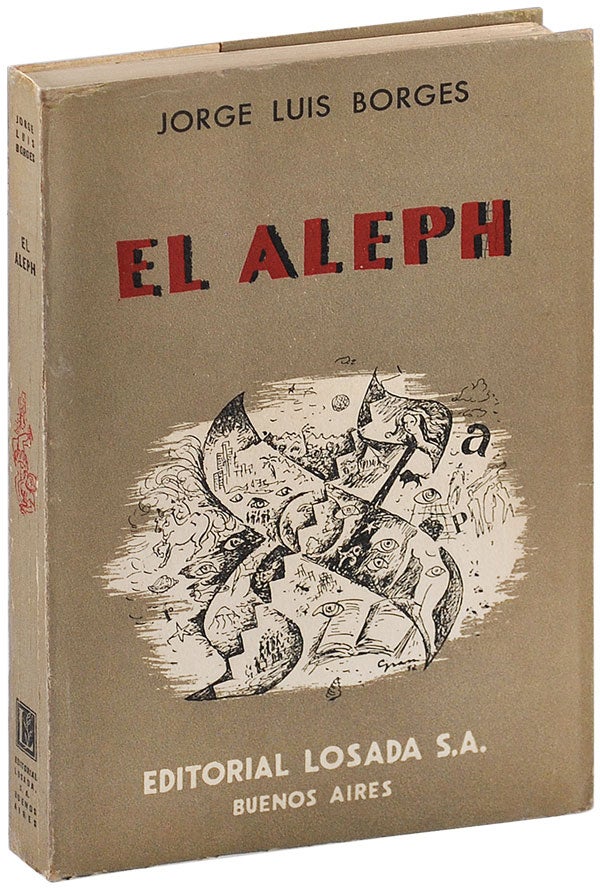
One source of reading material is a list I came across that names 100 books I should read before I die. Next up on that list is a book entitled The Aleph, and Other Short Stories by the Spanish author Jorge Borges (1949). Unfortunately, I could not locate that volume as an audiobook but was able to find the short story for which that volume was named.
This short story was about a man with a friend whose house contained an aleph. The aleph was a place from which someone could view – everything, everywhere, all at once. The plot was about how the narrator first could not believe that there was such a thing, and then about how life-changing it was. Until it ceased to be. Perhaps I might have enjoyed it more as part of a collection. Perhaps I prefer writing that originates in my native tongue of English, and is not the product of a translation. Or perhaps I am simply a Phillistine. Or a Cretin. Take your pick. But I found the story to be a bit of a yawn.

I went back to my bookshelf of classics for the next one, and it was one that I put off for awhile. Faust, by Johann Wolfgang von Goethe (1808). You know the famous story in which someone sells his soul to the devil for worldly riches, fame or pleasure? This was one of the earliest versions of that old tale – hence the term “Faustian bargain”.
I had read the book back when I was still finding time to read an occasional classic, and recalled that I had found it a slog. My hardcover includes both Part I (1808) and Part II (published posthumously in 1832). It is considered to be perhaps the greatest work of German literature in history. Perhaps this is another in my unsatisfactory experiences of work translated into English, or perhaps I just cannot make peace with long-form poetry. And how do you translate something from German and make it rhyme in English, anyhow?
I will confess that the audiobook I found contained only Part I. I am normally one with a compulsion to finish a book once I have started it, but methinks that I have been provided with a lifeline which will permit me to stop without revisiting Part II.

My last selection was chosen after reading a review of a recent biopic about the author Flannery O’Connor. Called Wildcat, the film examines the life of that southern author who died of a chronic illness at age 30 in 1964.
This book was the second of her two novels, and involved characters from her native southern U.S. who were flawed to the point of being thoroughly unlikeable. The story involves a terribly dysfunctional extended family that includes an old man who believes himself to be a prophet, his great-nephew (usually referred to as “the boy”) whom he kidnapped as a child to baptize and raise in his backwoods cabin, and his nemesis, an agnostic nephew who teaches school in town and is raising a child whom we would now call special-needs, but who everyone in the story calls an idiot (or a boy “who ain’t got sense”).
I found the book more intriguing than enjoyable, mainly because of the author’s way of infusing her Catholic sensibilities into a story without any overt Catholicism in it at all. She writes of a world that is fallen and ugly, and one in which there is both sin and redemption. In this story, there is a surprisingly uplifting ending after everyone involved has seemingly done his best to damage or destroy everything in his path.
I had not intended to finish (or start) this installment with such disquieting reads, but here we are. Now, having consumed a good portion of literary vegetables, I plan to proceed to lighter and more enjoyable fare.
 J. P.'s Blog
LOL -Yes, lighter reads might be good, it’s Spring now. You’ve read some heavy stuff recently.
LikeLiked by 1 person
I cannot agree more!
LikeLiked by 1 person
Do you like a bit of humor/adventure? Have you read the Flashman series? In fact, I just looked, my library has two audio books. You should start at the beginning with the first book. https://www.amazon.com/Flashman-Novel-George-MacDonald-Fraser/dp/0452259614/ref=asc_df_0452259614/?tag=hyprod-20&linkCode=df0&hvadid=693409812949&hvpos=&hvnetw=g&hvrand=17964115338454593117&hvpone=&hvptwo=&hvqmt=&hvdev=c&hvdvcmdl=&hvlocint=&hvlocphy=9021743&hvtargid=pla-571973121255&psc=1&mcid=bae916c054d238e2aef95c9c4ae79bd6&gad_source=1
LikeLike
The Coolidge book sounds like a god one. Most present-day Americans probably never heard of him.
LikeLiked by 1 person
You are probably right about that – partly because he was President so long ago and partly because popular history tends to favor the Presidents who were more colorful and who favored a more activist role. Yes, I found that one to be an excellent read – the first quarter of the 20th Century was a really interesting time that doesn’t get enough coverage. It was also interesting to learn how dissimilar Coolidge was from his successor, Herbert Hoover. Coolidge did not particularly like Hoover, who started as a mining engineer and who became known as a guy who could take on big projects and get them done. Coolidge privately referred to him as “wonder boy.” 🙂
LikeLiked by 1 person
I’ve also read it, and it’s a good biography aimed at the general reader. Ms. Shlaes is a good writer/non-academic historian. I learned a lot about Coolidge from her book.
LikeLiked by 2 people
I agree that Shlaes’ writing is quite readable and accessible.
LikeLike
Orwell had a huge influence on my reading. After digesting Animal Farm and 1984 in my early teens, I was hooked and abandoned comic books in favor of library books and selections from my Mom’s well stocked bookshelves.
LikeLiked by 3 people
You were far more advanced as a reader in your early teens – I may still have been slurping up The Hardy Boys mysteries. I did not get to Orwell until high school. Now you have me trying to think of the first “real adult book” I read. It is not coming to me, so it clearly did not have the influence that 1984 did on you.
And after searching old book covers, I wonder when it went from Nineteen Eighty-Four to 1984?
LikeLike
I have always said that everyone ought to have to read 1984 even though I didn’t like it, I think it’s important.
LikeLiked by 1 person
It is indeed grim, but I agree with you. Actually, people ought to read it again now, because it is jarring how some of the ideas in it are things we have become used to.
LikeLiked by 1 person
Men in women’s sports – just one of the strange things going on these days. One of my neighbours told me her son came home from grade school and said his teacher told all the kids to think about whether they really should be the other sex. Another kid in his class claims he is a cat and that is how he acts all day…
LikeLiked by 1 person
My daughter wanted to be a cat for a short time during her childhood, and she crawled around the house meowing and motioning to things rather than talking. I lost patience after about two days and told her to knock it off. I would probably get referred to child services now. But I was right – she has gotten married (to a human male, even) and is a fully functioning adult.
LikeLiked by 2 people
Well JP, the only book of this bunch that I read was George Orwell’s “1984” and that was a long time ago and before the year 1984. It was for a book report and like your impression at your first reading, I don’t think we students were fazed a lot by the subject. I think I would like to read it now that it is closer to reality.
LikeLiked by 1 person
I’ll bet you would be amazed at how much closer that story is to reality than you might have imagined back then.
LikeLiked by 1 person
I’m sure it would not be too comforting to read these days. I thought of you today as they were advertising “1984” as an Audible selection.
LikeLike
1984 kind of became the generic reference for too-big government overseeing all that happens in society. Great book, I recall it being a bit of a slog as things went from bad to worse even as Winston tried to escape to green meadows for quiet respite.
LikeLiked by 1 person
I had also forgotten that this was where the term “memory hole” came from. In the book, the memory hole was the slot where old books/pages were put, from which they ran down chutes to a big incinerator. Newly written pages replaced them. Kind of like today’s internet.
LikeLike
I was amazed to find out that Cal Coolidge was born the year I graduated from high school!
LikeLiked by 1 person
Doooohhh! Fixed. This error probably came from my tendency to put dates from prior centuries into context that resonates with me. For some reason, thinking about Teddy Roosevelt (born 1860) and Coolidge (born 1872) has my mind jumbling them up to “second half of the 1800’s). But if I think about them by adding a century and bringing them into the 20th, the difference between someone born in 1960 (close to my age) and another from 1972 clicks right into place in my brain.
LikeLike
LikeLiked by 1 person
P. S.: I read that Coolidge was frustrated being president because “Hidden Powers” prevented him from putting in reforms that he thought were best for the country. That is probably why “I do not choose to run for President in nineteen twenty-eight.”
LikeLiked by 1 person
This book attributed his declining to run on a few things. He had watched his predecessors Wilson and Harding either become incapacitated or die in office and believed that the job really took a toll. As things turned out, Coolidge died in early 1933 (at age 60) and would barely have survived another term. Also, his younger son had died right before his 1924 campaign, and he lost some of his spark after that. Finally, his official reason (per his autobiography) was that as President, you are surrounded by people telling you how great you are and the longer you are there you are more inclined to start believing it. He thought it best to get out before that kind of thing happened.
LikeLike
J.P., if you want to read some more popular histories, I recommend Richard Brookhiser’s books. His focuses on the Founders, and has written on Washington, Hamilton, Madison, John Marshall, Gouverneur Morris, and the Adamses. He also departed from the Founding generation to write on Lincoln.
LikeLiked by 1 person
This sounds like a great suggestion!
LikeLike
I’ve read the Coolidge book…a very interesting book, and gave me a newfound respect for both Coolidge and First Lady Grace Coolidge. He remains under-rated as a President. I’ve never read 1984, but lately I feel like we’ve been living some aspects of it.
LikeLiked by 1 person
You’ll feel more that way about 1984 if you read it!
And I completely agree about your take on Coolidge. We could use a few like him today the way the federal budget has looked for the last 20+ years.
LikeLike
Coolidge has always been intriguing. Thanks for the lead on this book.
The only Orwell I’ve read was Animal Farm when in 7th grade. I should reread it as it’s doubtful all the nuances resonated with a 12 year-old me.
Right now I am reading “American Ulysses” by Ronald C. White. Grant was a fascinating character; stoic, introverted, and wise. I’m just now up to 1868 and his various run-ins with Andrew Johnson. Perhaps a biography on Johnson would be in order as he has always seemed arrogant and inept, both seemingly confirmed in the book about Grant.
LikeLiked by 1 person
That book on Grant sounds like a great read.
LikeLike