JP’s Book Report – February, 2024 Edition
My literary adventures continue. To review, I now spend hours and hours a week behind a windshield, and have choices on what kind of nutrition to feed my mind whilst doing so. There is the pablum or empty calories of podcasts, and then there is the vitamin-fortified nutrition of audiobooks. Many of the latter are consumed, and this shall be my second periodic report.
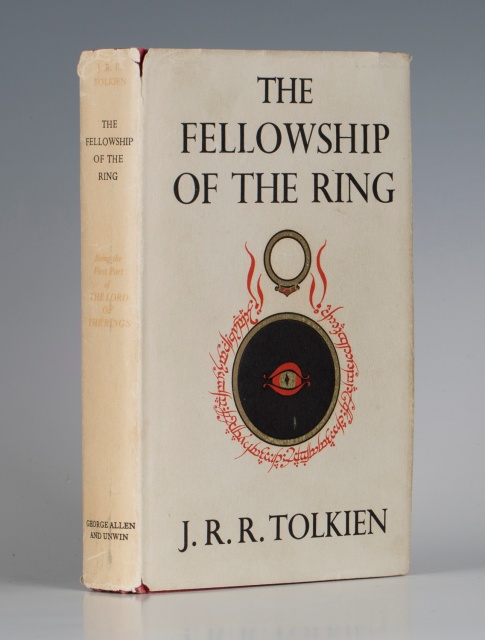
After an enjoyable experience with “The Hobbit” by J. R. R. Tolkein, I decided to make the deep dive into his fantasy trilogy, “The Lord Of The Rings”. These three volumes were first published in 1954 and 1955, and are thus more modern than I had originally believed. They build on the story contained in “The Hobbit”, and are more-or-less a continuation of that adventure, though undertaken by the original protagonist’s nephew.
I completed the first volume, “The Fellowship of the Rings”. I had intended to plow through all three, but was stymied by my tendencies towards thrift. My go-to (and free) source has been the site run by my local library. It has a limited number of licenses available for any given title, and it is my belief that the waiting list on these books is explained by schools being in session. I could be wrong, of course, but the delays I have experienced seem to be for the kinds of books that are assigned by high school and college English literature classes. Oh well – the second volume has just become available and will be pursued forthwith.
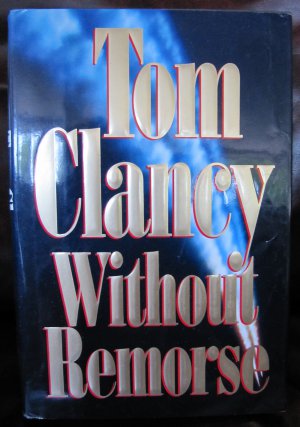
After something thought of as “real literature”, a fluffy palate cleanser is needed. One of my favorite authors back in the 1980’s (also known as the last time of my adult life I had any real time for reading) was Tom Clancy. I own several of his hardcover books, but decided to choose one I had not read. I settled on “Without Remorse” (1993). Clancy’s specialty is books that dive into worlds of the military and espionage, and this book is on point. Set during the Viet Nam war, Ex-Navy Seal John Kelly seeks to avenge the death of a woman he had rescued from some nasty drug dealers – only temporarily, it turns out. This being a Clancy novel, he accomplishes his mission quite thoroughly (if violently). Only after reading did I learn that this book inspired a 2021 film.
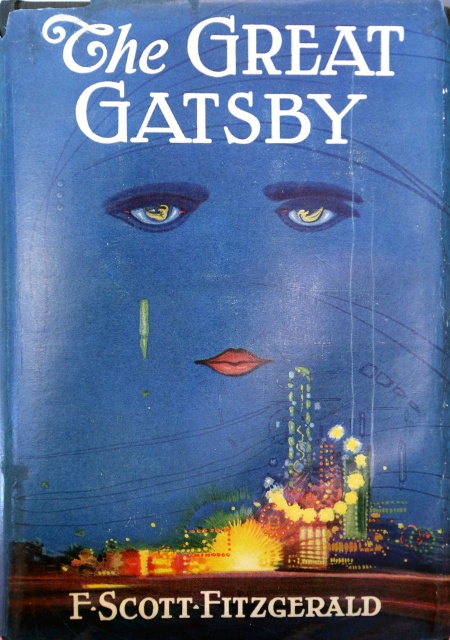
I recall beginning F. Scott Fitzgerald’s “The Great Gatsby” back in high school, but do not recall much beyond the beginning. Did I just forget it? Did I only read as far as I needed to to squeeze an extra credit book report out of it? I have no idea, but I can now definitely count it as finished. I found it a fascinating tale of alcoholic excess from The Jazz Age of the 1920’s. Fitzgerald’s direct yet elegant prose is a delight, and he makes characters of a century ago quite recognizable to we moderns.
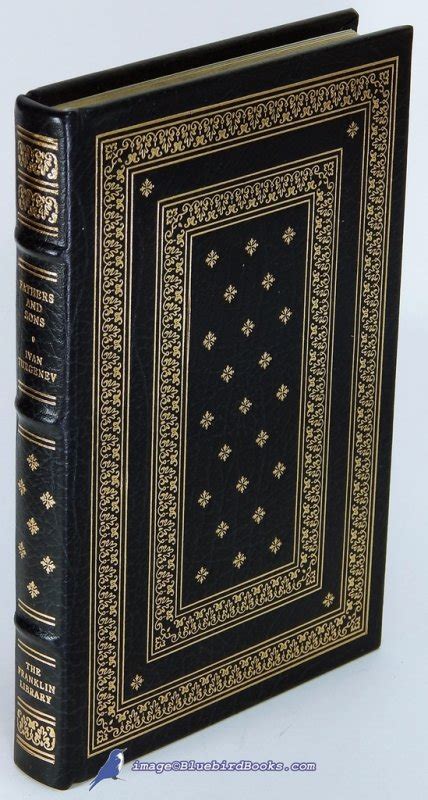
I have continued my project of “reading” through my bookshelf of classics, and read two volumes which I had read quite a number of years ago. The first was “Fathers And Sons” (1862) by Russian novelist Ivan Turgenev. I read this book early in high school, but recalled very little of it. It is about two friends (fresh from their college educations) and their families. At first the two young men fancy themselves quite the progressives, and are dismissive of the habits and views of their elders. However, time works its magic and each of the friends revises some of his views (though each at different paces) and comes to terms with the family elders.
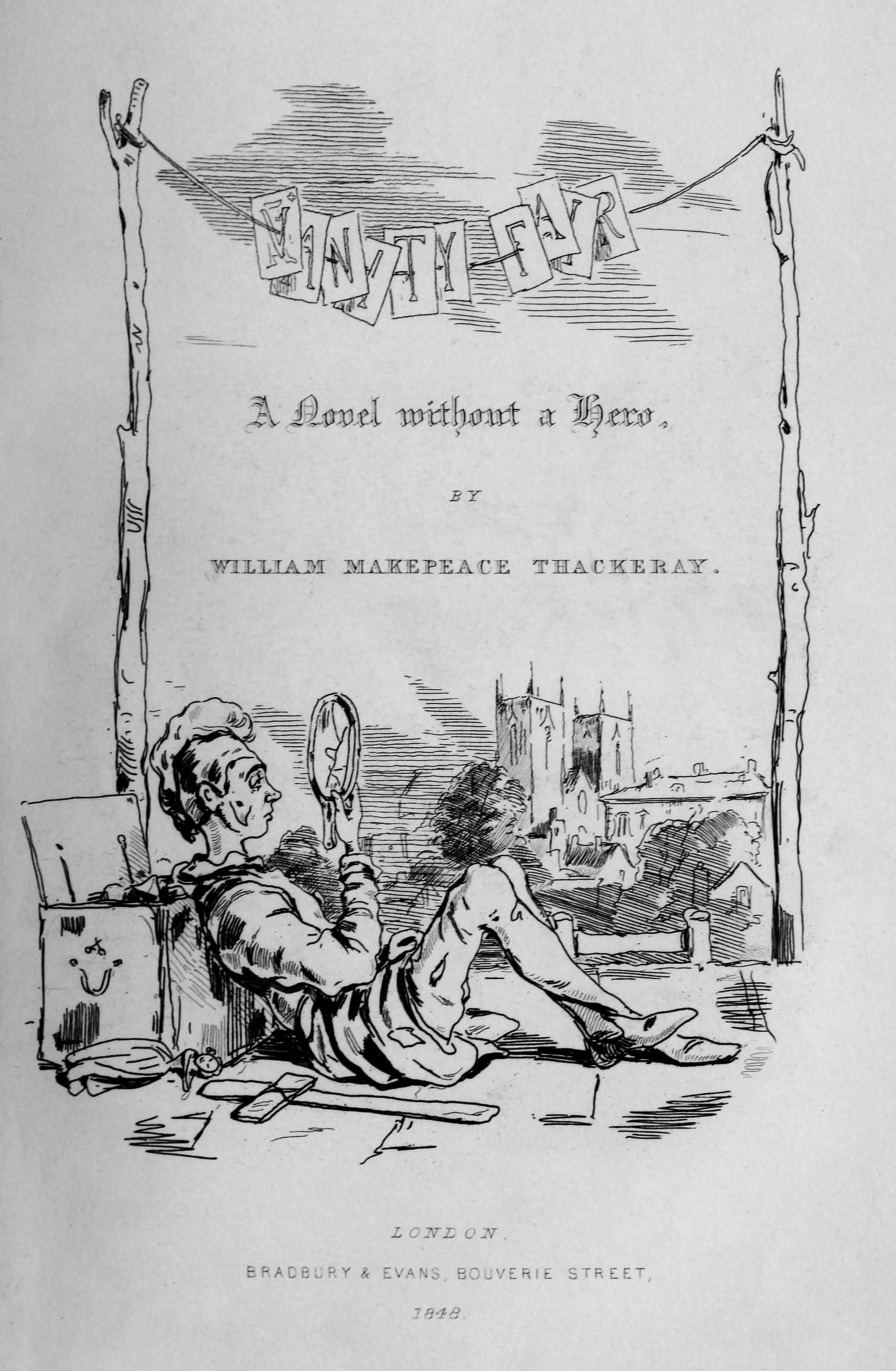
The second dive into the classics was “Vanity Fair” (1847-48) by William Makepeace Thackeray. Where the Russian novel is a straight-up narrative, this British story (though quite long) is told with characteristic English wit and verve, including some prose that skewers English life with a deadly but delicious effect. The story begins with two young women who leave finishing school. Amelia Sedley is as kind and pleasant as they come, while her friend Becky Sharp is a manipulative girl who grabs hold of every advantage she can find (or make). Their ever-widening circles of family, friends and others provides the grist for an unvarnished (yet clever) view of life in the English middle and upper classes of the day.
I really loved Thackeray’s gift for giving characters (both major and minor) names that fit themselves. In addition to Becky Sharp there is Lord and Lady Bareacres (the nobles of greatly diminished fortunes), and Mr. Hammerdown (the auctioneer), to name just two at random.
My thrifty source for these classics is Libri Vox, a site for audio versions of works in the public domain. The downside is that the readers vary greatly in quality, and there can be several in a long book like this. One Englishman was perfect. Others seem immune to the wit of the author and do all they can to stifle it.
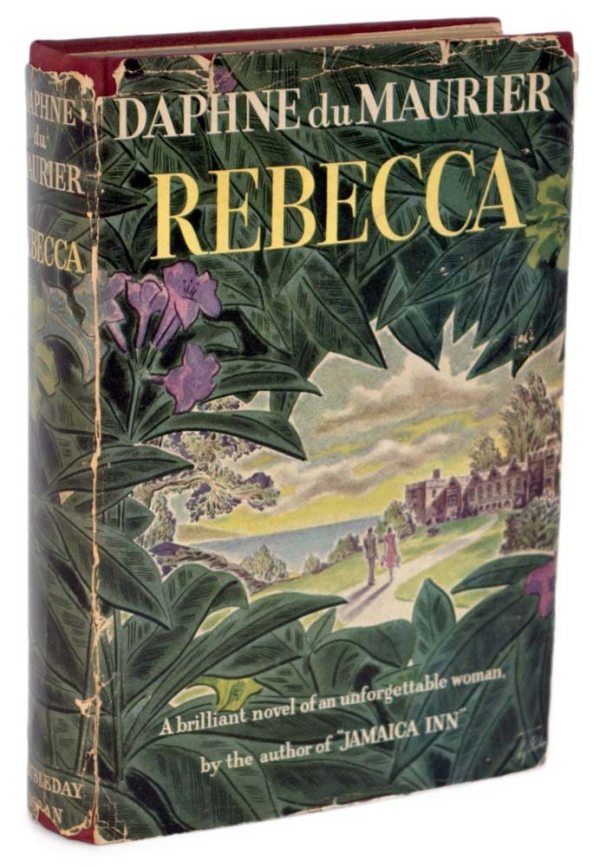
I went back to my list of books that served as source material for movies of the “film noir” era, and read “Rebecca” (1938) by Daphne du Maurier. This novel led to the 1940 Alfred Hitchcock film of the same name, which won the Oscar that year for best picture. The novel had the advantage of not being subject to Hollywood’s Motion Picture Production Code of the period, which required Hitchcock to change several plot details.
I have decided, after reading several novels, that male authors are better at creating believable male characters and female authors are better at developing characters of that sex. Rebecca is very much a book where the female characters are far better done than are the men. As one of the guys, I found the action a bit slow during the first half, wherein the heroine of the story thrashes about in her insecurities as a young woman without much breeding or education who finds herself married to a wealthy yet emotionally distant owner of a large English estate. However, things pick up as the book goes along with a good murder plot to shake things up. Between this novel and “Vanity Fair”, I think I should be able to acclimate to the customs of high English society, should that situation ever come to arise in my life.
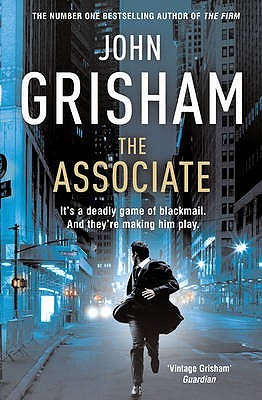
During my many years as a litigation lawyer, I lost count of the number of times people would say to me “I’ll bet you read a lot of John Grisham novels!” The truth is that I had actually never read even a single John Grisham novel, though I had seen some of them as adapted to the movie screen. I have now rectified that situation with two of his selections. My first choice (mostly at random) was “The Associate” (2009). A little research reveals that this was his 21st novel, and I can certainly believe it. The book involves a new grad from Yale who is blackmailed into taking a job in a big New York firm as a mole in an industrial spying operation.
John Grisham was a practicing attorney before he started writing novels about lawyers, so he has a deep understanding of what the legal world is like. I never worked in “big law” but have some friends who did – Grisham accurately describes the life of a fresh lawyer in a big firm and the way the billable hour is king.
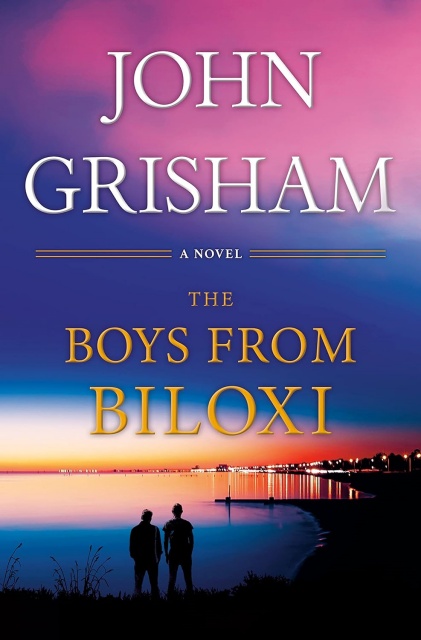
I also read “The Boys From Biloxi” (2022), one of his recent efforts. This story spans multiple generations of two families from “the coast” of Mississippi. One family gets deeply into the vice and rackets endemic to the area while members of the other find their way into the prosecutor’s office. I never practiced criminal law or law in a small close-knit community, but this book describes that life quite well.
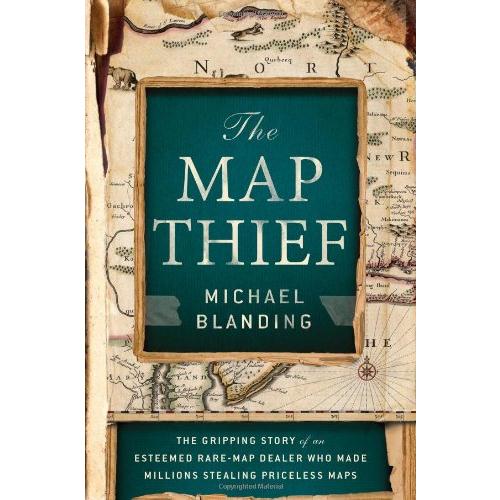
Finally, I stumbled on a really good non-fiction selection – “The Map Thief” (2014) by Michael Blanding. This is the story that comes from the arcane world of valuable and collectible maps, and some of the people who inhabit that world. The main character is E. Forbes Smiley, III – a man who became one of the foremost experts and dealers in rare maps of North America (especially of New England and the area along the eastern seaboard of the U.S.) He also became one of the most notorious thieves of those maps, taking advantage of many unsuspecting library collections, and selling the purloined maps for serious (though never enough) money. I seem to remember being told about this book by someone, but it has been some time and I have forgotten who that someone might have been. But whoever it was was right – it was a really interesting read.
I will continue to keep up some level of variety in my selections, and have located several lists of notable works in several areas. Except poetry – I doubt very much that I will seek out books of poetry (although my shelf of classics may force me into that corral sooner or later). Until then, I will continue to consume audiobooks as long as my trusty Freightliner continues to consume the miles.
 J. P.'s Blog
Well, there’s some classics alright. I haven’t read any of those, I don’t even think I read Gatsby in High School.
I recently finished The Bomber Mafia by Malcolm Gladwell, very interesting if you don’t already know every detail of the war in the Pacific, and am chewing through Bob Dylan’s The Philosophy of Modern Song which is mostly not very good, with the occasional interesting point or wtf moment.
LikeLiked by 1 person
I have been disappointed by books from musicians before. I bought a new biography/autobiography of Count Basie back in the 80s – I was looking into some insights from that famously quiet guy. But it (a collaboration by subject and writer) turned out to be a mostly boring series of “and then we went on the tour of that country” kind of thing. There were some interesting nuggets, but far too few of them for a book of its size and weight..
The Bomber Mafia book sounds interesting.
LikeLike
Ditto the last book I read on Sonny Rollins. No insights, a lot about his touring schedule…yawn…
LikeLiked by 1 person
Can’t say enough about the Great Gatsby. I keep a physical copy in my car to read if I have wait time, and I usually reread every year. I’ve been in numerous arguments over the years with friends that think it’s simplistic writing, not understanding how Fitzgerald sweated over the prose to get it perfect, and how perfectly focused it is. It is the magnum opus of understanding love, and social status in the modern era. His section on leaving town after he thinks he lost Daisy the first time, is so simple and well described as to instantly be visual. There was a period of time when I was coming of age, that what passed as the hip community was reading books that in order to be well regarded, had to be almost unreadable and not understandable. This book went through a period of scorn back then because it was neither.
Those fans who’ve read about Fitzgerald, as well as his books, will always ponder the irony, if that’s the word. Gatsby loses the woman he thinks is the love of his life, and spends the rest of his life trying to become the thing that will attract her, ending in his unraveling. In real life, Fitzgerald lost his love, then regained her by making himself the success she would be attracted by, and that ended up in the long term, being the vehicle of his unraveling as well.
Those so inclined should also read Maureen Corrigan’s: So We Read On, How the Great Gatsby came to be and why it endures, from 2014. An excellent companion for the uninitiated.
LikeLiked by 1 person
The Corrigan book is a great suggestion. I would like to explore a sampling of Fitzgerald’s other books, but I understand that they are all “close, but no cigar” compared to Gatsby. I have not been much of a student of Fitzgerald, but now I am intrigued.
It is interesting how books (and music) come into and go out of fashion. It is also interesting how there have been multiple efforts to turn Gatsby into a movie over the decades, and none of them has been very good.
LikeLike
If you’re interested in Fitzgerald, it pays to read his first book, the one that made him: This Side Of Paradise. He spent the rest of his life trying to recreate the buzz of that first book. It was a college “coming of age” expose that gained traction with the flappers and sheiks it was supposed to be describing, and their parents, who were trying to figure out what their kids were up to. This was the beginning of the roaring twenties and the machine age. It was as vital to its era as Kerouac’s The Town and the City, was to his, or Brautigan’s Trout Fishing in American, or McInerney’s Bright Lights, Big City. The definitive books of youth culture in their age.
You are correct about the movies. The made for tv 2000 version is supposed to be the most accurate, but I’ve always found Mira Sorvino cringe worthy, and felt she tripped into her Oscar not by acting, but just being herself. The 1974 Robert Redford version was a yawn, with Redford also just walking through his role. There was a resurgence of the Deco feel and culture around the early 70’s, and I probably read more about the clothing in that movie that any actual kudos for the movie. I will say that Sam Waterston playing Nick Carraway was the definitive performance, and I visualize him when I reread the book ever since. The 2013 Baz Luhrmann version is one of my favorites, because DiCaprio is directed into a frenzied performance of loss and love that probably is closest to the book; and kudos to the ersatz Cab Calloway performance with the band during the party scenes. The biggest flaw, tho, is painting the Nick Carraway character as recovering in a sanitarium when no such thing happened in the book. He was the stable mid-westerner playing “Greek chorus”, and describing the insanity of the east coast easy money set until he couldn’t take it, and beat it back to Lake Forest.
LikeLike
A little party never hurt nobody!
LikeLiked by 1 person
HaHa, very true! Although this makes it sound like techno-pop was a thing in the 20’s. 🙂
LikeLike
That is a very wide and interesting assortment. I vaguely remember reading Gatsby long ago (perhaps Jr. High?); it didn’t leave a particularly big impression upon me. Somewhere along the way there has been some Grisham, but I forget which one(s). All I can really remember is one character could not pass the bar exam and referred to himself as a “paralawyer”. For whatever reason, that has stuck with me.
A couple weeks ago I finished “My War” by Andy Rooney. Rooney recalled many intriguing tales from his time in Europe during WWII plus it also provided some insight into his general disposition. If there is an audiobook of him reading it, it would be highly worthwhile. As I read it I kept hearing the text in his voice, if that tells you anything about the book itself.
LikeLiked by 1 person
Haha, Rooney had a very distinctive delivery! You remind me of one I read back in the late 80s – “Washington Goes To War” by the old newsman David Brinkley. It was a really interesting tale of how the onset of WWII changed the way Washington DC and the whole of the Federal government works.
You have kicked me into action – I have started a book recommendation list so that I don’t go “great idea” and then forget about these suggestions.
LikeLike
Without Remorse was one of my favorite Clancy novels. I mostly read these when I was a young teen, and probably quit reading them around 1998 (I think I rolled my eyes at the one where Jack Ryan becomes president, and I “noped out” of the Clancyverse).
I’ve been thinking of rereading a couple though: Red Storm Rising was pretty good, and Without Remorse seemed like a shoe in. I remember being bored out of my mind as a kid by Cardinal in the Kremlin, but I might enjoy it more now. (And hell, if the mainstream media is to be believed (HA!), the Russians are the bad guys again, so these are all relevant again). Everyone’s taste differs, but I quit watching the Without Remorse movie about 20 minutes in; I thought it sucked massively.
Grisham exploded onto the scene around the same time in my life, and I read a few of his — until I sort of got the “Same Story as the Last One” vibe and just quit paying attention to him.
LikeLiked by 1 person
I think my favorite Clancy book was his first – The Hunt For Red October. It was quite compact, something he never managed to do after that. I think Red Storm Rising was the fist one I bought, and would like to read it again. Like you, I kind of got “Clancy’d out” after awhile, so I am not about to plow through the whole batch, but they are a fun thing to dip into occasionally.
LikeLiked by 1 person
The Hunt for Red October is actually my favorite Clancy book as well. But I read it quite a lot, and if I’m going to dip back into that world, I’d prefer to try out the ones I’m less familiar with.
LikeLiked by 1 person
I’ve read most of the Grisham books – I find the legal aspect of his stories quite interesting and probably more accurate than the way the occupation is presented in some murder mysteries.
LikeLiked by 1 person
I have enjoyed my brief dip into Grisham a lot. And I can vouch for the realism in the way he deals with the world of law and lawyers. At least mostly – the way a prosecutor and a judge discuss active cases without the defense lawyer being there is something that would never be allowed in my large-city area. But then I suspect that lawyering in small communities has a lot of that kind of thing that goes on.
LikeLiked by 2 people
I have no idea if there are audio-books by Wendell Berry or Elmer Kelton but anything by them is very rewarding! I would start with The Memory of Old Jack by Berry and The Time it Never Rained by Kelton. I became a college drop-out to be a truck driver, didnt stick but I have fond memories of those years in the early 70’s. Truck driving was so very different yet just the same! I enjoy your blog!
LikeLiked by 1 person
Thanks, and I will note the suggestions!
I would imagine that trucking was a whole different thing then.
LikeLike
I’ve noted “Vanity Fair” (hopefully one of the easier “classics” reads) and “The Associate” (because I think I missed this one in all of my Grisham reading) – thanks. You certainly subscribe to “variety is the spice of life”. My wife claims she’ll try an audio book for the first time on an upcoming flight to Europe. I’m hoping it takes, because she’s not much of a reader. Me, I’ve always got something going on my Kindle and will happily continue the habit.
LikeLiked by 1 person
Marianne isn’t much of a reader either, which was one reason I didn’t try harder to read in my spare time – I prefer doing things we both enjoy.
I enjoyed Vanity Fair, but would have enjoyed a version with a better reader more than the random assortment of volunteers that I got in my free public domain version. If reading it for yourself, assuming the voice of a droll Englishman in your head. 🙂
LikeLiked by 1 person
I am probably in the minority, having never read the trilogy “The Lord Of The Rings” and I am surprised they were written that long ago. I guess I thought they were more modern. Since we had bare-bones classes in 10th and 11th grade due to millage issues, our reading lists, like our education was poor. Senior year was a bit better, but why did I never read some of these classics in college either? I guess I should get cracking on them. I read the very first novel from John Grisham, “A Time to Kill”, then “The Firm” and I wasn’t keen on the next one, so I stopped reading him. Perhaps I need to revisit Grisham. I did read “The Great Gatsby” and saw the movie as well, though I don’t remember which came first book or movie. I just thought of that movie within the past few days. I used to watch the TV series “Law and Order” for many years and liked the D.A. Jack McCoy character played by Sam Waterston. Waterson just ended a 30-year run with that character last week. I remember a boyish-looking Sam Waterston playing Nick in the movie version of “The Great Gatsby” that I saw.
LikeLiked by 1 person
I think we had a lot of company in never reading the LOTR trilogy. I am in the middle of listening to the second volume, and the reader is doing the job as a good dramatist.
I don’t think I saw the 70s version of Gatsby. Marianne and I started the modern version with Dicapro but she didn’t care for it and we stopped.
I never read Grisham because I got enough law during the day, but now that I’m out, I enjoy looking in through an open window, so to speak.
LikeLiked by 1 person
I think people forget that Lord of the Rings, in my generation (which was college in the early 70’s) was pretty much considered a red flag alert for dweebs that got pushed down on the playground when they were eight and then spent the rest of their lives in their basement with fellow dweebs playing Dungeons and Dragons. Not a slam, but a descriptive. People were rediscovering Kerouac and On the Road, and reading Carlos Castanedas, Tom Wolfes Electric Kool-Aid Acid Test, and translations of South American literature. Those naming their cats Frodo were not in the main stream like they are today among the coding crowd. I don’t deny anyone whatever reading pleasure they like, that’s the point of literature, but I want to make sure people know that LOTR was most definitely NOT a “thing”, and not the cult it developed into today. No shame in not wanting to read fantasist literature about trolls. Do any type of research on it, and you’ll find the LOTR was met with a lot of hostility and ridicule until about 1982, when it started to be re-examined.
LikeLiked by 1 person
I have so many of the classics to read down the road JP. I think you wrote about “Catcher in the Rye” and I wanted to read that book.
I only saw the 70s Gatsby with Robert Redford in the lead. I’ve never seen a Dicaprio movie, even “Titanic”. I’m not an old movie buff, but years ago I watched “A Night to Remember” a B&W version which was excellent.
Yes, it is different for you now (and soon will be for me as well). At least we both have a working knowledge of the lingo. 🙂
LikeLiked by 1 person
Great list of books! I’m reading The Cracked Spine by Paige Shelton and I got The Case of the Missing Servant by Tarquin Hall. The Missing Servant is in audio, very good.
LikeLiked by 1 person
Thanks for the suggestions, I’ll check them out!
LikeLiked by 1 person
I may have read all of Grisham’s books, I certainly sought them out. He always had a good hook and wrote well but sometimes I thought his endings were weaker than the beginnings. Great entertainment fiction for an airplane ride. I have also enjoyed the movies made from his books. He once said after writing so many of the novels, he could recognize his rookie mistakes in the early ones. I don’t remember noticing any rookie mistakes. They all seemed the same quality to me.
LikeLiked by 1 person
I think I agree with your assessment, at least so far as I have gotten with him. I think the people who write a novel a year lapse into a kind of mechanical state, but some authors’ mechanical states are at least entertaining.
LikeLike
It can be frustrating for someone to try for a lifetime to write a novel while watching someone else churn them out every year with no more effort than it takes to compose a Christmas Newsletter!
LikeLiked by 1 person
Good list. Glad I stumbled on this blog!
My problem with fiction is I read one book by a particular author (e.g., Lee Child, Steve Berry, etc.) and I really like it. I then search out that author’s back catalogue and try to read all of his/her books. I burn out on that author quite quickly.
I’ve recently finished The Great Society by Amity Shlaes and The Splendid and the Vile by Erik Larson. Both are popular histories. The Shlaes book covers the lead-up to, creation of, and fallout from LBJ’s Great Society programs. Shlaes brings a different slant to this period than most authors.
The Splendid and the Vile covers Churchill’s rise to power in 1940 and The Blitz. I was already fairly familiar with this period of WWII, but Larson included many interesting details I didn’t know. Might be worth your time if WWII is your cup o’ tea.
LikeLiked by 1 person
I remember Amity Shlaes from her days writing for the WSJ, and given my undergrad background in economics, I expect I would find some good analysis there. The other one sounds interesting as well, so I am likewise glad that you stumbled in here so that I can add these suggestions to my list.
Don’t be a stranger!
LikeLike
She’s also written a biography of Calvin Coolidge, title “Coolidge.” And the first book of hers I read, “The Forgotten Man: A New History of the Great Depression.” She takes the subtitle from William Graham Summer’s essay where he wrote:
“As soon as A observes something which seems to him wrong, from which X is suffering, A talks it over with B, and A and B then propose to get a law passed to remedy the evil and help X. Their law always proposes to determine what C shall do for X, or, in better case, what A, B, and C shall do for X… What I want to do is to look up C. I want to show you what manner of man he is. I call him the Forgotten Man. perhaps the appellation is not strictly correct. he is the man who never is thought of…. I call him the forgotten man… He works, he votes, generally he prays—but he always pays…”
Note that this is very different than how politicians use “the forgotten man.”
And I do not plan to be a stranger!
LikeLiked by 1 person
Another great suggestion! I finished a 3-volume bio of Teddy Roosevelt and thought at the time that a good bio of Coolidge would be a great counterweight in thinking about Republican presidents of the early 20th century.
LikeLike
Always in the market for a good book recommendation, I like it when someone makes a list of his favorites. If the person lists any that I’ve already read (and enjoyed) it lends credence to his other recommendations. I’m going to try The Map Thief since you liked three others (maybe four but my memory is porous) that I’ve read. Have you tried any of Nelson DeMille’s books? I liked Upcountry which surprised me as I don’t normally go for that macho sort of action-adventure, suspense.
LikeLiked by 1 person
I have not read anything by Nelson DeMille – I will have to add him to my list.
LikeLike