JP’s Book Report – January, 2024 Edition

When I was a kid in school, a staple of my education was being assigned books to read and then having to write a book report on them. Most of the time my book reports were pretty forgettable, though I recall the one I wrote in high school on Dickens’ “A Tale Of Two Cities”. The book was assigned reading over Christmas break (which I thought was quite unfair). Of course, I put off starting the book until quite late, and discovered that it was a much longer slog than I had anticipated. I got maybe a third of the way through, and wrote about how I simply didn’t understand what the book was about. My grade (long forgotten) was not very good, though I think it was better than the “F” it should have received.
Now, I spend my nights consuming audio books, and have read quite a variety. It occurs to me that maybe I should do monthly reports of my reading. This will either ignite ideas for reading in those who visit here, or may instead bore the socks off of everyone. I’m in an experimental mood, so let’s find out.
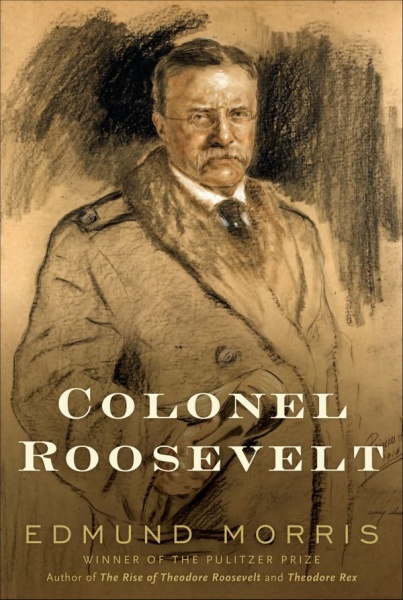
The list is quite long through mid January, so each will be described only briefly. When I last mentioned my reading, I was working through a three volume bio of Theodore Roosevelt by Edmund Morris. ”The Rise Of Theodore Roosevelt” (1979), “Theodore Rex” (2001) and “Colonel Roosevelt” (2010) were all engaging reading about one of the most fascinating figures in America’s history. It was also a great immersion into American life from the late 1850’s to just after the First World War. Is five thumbs up a valid way to measure books? If so, this trilogy earns it.
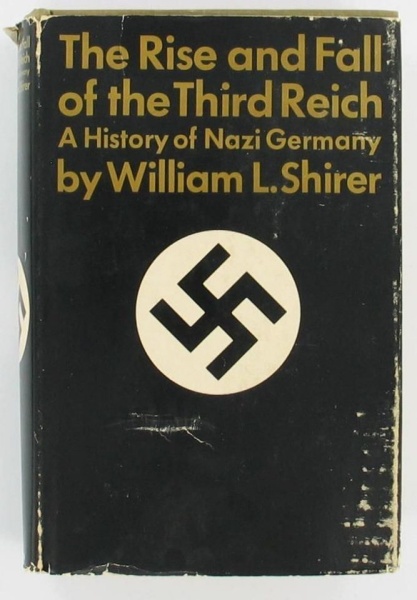
My other deep dive into history was William Shirer’s 1960 classic “The Rise And Fall Of The Third Reich”. I read this in my early 30’s after I plucked it from my mother’s bookshelf, but I think that another thirty years of living helped me digest its content more fully. This book added much to my understanding of German history, and dovetailed with the era of the Kaiser as covered in the Roosevelt books. My main takeaway here is that anyone who compares any modern politician to Hitler is a fool.
I also completed “The Economics of Politics And Race” (1983) by Thomas Sowell, along with his 2006 collection of essays entitled “Black Rednecks And White Liberals”. Sowell is an accomplished and iconoclastic economist who was born in the segregated south and continues to write even into his ninth decade of life. Sowell turns his economist’s eye on development patterns of different peoples in different places, and finds that some groups (Germans and Chinese, for example) have consistently out-performed other groups wherever they have settled, mainly because of the knowledge and habits they have brought with them. Many economists research to support their conclusions. Sowell is one of the rare economists who does the research first and lets that research lead him to conclusions. Those conclusions often go against the grain of popular thought, which is probably why you will most likely not hear his name during the soon-approaching Black History Month, despite his being one of the most accomplished black scholars of his generation.
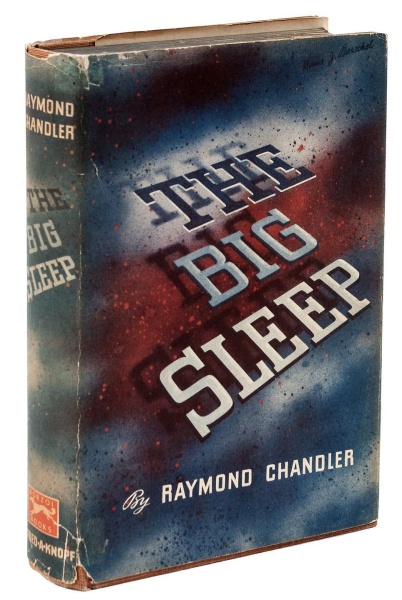
Not all of my reading is so heavy-duty. I need pulp-ish palate cleansers to recover from some of the thicker or more scholarly tomes. As a lover of “film noir”, the source novels have proved to be a fountain of great reading. Books by Raymond Chandler have made some great movies. I finished “The Big Sleep” (1939), “Farewell My Lovely” (1940) and “The Lady In The Lake” (1943). Each is a little fuller and has some differences from the famous films, but each is well worth the read.
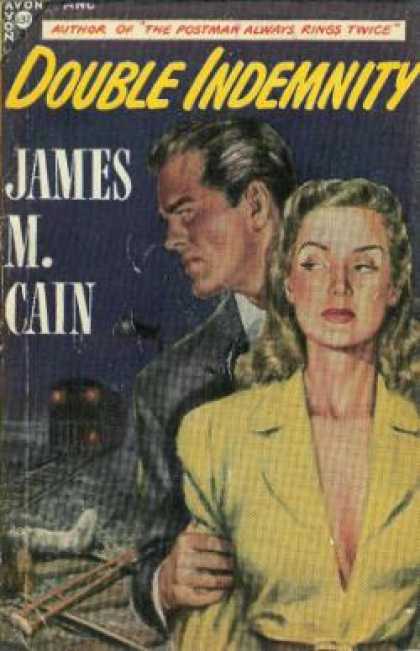
Another author from that era is James M. Cain, and I finished a trio of his novels: “The Postman Always Rings Twice” (1934), “Double Indemnity” (1936) and Mildred Pierce (1941). Each of these was also the source for a famous film. ”Double Indemnity” is a straight-up crime story, while the other two are more in the nature of potboiler fiction that proves that plots involving sex, conflict and intrigue were not invented in the 1960’s.
More modern pulp reads were “Strangers On A Train” (1950) by Patricia Highsmith and “The Godfather” (1969) by Mario Puzo. Again, each was the source of a famous movie. Alfred Hitchcock adapted the first and Francis Ford Coppola got two films out of the second. ”Strangers” is the only one of all of the above that I found particular maddening, mainly because of characters that I found thoroughly unlikeable. The Godfather, however, was pure spaghetti, meatballs and cannoli. Which means delightful.
Finally, I continued my slo-mo goal of working through my shelf of classic tomes, though in an audio version. I began with “Crime And Punishment” (1866) by the Russian novelist Fyodor Dostoyevsky. The story is about a disturbing person who considers himself too good for real work and decides that he is brilliant enough to commit the perfect murder. He is, of course, not that brilliant.
I would not have dived into the second book but for my plan to read these books in the order in which the physical versions of these books sit on my shelf. ”The Annals” by Publius Cornelius Tacitus is an ancient collection of historical writing covering the eras of Roman Emperors Tiberius, Claudius and Nero (A.D. 14-67). Augustus (who preceded Tiberius) is only covered in his death, and books concerning Caligula (who ruled between Tiberius and Claudius) are lost, as are books about the latter days of Nero’s rule. Included, however, was a secular account of the first large-scale persecution of Christians, mainly as scapegoats following a destructive fire in Rome. There was recently a series of popular memes about how often men think about the Roman Empire. It turns out that I have thought about it quite a lot. It was a great time for those who ruled, so long as they were able to avoid daggers and poisons that were so commonly wielded then.
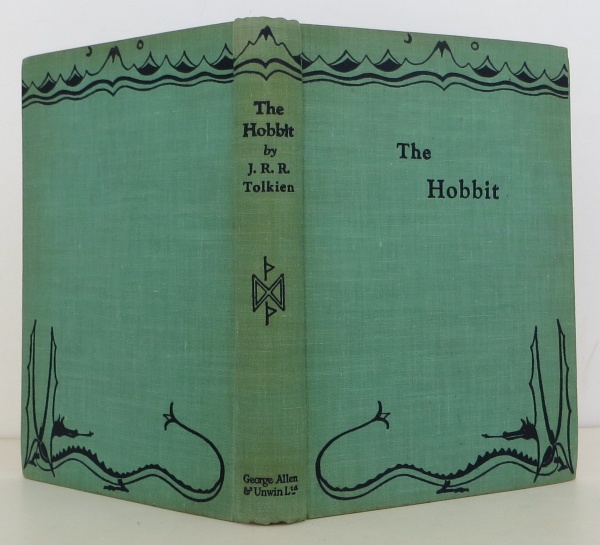
My final entry concerns a different genre altogether. The Hobbit is a 1937 story by the English writer J. R. R. Tolkein. It is a masterful work of fantasy fiction that originally came from a story created for his children. The title comes from the race of creatures to which belongs the main character, Bilbo Baggins. Bilbo is chosen by Galdalf the wizard to accompany thirteen dwarves to the land of their forefathers, which has been overtaken by a murderous dragon. The story is made even better by the delightful narration of Rob Englis, and his English-Australian voices and dialects. I somehow got through high school without reading “The Hobbit” but can now cross that one off my list – and at the same time most heartily recommend it as a thoroughly enjoyable read.
This was a long list and I will keep future installments to a much smaller number and can perhaps provide more in the way of highs and lows for each. But now we are caught up. At the very least, I am sure to improve my skills with crossword puzzles.
 J. P.'s Blog
This is a formidable and impressive list. Having read only a few of these (Third Reich, The Godfather), you now have me intrigued, particularly Thomas Sowell’s book, as I have always found him fascinating and spot-on.
If you want a really easy and fun read, I would recommend “Lake of the Ozarks” by Bill Geist. I got the book from my parents several years ago and reread it around Christmas. Geist was the guy who reported about all sorts of unique things and people for CBS News and the book was about his years working at his uncle’s hotel around the Lake.
LikeLiked by 1 person
The Sowell book “Black Rednecks” contains some fascinating historical research on the pre-Civil War south. Such as how black soldiers from the north in WWI averaged higher on IQ tests than white soldiers from the south. It is a really interesting read that convinces me (more than I already was) that there was simply no way the south could have won the Civil War under any set of circumstances.
LikeLike
When I read the book on release: “White Trash, the 400 year untold history of class in America”, there was an interesting citing of a Sowell study from the 1950’s, where he was describing sociologically unexceptable behavior of a very uneducated blue collar working class, and how it was bringing down metropolitan communities; thinking that people would identify the behavior as coming from people of color; when it was actually a description of white southerners working in Indianapolis! Something I still saw the vestiges of, in the four and a years I spent there.
LikeLiked by 1 person
I had the same experience. I grew up in Fort Wayne, that was a community that was heavily German in its ethnicity. I went to college in Muncie, that had experienced a large influx of people from the south who moved there for jobs. The vibe of those two communities was like night and day. I recognize different parts of Indianapolis from my time in both of those smaller cities.
One interesting point that Sowell makes is that racial segregation was not much of an issue up north before 1900, with blacks and whites often living in the same neighborhoods (stratified by incomes, of course) and schools. The big changes came in the great migration of black people to the urban north from the rural south in the years after 1900. Indianapolis, for example, only began segregating its public schools in the 1920’s. Many of the habits that northerners found unwelcome in the new arrivals had actually been commonplace in southern white society before the civil war, something that Sowell traced back farther to the different regions of Great Britain where immigrants to different parts of the American colonies chose to settle. Those who settled in New England came from parts of (old) England that prized education, industry and thrift, while those who settled in the American south came from rustic, wild “borderlands” between England and Scotland, where hunting and fighting seemed to be the prized characteristics. Where immigrants came from (and when they came) had a huge impact on the different parts of what is now the US. In Sowell’s view, this is the main explainer to why the American northeast developed so quickly while the American southeast developed so slowly.
LikeLike
Very interesting JP. The author of “White Trash”, Nancy Isenberg, has a section where she tries to disabuse people of the idea that America was founded by some holy, religious diaspora of people from England, and has a section talking about how the Brits were rounding up drunk and criminal Scots-Irish, literally off the streets, and throwing them into the piedmont south (read Virginia and the Carolinas) as indentured servants. Literally a precursor to what they did to Australia after American independence.
Ditto to your experience in Fort Wayne, I grew up in Chicago and Milwaukee neighborhoods of educated Germans who emigrated to America after the late 1800’s German trade group wars. Indianapolis, and it’s southern working class, was like being in a separate country! After moving back to Milwaukee to take care of my mother, then after her passing, applying for corporate positions around the country, I met a few very nice young college educated people of color in my apartment, that were recruited by large national businesses in Milwaukee to work there. They were both leaving, back to Atlanta and Washington DC, and both espoused the idea that the black community that existed in Milwaukee was nothing like they’re familiar with, and they couldn’t imagine finding girlfriends or starting families there. Most of those people came to Milwaukee as unskilled labor during WW2, and shortly after, for unskilled factory work; and I’ve actually seen signs Milwaukee put up on the roadsides back then, in the Delta, to recruit. This population was straight off the share-crop farms, and as the years went on, most did not develop an educational stance for their kids and grandkids.
LikeLiked by 1 person
Also, your suggestion sounds interesting!
LikeLike
I’ve read a few of those, though I think I too could probably benefit from a second read through with some number of years between then and now.
I loved the Godfather, which I actually read years before I saw the movie.
When I was a teen, I read the Hobbit; but couldn’t slog my way through Lord of the Rings at the time (and it wasn’t due to length; I’ve never shied from long reads); I eventually read it after watching the Jackson films, and found it okay. Then my daughter had to read the Hobbit for school, and I re-read it — but found myself put off by the tone of the thing.
Rise and Fall is one I should pick up again; I tried reading that one before, but I doubt I had enough not-American-centric perspective on the history of Europe to really understand it.
I presume you’re spending a lot of your windshield time ‘reading’. If I may presume to suggest a couple of historic fiction titles I’ve enjoyed recently, both by the same author, Eiji Yoshikawa.
Musashi — Though Musashi was an actual historic figure, the man has a big of a “folklore” aura around him; I can’t say for certain this novel is a part of that — but I think it might be. I wasn’t sure I’d like this one since it is fiction (and at the time I was looking for a bio), but the world building and characters in this book made it an instant favorite.
Taiko — the story of the rise of Toyotomi Hideoyoshi, the middle of the 3 great unifiers of Japan. If you’re not particularly interested in Japan’s ‘medieval’ history, this might not be as interesting. I actually found myself constantly putting the book down to look up the historical accounts of the battles.
LikeLike
I know virtually nothing about Japanese history, so your suggestions have some merit.
I wonder if The Hobbit is one of those stories that is better when the right person reads it to you – kind of like a really long bedtime story. 🙂
LikeLiked by 1 person
Hmm. If that’s the case, I suggest you don’t read the Hobbit at work.
I think the thing with that one is, it actually is a children’s book. It’s tone is geared toward children. I simply didn’t recall its being that way — the tone is completely different from the Lord of the Rings.
LikeLiked by 1 person
Love your selections! As a longtime and long term reader, I love a good selection of fiction and non-fiction. I especially recommend re-reading, or in many cases, actually first time reading crime fiction you think you already know from seeing the films your whole life! Maltese Falcon, Lady in the Lake, The Big Sleep. All great. I love biography of interesting people too, not just creatives, which is my field, but business people and scientists and even key politicians.
Summer coming up, key bookworm club season!
LikeLiked by 1 person
Re-reading is a great thing for a good book! And I agree that a good bio is always a treat.
LikeLike
Let’s see – socks still in place!
I have only read The Godfather from your list here, which was an enjoyable read, and I happily found it very true to the movie rendition. Or vice-versa if you prefer.
My current read is ‘My Effin’ Life’ by Geddy Lee. A book not just all about Rush, but it includes important and significant reading on his parents’ and grandparents’ experiences before, during, and after the Holocaust. What suffering and death they endured.
LikeLiked by 1 person
I had watched The Godfather movies, but had never read the book. The book was excellent!
I was never much of a Rush fan, but I think musician bios are often quite good.
LikeLike
That’s an impressive amount of reading. I mostly read fiction these days. The novel I liked the best last year is a pretty obscure one. I found it while wandering the aisles of a local library. The Middlesteins, by Jami Attenberg.
LikeLike
I checked it out on Goodreads, and sounds interesting. I plan to check out some newer stuff, but feel like there is so much older stuff to catch up on. And it occurs to me that I am (was) a lawyer who never read a novel by John Grisham.
LikeLiked by 1 person
So we all hated writing book reports in school, and now you’re doing it voluntarily? How do you explain that? (I have a few theories . . . )
LikeLiked by 1 person
Haha – I used to hate writing, too.
LikeLike
Great reads and a good variety. The Hobbit was enjoyable. I enjoy those pulp detective stories but usally get my fix from Old Time Radio shows. T. Roosevelt is an intriguing peron and I might pick that trilogy up.
LikeLiked by 2 people
I highly recommend that Roosevelt series, but it is a commitment!
You remind me that old time radio shows would be a great change-up.
LikeLiked by 1 person
I love ’em.
LikeLiked by 1 person
Thomas Sowell – I read a quote from him almost every day in my Twitter (X) feed – really a common sense kind of man, backed up by his research.
I’m looking forward to getting back to Arizona and the little public library in our community hall! Books, books, books and a gym in the same building where I can use the treadmill and stationary bike and read at the same time!
LikeLiked by 1 person
Sowell is a great source for a daily thought. He is pretty good at making a point while making you smile.
Me? I prefer more books and less treadmill. 🙂
LikeLiked by 1 person
Yes to monthly reports of your reading. It brings back good memories and does stimulate interest in doing more of it. The best shortcut to education is just reading. I was embarrassed earlier this month to realize I had not been to a library in so long that I had to borrow my wife’s library card to check out Code Talker by Bruchac.
LikeLiked by 1 person
I was the same way – I have no idea whatever happened to my library card. I used to read all the time, but then life got busy and I mostly stopped.
My basic sense of thrift (and my now-large demand for material) dictates many of my choices. My local library is a great online source for free audiobooks. There is also a site called Librivox, which is devoted to audio versions of books in the public domain. I have a subscription to Audible, but I only choose things I can “buy” with the points that accrue from my membership, and not those that cost extra. I am sure I will find some other sources, but those seem to work for now.
LikeLike
Well JP, as I read through your list of books, I’m ashamed to say I have only read “The Godfather'” by Mario Puzo and I assume I read it after the first (and best IMHO) “Godfather” movie. To make matters worse, I was a literature minor in college! In high school we lost our millage the first two years of high school, so we only attended school for four hours – English, History, Math and Science classes, a bare-bones education. We went whole days for senior year, but we never delved into any of the classic or historical books. When I got to college, I soon realized what a crummy high school education I had. I remember writing book reports, more so in college though, often on the same books, over and over again and it was a long time after I graduated from university before I wanted to open a book for an enjoyable read. I remember you mentioning the Teddy Roosevelt series to us and also in a comment on my blog, so in my January 21st post I mentioned you and included the link to the historical film about Teddy Roosevelt and the Migratory Bird Act of 1918 and the plight of the Snowy Egrets that you gave me.
LikeLiked by 1 person
I remember the Roosevelt film you sent, it was really interesting!
I got assigned some reading in high school, but not many of the classics. 20th century authors seemed to be most of the assignments. As a business school major, I took very few English courses, so I also felt that I got a defective exposure to good literature. So better late than never!
LikeLiked by 1 person
Yes, it was very interesting. I don’t know how my teachers made their picks, but I still have not read many classics, something I hope to do someday. You are doing great with the audio books. My boss uses Chirp for his audio books – they have good deals, in case you exhaust the library system’s collection. Now they have the relationships with other area libraries, so you should be set for a while.
LikeLiked by 1 person
I will suggest Elmer Kelton, perhaps starting with The Time it Never Rained. I was raised in the area he writes about and was old enough to have memories of not seeing grown men ever smile in the early fifties!
LikeLike
Thanks for the suggestion – it looks like I need to start a list!
LikeLike
I read The Hobbit decades ago, but to another commenter’s point I don’t think it would resonate with me all these years later. It was an amazing story, but not so amazing to tempt me to read the Lord of the Rings series. I enjoyed fantasy novels at the time (somewhere in my teens) but I’m drawn to too many other genres these days to give it another read.
LikeLike