Pouring Gasoline On My Pants Because . . . Safety?
We all have the occasional bad day. You know, the kind where everything seems to go wrong. I had one of those one afternoon last week.
I had not left enough time to do a couple of things I needed to do before leaving for work. I needed to pick up a couple of things at the grocery store – and got delayed when the “Self-Scan” system at Kroger needed to call for assistance – just as the staff was dealing with a lost child. Then I stopped for a quick carry-out from a newly opened Chipotle – and ended up with a dish I would describe as a Mexican sour cream soup. Then, on the way home, my “low fuel light” came on in my car.

I am old enough to remember when a low-fuel situation was not a catastrophe. But it is in my car, which has a tiny gas tank. Worse, the tank is shaped so that the last 1/4 tank disappears faster than free beer at a frat party. I did not have time to stop for a fill-up, but was concerned that I had enough fuel to make the 20+ mile round trip to and from my workplace.
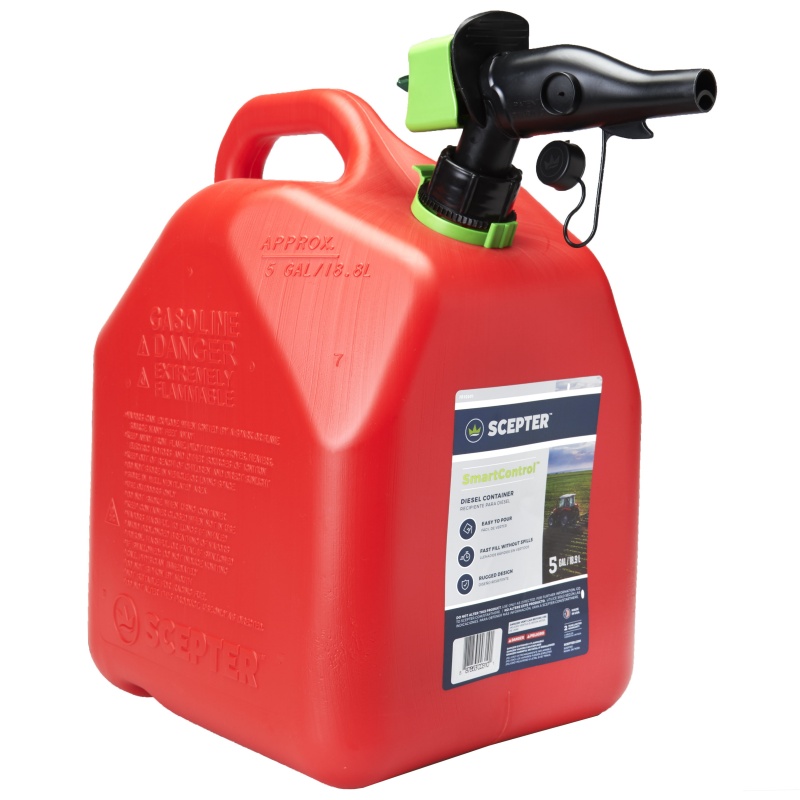
I decided to solve the problem in the time-honored way of procrastinators everywhere – I had at least a gallon of gas in the 5-gallon can I keep for the lawn mower. The plan was to dump a gallon into the car and all would be well. Right? Um . . . no.

When I bought my riding mower a few years ago, it was time to replace the 2.5 gallon gas can made of galvanized steel with something larger. My old gas can was a lovely thing that did its job without complaints (or leaks) for a long time. It had a nice plastic spout and was easy to pour the fuel right where you wanted it – and nowhere else. Two-and-a-half gallons, however, would have me running to the gas station much too frequently with my new, far-thirstier riding mower.
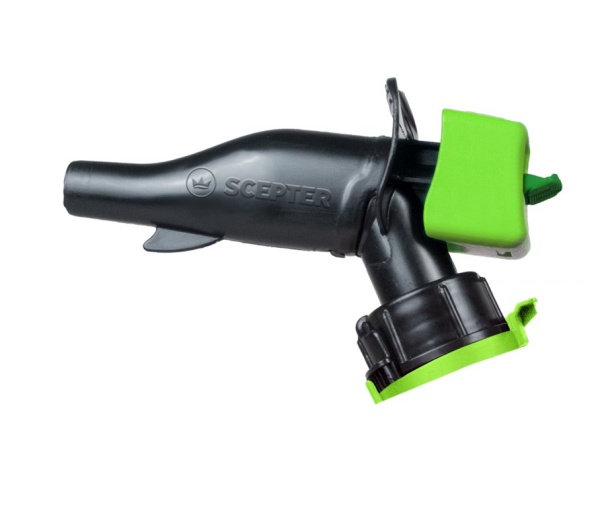
Unfortunately, it was 2019 and not 1988 and I was chagrined to find that new safety regulations now apparently required gasoline to be poured in a new way, with a complex self-closing device on the nozzle. Instead of just popping off the cap and pouring, I now have to pop a cap, balance the can in the right way, then push (hard) in on a big green spring-loaded button that opens a valve and allows the liquid to actually pour. Oh yes, and there is a plastic cap on the end, just like on my old one.
The last time I filled the can, I somehow cracked a piece of that mechanism, so that pouring the gas now results in a dribble of gas pouring onto my mower/the driveway/my hands. Because . . . safety? Or perhaps because of the need to maintain a clean environment? My older fuel cans never had any pieces so delicate. But older cans that do not pour gasoline onto the area surrounding the intended receptacle are evidently too unsafe to sell now.
Apparently when I hold the can at an angle to get the nozzle into the car’s filler spout, gasoline comes out of unintended places at a far faster rate than when I hold it an an angle necessary to fill the mower. I suppose that a small stream of gasoline pouring on a leg of my blue jeans is safer than the time a former law partner bent over an open gas can before coming into the office and had his necktie fall into the opening. So there’s that. If the goal is to reduce evaporative emissions, the gas can manufacturer failed badly – far more fuel vapors came from the leg of my pants than from the gas that did not spill over the prior twenty or more years.
My old steel gas can lasted for probably 30 years, and I only disposed of it after I no longer needed it. A newer, smaller plastic can is probably also about 20 years old and still works just fine. But my new, safety-design can must now be thrown out and replaced with a new one. I wonder if I can just lease the next one, and turn it in for a new one every two or three years.
I know – it is not the gas can’s (or the government’s) fault that I let my car get low on gas, or that I took the expedient route to using the mower can to fill my car. But this experience is just one more example of the economist’s “Law Of Unintended Consequences”, which posits that for everything you intend when making a change, there will be at least one result that you do not intent (and which you probably never even thought of). So, a design intended to improve safety and to decrease fuel vapors going into the air has resulted in an increase in both (in this particular situation).
The good news is that my denim wick (with a 30 inch inseam) did not come into contact with an open flame. That would have been bad. Far worse than a teeny bit of evaporative emissions into the environment. Which happened anyway. But I suppose we all must pay a price for safety and a clean environment. I am just glad that the price was smelling gasoline vapors for a few hours and not deductibles and co-pays that would accompany a trip to the hospital.
Now all I have to accomplish is to not have a traffic accident when I drive somewhere to buy a new gas can.
 J. P.'s Blog
Running into work with flaming pants is a good way to establish your place in the hierarchy!
You must own a Toyota, after a lifetime of owning them, I realized early on that three-quarters of the gas was tracked by the gauge from full to half, with the last half of the gauge being only about a quarter of the gas left. I don’t know why this is, but it was the same for my 73, 77, 85, 87, and 93. It was only my 2005 Scion xB that seemed more accurate.
LikeLiked by 1 person
A Honda, but mine is the same as you describe. Hitting the bottom quarter means “this is your last chance to fill up when it is convenient for you.”
I remember when hot pants were a thing in the 70s. I’m glad to not bring them back!
LikeLike
That’s a crazy situation you found yourself in. Years ago I owned a VW beetle. From 1962, I think. It didn’t have a fuel gauge! I had to guestimate how much gas was in the tank.
LikeLiked by 1 person
I had a car in college, a 1959 Plymouth sedan. In wet weather something would short out and the gauge would read “full”, no matter how much gas I had. I learned that a long straight wooden stick could be run down the fill tube so as to touch the tank bottom. I could pull it out and get a read on the fuel level by how much of the stick was wet. Kind of like a dipstick for gasoline.
But at least back then you could pour a can of gas into it if you had to.
LikeLiked by 1 person
I did buy a new gas can about 5 years ago, and unlike my 30 year old gas can the nozzle had 2 passages so that air and presumably fumes would be sucked in as gas came out. It took a bit of getting used to but has held up. Maybe you need to get a 30 old can from an estate sale.
LikeLiked by 1 person
The thought of a “vintage” can has occurred to me. But I like the plastic because my garage floor occasionally gets wet and steel cans will rust on the bottom.
There are probably other designs than the one I bought.
LikeLike
I share in this misery, my friend. We have several pre-regulation plastic cans which worked just fine and then I had to go and buy a new one, with the same nozzle you show here. I had to read the step-by-step directions just to figure out how to activate the flow (let alone not spill any on my jeans). I also couldn’t dispense the entire can without my hand developing a cramp. Talk about inefficient and frustrating. Ultimately, I just removed the whole contraption and filled my (mower) tank with the help of a funnel. Wouldn’t work on a car (or is there a funnel designed for it?) but at least the leaking and frustration are removed from the process.
LikeLiked by 1 person
It’s true – they design for maximum safety and minimum evaporation, which results in a guy splashing gas into a funnel like its 1950. I’ll bet you are not alone.
LikeLiked by 1 person
Sorry about the double comments. WordPress only let me post anonymously (instead of “Dave”) and then I it didn’t show as posted. WP is far from perfect…
LikeLiked by 1 person
I understand this misery, J P. We were doing fine with several pre-regulation plastic cans, but then I had to go and buy a new one. It took careful following of the step-by-step instructions just to get the gas to go. And I could never get through an entire filling without my hand cramping from holding the nozzle open. Ultimately, I removed the entire contraption and simply filled my (mower) tank with the aid of a funnel. More emissions than the manufacturer intended, yes, but at least I don’t have any leaking (or frustration) anymore.
LikeLiked by 1 person
I’ve felt your pain, JP!
Luckily, I found that you can purchase something called an “EZ Pour Replacement Spout Kit” that takes care of the issue. The kit consists of a new old-style flexible spout, two different sizes of screw-on rings (to fit different sized gas can openings) and a new vent.
New cans don’t have a vent, so drill a 1/2 inch hole higher than the fill line on the can and snap the new vent in.
So far, I’ve converted two cans and they work like a charm. Menards carries them for about $10 each or you can order them from the manufacturer.
Hope this helps!
LikeLike
I think I replied to an earlier comment. WP must be acting up today, you aren’t the only one commenting twice.
LikeLike
I have had days like that. It takes me more time than you before I can Blog about them!
LikeLiked by 1 person
Had I turned into one member of the Fantastic Four (“Flame On!!”) I’m sure it would have taken me longer. Remaining human with no marketable super power allowed me to be quicker.
LikeLike
I’ve felt your pain, JP!
Fortunately I found a solution that didn’t involve throwing away an otherwise perfectly good gas can.
After trying a couple of inferior replacement spouts, I found the “EZ Pour Replacement Spout Kit.” For about $10, you get a high quality old-style replacement spout, two different sized screw rings, and a snap open/close vent.
The spout is fairly self-explanatory. To install the vent, drill a 1/2” hole in the can higher than the fill line, then push the vent into the hole.
I’ve installed two of these kits so far and they work like a charm. Menards stocks them or you can order them directly from the manufacturer. Don’t accept substitutes, because the imported ones I tried first had cheap rubber rings on the base of the spout that weren’t compatible with gasoline – they leaked almost as bad as the dang fool newfangled spout did!
Hope this helps! – – PRNDL
LikeLiked by 1 person
DING DING DING – you win this thread! I didn’t expect the perfect solution, but you have provided it! I will be visiting Menards soon. Maybe their French Burnt Peanuts candy will be in stock too!
LikeLike
No worries about the WordPress thing.
Happy to be of service!
LikeLiked by 1 person
Replied twice but wasn’t prompted to input my name and e-mail. Hopefully those can be rescued from the WordPress but bucket? 😉
LikeLiked by 1 person
WP is being difficult today, it appears. I think I replied to one of your earlier comments.
LikeLike
I always hate running out of gas but spilling it on your pants? Good you quit smoking years ago, lol.
LikeLiked by 1 person
Good point – smoking is bad for your health in multiple ways.
LikeLiked by 1 person
I HATE gas cans like this, but I don’t have anything else to add. 😦
LikeLiked by 1 person
The positive reinforcement is enough!
LikeLike
Looks like we can still buy the old kind of plastic fuel can here in Canada. Even if we couldn’t get them here, I think my husband has enough cans for gasoline and diesel to last the rest of our life!
LikeLiked by 1 person
Oh boy, you sure had a tough day!
LikeLiked by 1 person
Could have been a lot tougher!
LikeLiked by 1 person
Yikes, what a set of circumstances for you at all one time. The U-scan always breaks when you are in a hurry. My Regal never displayed the amount of gas after about 10 years, so the mechanic said he COULD rip up the front panel, or I could just keep track how many miles I drove. I have an electric mower and had to buy a push mower because sometimes when the grass is so lush in early Springtime, if it was damp in the least, the electric mower would rebel and stop and once caused a fuse to blow before we had a circuit breaker. I have never used a gasoline can. Happily you were not injured, but scary nonetheless.
I have had an unpleasant week of circumstances as well. While outside when the generator tech was doing maintenance and configuring my wireless to the generator, I was chitchatting with him and standing on the cement patio so my feet stayed dry – we had rain the night before. I happened to turn around and saw a humongous hole where lava rocks and dirt had been dug up. A closer look revealed a burrow … a deep burrow. I said to the tech – what the heck dug this hole and burrow? He came over and said a groundhog or a skunk and told me to throw a bunch of mothballs in the hole. That didn’t sound good to me – I want it gone. Once inside I called my neighbor on his cell and asked if he’d seen critters in my yard. He asked me why. So he looked at the hole and said “I have three of them and put mothballs in and covered them up.” (Well great, then he/she migrated over here then?) The handyman said he’d set a trap and we’d put human food out for it … no, it will bring unwarranted critters like mice, rats. So a wildlife removal service is coming to set a trap/bait with special bait Monday morning. Thursday morning I put the car in the garage – the garage door got stuck going down – a broken cable which necessitated a “fix” by the garage door repairman. No words except like your story, the old adage is “when it rains, it pours.”
LikeLiked by 1 person
Ugh – that sounds like a terrible week!
LikeLiked by 1 person
Yes, at least it was spread out over two days and not all at once like you. I’m a little worried what lurks under my bedroom window – hopefully I’ll find out soon. The guy will set a trap tomorrow morning.
LikeLiked by 1 person
I wonder if the designer of the can has ever poured any gas. The handle of the can is on the top instead of the rear which would be a natural pouring position so that you could rest the nozzle on the lip of the receiving tank, thus, the left hand on gas release gadget and right hand on handle. The release gadget is “pourly” made. That’s funny I ain’t kiddin. I got rid of them and bought a $60 dollar metal safety can from Lowe’s.
LikeLiked by 2 people
It is amazing the designs that make it through layers of management reviews. I was once talking with an engineer I know about the comic strip Dilbert. His response was “I live it.”
LikeLike