Reading Some Crime Classics
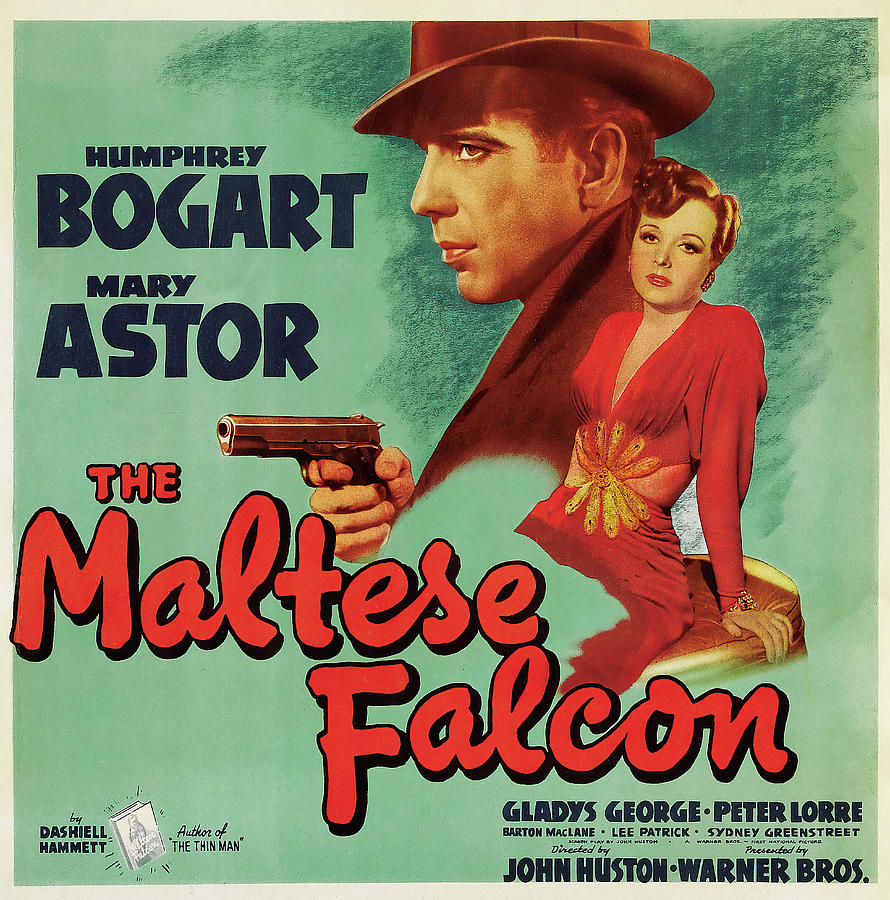
One of my favorite things is classic cinema. There were some truly great films that came from Hollywood during its golden age. And one of my favorite genres is the “crime film”, or its close relative “film noir”. Many were cheaply made “B” pictures, but others were some of the best movies ever made. The 1941 picture “The Maltese Falcon” starring Humphrey Bogart as detective Sam Spade has long been a favorite of mine.
I had known for years that many of these classic films were based on novels of the “crime fiction” type. But even though I have always been that type of person generally classified as “a reader”. But I have recently changed that.
As a kid, I sopped up every “Hardy Boys” book in the series. Or more of them, actually, because some of the books were re-written in the 1950’s to replace earlier versions from the 1930’s, and I had both versions. As I got older, I always kind of wanted to try some of the classic detective novels that had sired some of my favorite old movies, but never found the time.
But these days, time is something I have plenty of. And with technology that allows for someone else to read those books to me as I drive, I have made the dive into a vanished (under)world. A recent subscription to “Audible” found me casting about for something fun. I decided to try “The Maltese Falcon” by Dashiell Hammett, and also learned a bit about the author.
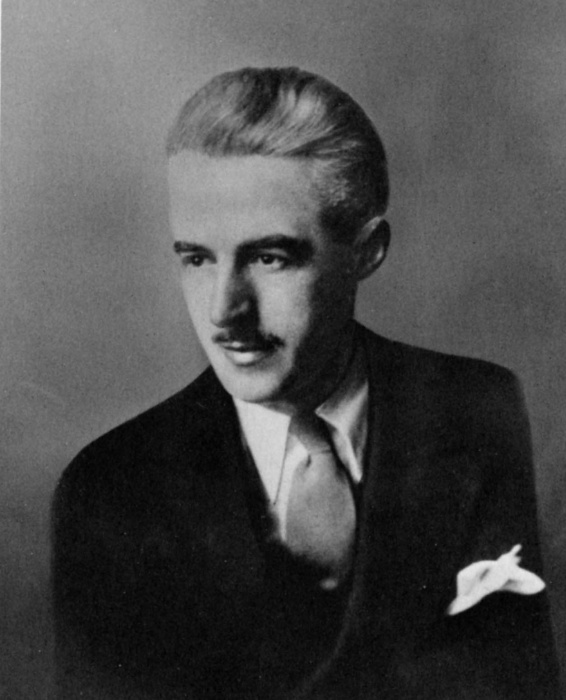
Samuel Dashiell Hammett was born in 1894 in Maryland, but grew up in Baltimore and in Philadelphia. He left school at age 13 because he was needed to help support the family after his father’s health declined. In 1915, Hammett became an operative for the Pinkerton National Detective Agency, where he worked for seven years (with some time out for service in WWI).
Hammett began writing in 1922, and was first published in magazines which featured his short stories. Most of those stories were inspired by his years with Pinkerton, and this subject was explored through a writing style that many have called the first of its kind – hard-boiled realism.
I had not realized that Hammett only published five novels in his lifetime, all between 1929 and 1934. As a fan of classic film, I immediately recognized the last three – “The Maltese Falcon” (1930), “The Glass Key” (1931) and “The Thin Man” (1934). I did not recognize the first two titles (both from 1929) “Red Harvest” and “The Dain Curse”.
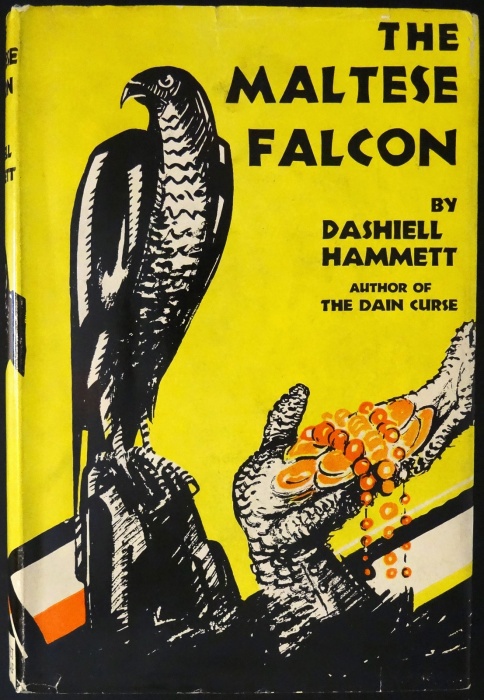
I began with “The Maltese Falcon”. It was difficult to read the book without visuals from the classic 1941 Warner Brothers film taking over in my head. For those unaware of the plot, it involves a San Francisco private detective named Sam Spade who is hired to tail a man as the way to find the mysterious client’s missing sister. Spade’s partner Miles Archer volunteers for the job and is promptly killed, which begins Spade’s quest to find his partner’s murderer and to untangle the web of intrigue surrounding a priceless antiquity that is at the center of things.
The novel from 1930 and the film from 1941 have some significant differences in detail. First, the literary Sam Spade was in the habit of rolling his own cigarettes with Bull Durham tobacco. The Humphrey Bogart character smoked them too quickly to go to all that trouble. Had I been required to roll my own cigarettes I would never have started smoking them. Also the movie Spade was able to do without hardships like prohibition and shirts with separate collars. Otherwise, the film follows the book quite closely, though with some minor sub-plot omissions that are necessary to cram a story into a telling in under two hours.

After finishing (and greatly enjoying) that familiar tale, I decided to try another. I opted for Hammett’s first, “Red Harvest”. I had been a little leery of it based on the title and Hammett’s well-known political leanings as one of the many genuine Communists who was active in creative circles at the time. My fears went unrealized. Hammett seems to have been one of a vanished breed of left-wing writers who parked his politics (mostly) at the curb when the typewriter was warmed up and humming.
“Red Harvest” is narrated by a nameless man whose identity does not become apparent until the beginning of the second chapter. He is character who has become known as “The Continental Op” – an operative of the San Francisco office of the Continental Detective Agency. He goes to a small, grim western mining city to meet with a client who does not live long enough to keep the meeting. Hammett spins a great (and grim) yarn about a town under the control of racketeers and about the detective’s new quest to do something about that.
In the real world, Hammett’s life was beset by illness (tuburculosis), alcoholism, and the kinds of problems that followed those with active Communist sympathies after WWII. He died in 1961 at the age of 66 of lung cancer. Perhaps this is why his most productive years were the 1920’s and 1930’s, with subsequent projects being much fewer and more infrequent.
But those peak years left us with some – well, I was going to say great literature. Actually it was great, in terms of its readability and its ability to conjure a world that most people have never experienced. Hammett is often credited with being among the first able to write about dangerous places full of dangerous people who seemed quite true to life other than their ability to turn snappy, memorable phrases. Like this one from “Red Harvest” where The Continental Op has his gun trained on one of the tough guys: “Be still while I get up or I’ll make an opening in your head for brains to leak in.”
Or this one from “The Maltese Falcon”, as “the fat man” pours a drink: “I distrust a man that says when. If he’s got to be careful not to drink to much it’s because he’s not to be trusted when he does.”
Or a line from “Red Harvest” that provided the title to a Coen Brothers movie from many decades later. As the Continental Op thinks about the violence that has been unleashed among feuding racketeers: “I don’t get away soon I’ll be going blood-simple like the natives.”
A world of plentiful bootleg whisky, unbroken strings of cigarettes and indiscriminate gunfire is a dangerous place, and real-life applications of at least some of those things eventually put Hammett into the cold, hard ground. And while the world in Hammett’s books is not the kind of place I would want to live, it is sure a treat to visit. Especially while driving at night.
 J. P.'s Blog
I’m a big fan of audio books and driving while listening is PERFECT. Sometimes we don’t want to reach our destination if the book is really good.
LikeLiked by 1 person
I have discovered that when you drive enough, you eventually want to reach the destination no matter how good the book is, especially when you know that you will pick it back up soon enough. 🙂
LikeLiked by 2 people
I hear you…
LikeLiked by 1 person
I highly recommend reading his novels as well. When I moved back to the Midwest from Washington D.C. after my Dads passing, to watch over my Mom, I was in my local library and saw Maltese Falcon on the shelves, and pulled it on a lark to read in between all my chores at my Moms house. I actually was amazed at how close the dialog was to what was in the movie, as well as the plot line; virtually unheard of in todays book/movie adaptations. I ended up reading the rest of his books as well. If you ever have the chance of seeing a restrike of the film, a pristine new print, in a projected format, please do! My town has restored vintage theaters, as well as some well kept neighborhood screens that run a pastiche of old films, indie films, art films, and European offerings. I had never seen the Maltese Falcon on anything but television for years, until one of these local venues showed a brand new print, on a huge screen, and with their carbon arc projector. I was in awe for the entire showing. I saw background and foreground images, as well as large scenes, with a level of detail and clarity I never knew was there! This was twenty years ago, and I still think about that showing!
LikeLiked by 1 person
I got that theater experience in the late 1970’s when I watched a newly restored print of the 1927 silent version of The Phantom Of The Opera starring Lon Chaney. The film was shown in one of the grand old theaters in Fort Wayne (The Embassy) that had seen the benefit of some restoration as well. The movie was accompanied by the restored theater organ. The whole experience was a thrill. I also saw Hitchcock’s Rear Window when it was re-released in the mid 1980″s. love seeing classic movies on a big screen whenever I can.
LikeLike
Hi. Years ago I read one or two of his books. You’ve got me interested in reading more by him. I like hard-boiled, quick-paced mysteries. Recently I read a pretty good one from that genre: Dead Cat Bounce, by Norman Green.
LikeLiked by 1 person
Thanks for the tip – I am looking for good suggestions.
LikeLiked by 1 person
For my birthday a few years ago I got a couple of old pulp fiction detective stories. I did read The Lady is Afraid by George Harmon Coxe but it was so hard to see the little tiny print on the yellow pages I didn’t bother with the others.
Hopefully you got some nice big ol hardcovers for your reading pleasure.
LikeLiked by 1 person
In my experience, many old books used fairly small print, even the hardcovers. With the audio books, I let the guy reading them worry about the size of the print. 🙂
LikeLike
Now I have a couple more to add to my TBR stack. I love the Sam Spade character. Sam Shovel was pretty good, too, though.
LikeLiked by 2 people
Gee Herb, I would never have thought of you reading dirty books. 🙂
LikeLike
Wow, this brings back some really old memories!
LikeLiked by 1 person
Both of us are getting to the age where we have quite a few of those. Better than not having them, I guess.
LikeLiked by 1 person
We are twice blessed when we have both life and memory!
LikeLiked by 1 person
Well this job has opened avenues to you, figuratively and literally, JP. You’re enjoying these audiobooks and making the time fly as you are marking miles. I have never listened to an audio book before. This year I signed up for Goodreads, aspiring to reach 25 books read in 2023 but I adjusted it to 15 books as I decided that was more realistic. I’d read how fellow bloggers read a lot and still worked, so I had to make it work for me too. Since I took the bus to/from work for eons, I was always an avid reader then and on off-work hours, but as many books as I read, I neither read nor saw the movie “The Maltese Falcon” – but maybe after reading this post I shall give it a whirl.
LikeLiked by 1 person
I was a reader for a long time, but time got scarce and I almost stopped. This has been a great experience so far.
LikeLiked by 1 person
Your last sentence was my comment’s first thought. It must be great to listen to this genre alone and in the dark, with nothing but your engine’s rumblings and the endless stripes of the highway to keep you company. I have no doubt audiobooks are a great way to go, even though I’ve never tried them. I’d need a job like yours, or some other situation where I’m captive to whatever is in front of me, instead of tempted by my inclination to multi-task.
LikeLiked by 1 person
It is really the perfect situation for audio books. Now I’m just trying to figure out how the platform works so that I can expand my selections.
LikeLike