Binging Alfred Hitchcock
I love old movies. And I love good action/mystery/suspense movies. Fortunately for me, there is a lot of overlap in those categories that simply scream for a Venn diagram. And for lovers of such films, one sweet spot is the work of director Alfred Hitchcock.
Alfred Hitchcock was a household name when I was a kid. Unfortunately, I equated his name with two films. The main connection was to The Birds (1963). A movie that I was not allowed to watch until I was over the age of ten because both of my parents (who did not agree on much) considered it too frightening for kids.
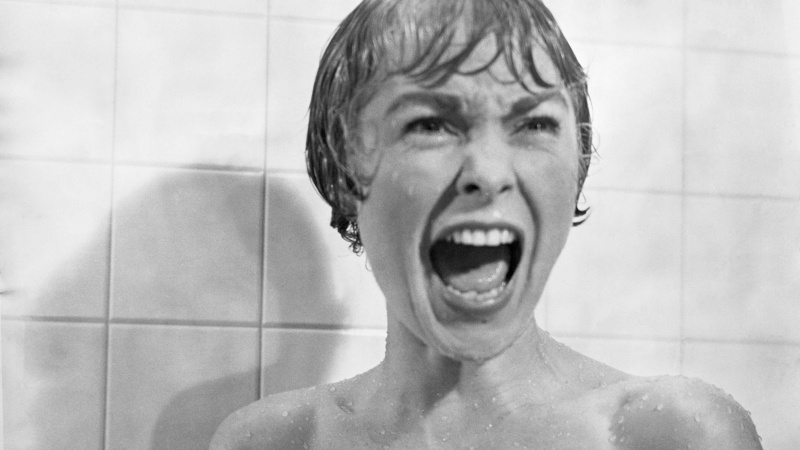
The second was Psycho (1960), a movie best known for a grisly murder of a young woman in the shower of her room at the Bates Motel. Even before seeing that one, I knew a woman of my mother’s age who refused to live in a house with a white tile bathroom because of that famous scene in Psycho.
Because Hitchcock did few (possibly less than few) really great films after The Birds, my exposure to his work was stuck in those examples of fright and horror. It was only later when I came upon some of Hitch’s earlier work, which caused me to change my mind completely.
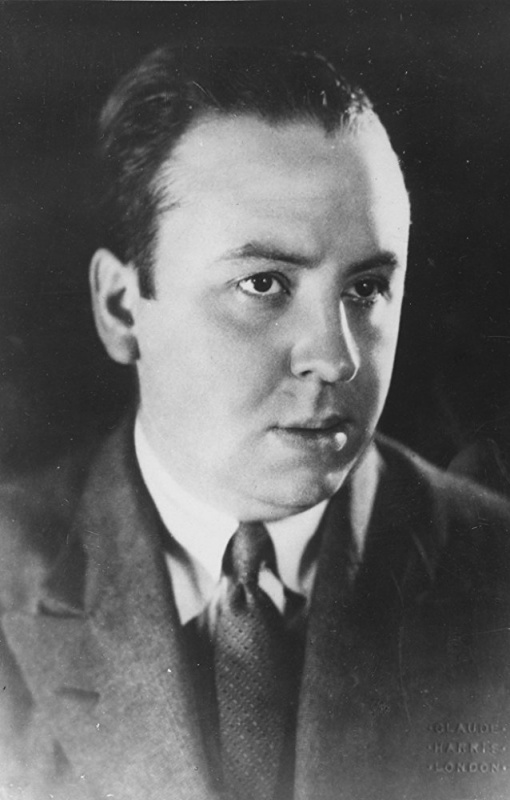
Alfred Hitchcock was born August 13, 1899 in Essex, a location east of London, England. The lad got his start in British cinema as a title card designer in the early days of silent film. His first directing credit was in 1925 and by 1929 he directed the first British “talkie” in Blackmail (1929). Years ago we found a DVD set of Hitchcock’s early English films. Despite the poor quality of the prints used for these movies (which have gone into the public domain) I found that these movies have held up as being quite watchable today.
His work of the 1930’s put him among the most sought-after directors, and by 1939 David O. Selznick convinced him to come to Hollywood, where the director continued his winning ways with movies like Foreign Correspondent (1940), Suspicion (1941) and Notorious (1946). Rebecca (1940) won Oscars for best picture and best director. Had I paid more attention when I would occasionally catch one or another of Hitchcock’s pre-1950 pictures on television, I might have noted how his direction resulted in compelling stories, high suspense and innovative visuals.
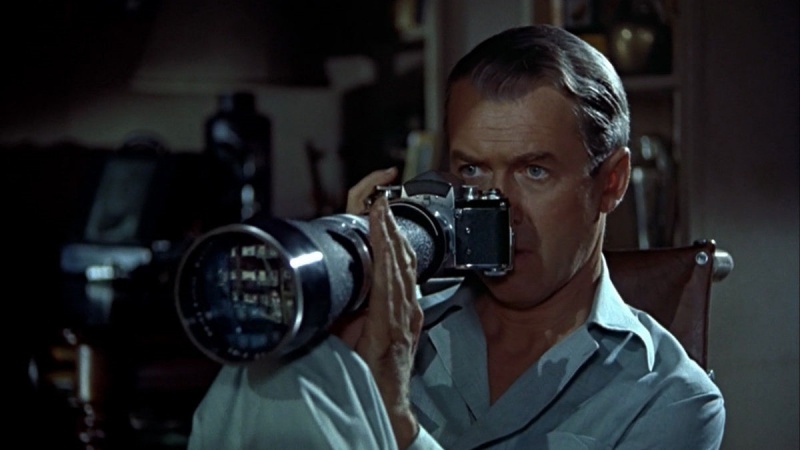
It was not until the early 1980’s when his 1954 film Rear Window was re-released in theaters that I got a blast of what I still think of as Ultimate Hitchcock. In it, James Stewart is “Scotty”, a news photographer who has been rendered a temporary invalid by a massive lower body cast following a bad accident. He sits in a wheelchair in his New York apartment, with nothing to do but look out of his apartment window across a courtyard at the many lives on display through their own open windows in a reminder of what urban life was like before commonplace adoption of air conditioning.
His co-star is the incomparable Grace Kelly as Lisa, a young woman of wealth who works for a fashion magazine, and who is in love with Scotty despite the stark differences in their lifestyles. Things heat up when Scottie sees one of his neighbors acting suspiciously after his harpy, invalid wife suddenly disappears from the apartment. It takes some doing. but Scotty finally convinces Lisa and his visiting no-nonsense nurse (a perfect role for Thelma Ritter) that foul play is involved.
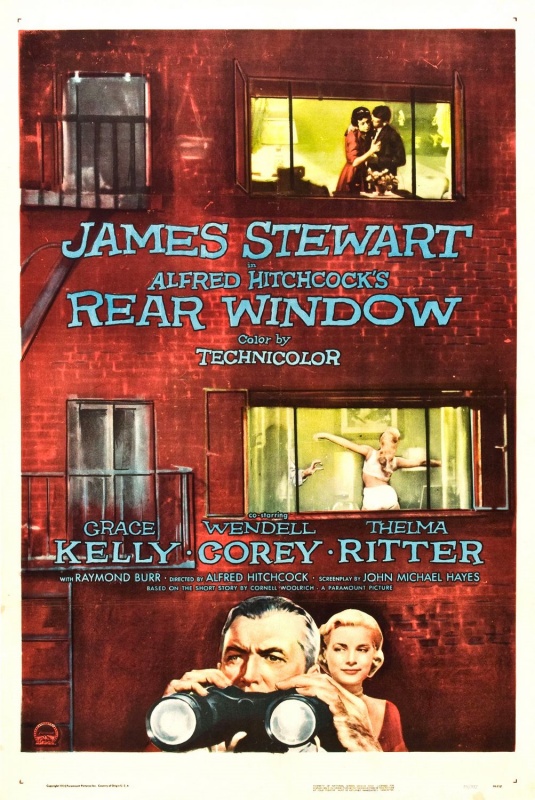
The whole package is one of the best examples of the filmmaker’s art – one that is admired by both film-snobs and by the public. Smart, innovative camera work helps to tell a story that plays out through a multitude of open windows. A taut script that is at varying points playful, touching, and most of all, grippingly suspenseful. That it comes at the tail end of the glorious era of Technicolor provides more of the visual candy that makes this movie so worth the watch.
Some have called Rear Window the best film Hitchcock ever made. The only niggle I have with that claim is his (almost) unbroken string of movies that are right up there with it. They include these:
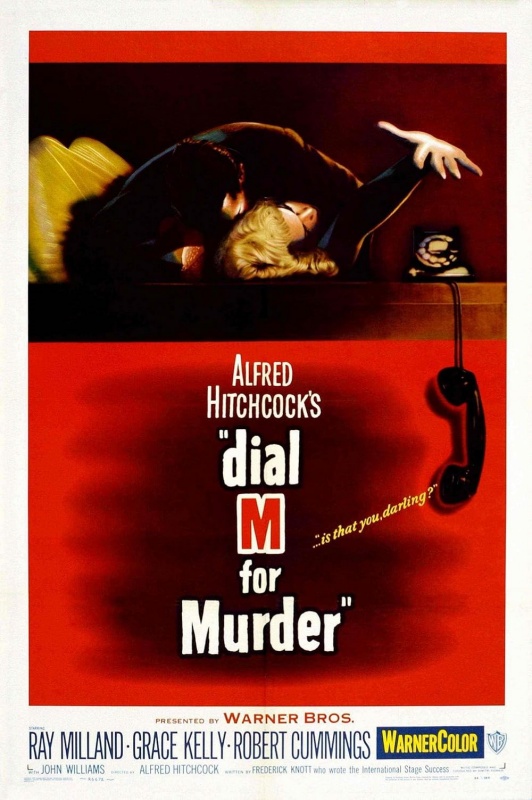
Dial “M” For Murder (made immediately before Rear Window in 1954). In it, a professional tennis player (Ray Milland) who has gotten used to his wife’s (Grace Kelly) money arranges to have her killed before she can leave him. Things, of course, go terribly wrong for him.
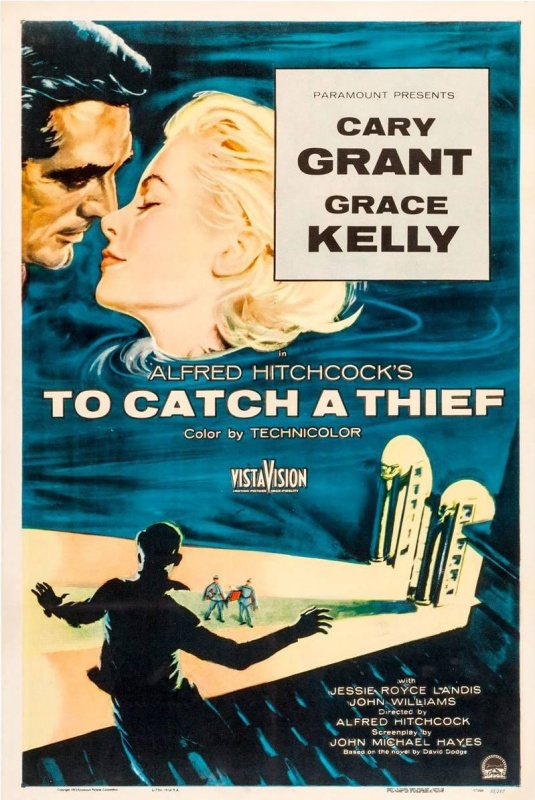
To Catch A Thief (1955). Cary Grant is a reformed jewel thief on the French Riviera, who comes under suspicion after a string of jewel robberies that look to be his work. Grace Kelly (again) is the young American woman he tries to convince of his innocence as he works to solve the mystery. This one may have both the lightest tone and the most sumptuous visuals of the bunch.
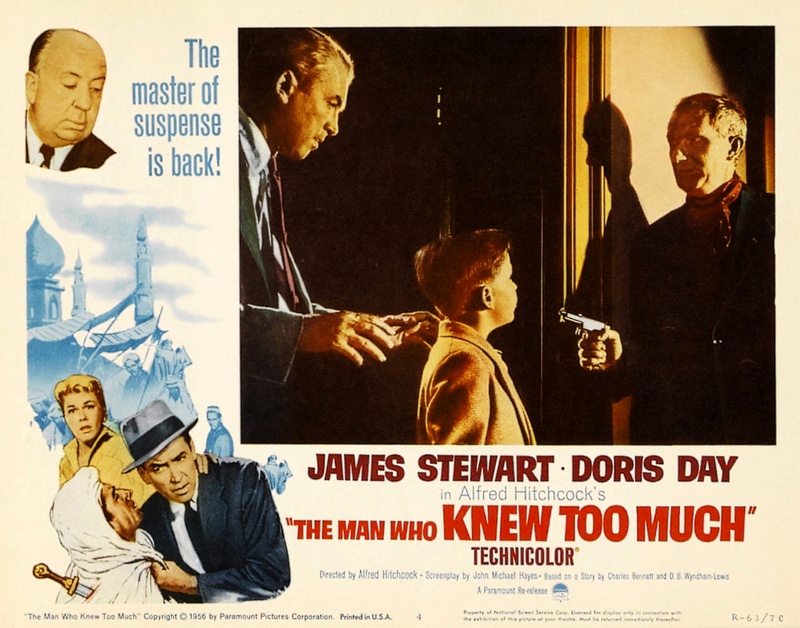
The Man Who Knew Too Much (1956). This is the only remake of this crop, with the original having been done by Hitch in 1934. This time, James Stewart is an American doctor who is vacationing with his wife (Doris Day) and young son in Marrakesh. Stewart’s character sees something he should not have seen and the bad guys kidnap his son to keep him from spilling the beans.
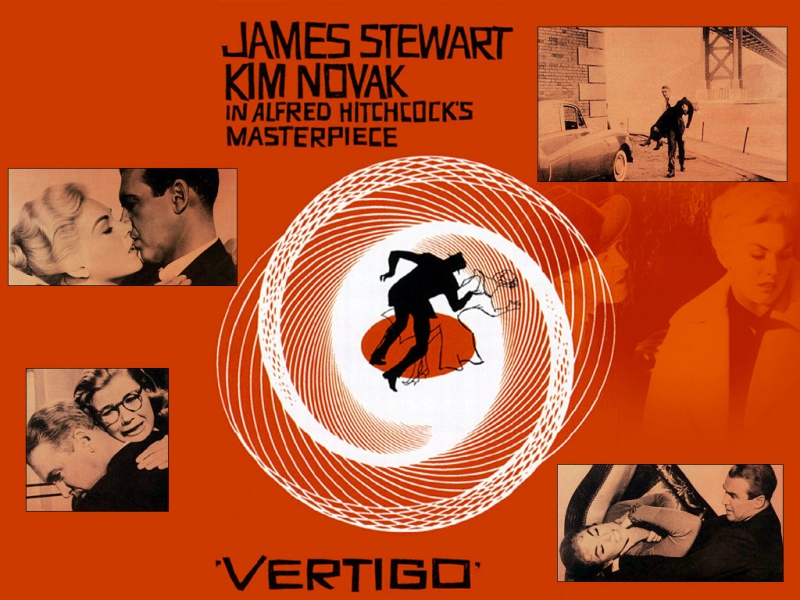
Vertigo (1958). James Stewart is back, this time with Kim Novak. This movie has the slowest and most intricate plot of this batch. This is a psychological thriller in which Stewart plays a cop who is off the job due to emotional fragility after watching his partner fall to his death during a pursuit. That fear of heights keeps him from saving a friend’s wife who dashes to the top of a tower and jumps. But it turns out that the events were not what he believed them to be.
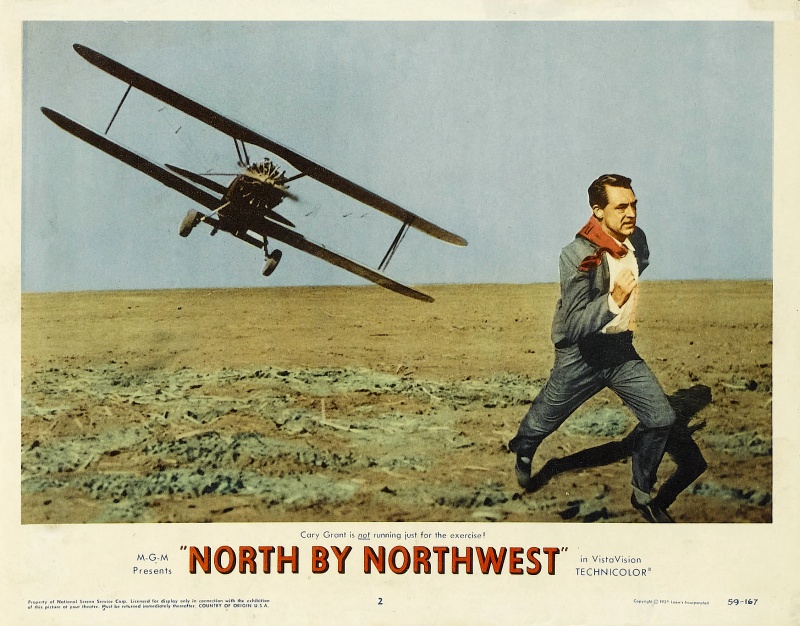
North By Northwest (1959). This might be my favorite of the bunch. Cary Grant plays Roger Thornhill, a New York advertising man who gets mistaken for a spy named George Kaplan. The plot takes Grant’s character from New York to the top of Mount Rushmore as he tries to figure out who is trying to kill him and why. Eva Marie Saint plays the woman who might or might not be on his side while he works through the mysterious plot.
Hitchcock loved his blonde leading ladies, and his favorite was Grace Kelly, who starred in three out of these six films (Dial “M”, Rear Window and To Catch A Thief). In fact, our Hitchcock binge was preceded by a Grace Kelly binge. The others were Doris Day (The Man Who Knew Too Much), Kim Novak (Vertigo) and Eva Marie Saint (North By Northwest). James Stewart must also have been a favorite, because he also got three roles (Rear Window, The Man Who Knew Too Much and Vertigo.
Each of those six films deserves a full post to explore its merits, but they can also be considered together as a set that displays the apex of the filmmaker’s art while simultaneously satisfying the popcorn-buying public. Each of these combines the best of the old Hollywood star system, gorgeous photography, and moments of edge-of-your-seat suspense. And because Hitchcock was gifted with a great (if subtle) sense of humor, there are occasional places where you can get a good chuckle, too.
I ultimately decided to treat them as a set because the era has long passed where a person could regularly catch these on late-night television. Those younger than your humble author must go looking for what to watch rather than having it spoon-fed by a TV network. Therefore, not everyone has had the good fortune to see and enjoy these gems. And I can pretty much guarantee that once a viewer has seen one of them, the others will make the short list of other worthwhile movies to seek out. Even after seeing each of these multiple times, I am always up for a re-viewing.
Alfred Hitchcock turned out an amazing body of work, consisting of over fifty feature films during the course of six decades. But even if these six films from the 1950’s had been all he ever did, they would have been enough.
 J. P.'s Blog
Wow, I didn’t realize he made 50 films. I didn’t watch his “really scary ones.” I did like Rear View Window and Rebecca. Thanks for the post, I should watch some others.
LikeLiked by 1 person
You absolutely should!
LikeLiked by 1 person
Years ago I stumbled upon one of Hitchcock’s earlier American works (circa WWII, give or take a few years either way) titled “Shadow of a Doubt”. It was black and white and featured a young Macdonald Carey (later of Days of our Lives). It’s about an elusive uncle who is visiting his older sister. The sister is utterly naive about her brother, but her daughter quickly figures out her uncle’s motives and behavior. That is where it gets interesting. It has tastes of some later Hitchcock trademarks.
There is also Rope, Stewart’s first Hitchcock film. Stewart plays a professor at a dinner party. Also at the party are two young gentlemen and the topic of discussion is another young gentleman who does a no-show. The two young gentlemen know what happened and try to keep anyone from learning of their nefarious activities. This film is, if I am remembering correctly, notable for using one camera that followed the movement throughout the apartment. Some information I heard about it said the film was remarkable as the one camera approach did not allow for easy retakes – if you goofed, the whole scene had to start over and some single shots were up to seven minutes long.
You have compiled an excellent list, with Psycho being the first Hitchcock film I ever saw. It left an impression. I also realize there are several you have named I have not seen – perhaps some cold winter nights will alleviate that.
LikeLiked by 1 person
I have not seen Rope in a number of years and should probably re-watch it. And yes, those on my list are all worth the time, IMHO.
LikeLike
Rope was a good one, too; but I can definitely understand why it doesn’t appeal much to audiences brought up on hyper-cut movies.
The long scenes are part of the reason I really enjoy older shows and movies.
LikeLiked by 1 person
I agree about these movies. My folks introduced me to Marnie and Man Who Knew too Much when I was around 12 or so — I really should give them another watch.
I also recently got to binge on some Alfred Hitchcock Presents, which were mostly really good as well (and gives him an opportunity to flex his sense of humo(u)r that would’ve been out of place in the movies).
The Birds, while staring his trademark blonde (Hedren?), has a far prettier character, though one with far less importance to the plot: an Aston Martin Drophead Coupe.
I don’t know if it made an impression on her or not, but I made sure to introduce my daughter to these (Psycho, Birds, Rear Window for sure) before she flew the coupe. (A handful of Simpsons references became clearer to her, in any event).
LikeLiked by 1 person
I need to re-watch Marnie. I saw it several years ago and was underwhelmed. But several sources consider it as top-tier Hitchcock, so maybe it deserves another chance.
The 50s TV show is also a great series!
LikeLiked by 1 person
He was a consistently hard worker, turning out film after film. I guess Rear Window is my favorite Hitchcock movie, followed by Vertigo and North By Northwest.
LikeLiked by 1 person
I think the old studio system involved fewer directors making more movies than we have been used to over the last 50 years.
I can attest that it was an amazing experience to watch Rear Window on a real theater screen!
LikeLiked by 1 person
Every Christmas we watch “It’s A Wonderful Life”, and every Christmas I think, “I really need to watch Jimmy Stewart in one of his other films”. Sounds like “Rear Window” is the one, if only to get me watching a few more Hitchcocks than the two you mentioned in the first place.
LikeLiked by 1 person
I love Stewart – many great performances over a long career.
LikeLike
Also, I’d swear “To Catch A Thief” was a TV series but I can’t find it anywhere. Maybe I’ve seen that one after all.
LikeLiked by 1 person
You are right! It ran from 1968-70 or so and starred Robert Wagner as a reformed jewel thief working for government handlers. It was a favorite of the Mrs when she was a kid and we watched the series a few years ago when we found it running.
LikeLike
I’d forgotten all about that TV show, but recall it being quite popular at least among the other 4th graders in my elementary school. I even believe that some lucky kid had a To Catch a Thief lunchbox…although I’ve found no modern evidence of such a thing ever existing.
LikeLiked by 1 person
The lunchbox hierarchy was real! I had one with a generic cowboy on a horse – it was not embarrassing, but it ranked fairly low. I remember the Batman lunchbox (from the Batman TV show) as being the one I coveted above all.
LikeLiked by 2 people
I had a Hot Wheels lunchbox with little magnetic cars you could move around a track imprinted on the lid. I thought I was so cool with that little gimmick.
LikeLiked by 2 people
Another favorite for me from the 1950s is Strangers on a Train.
LikeLiked by 1 person
That is another I have not seen in awhile. I read the book within the last year, so a re-watch of the Hitchcock movie is in order.
LikeLike
I loved watching Hitchcock, movies and TV series alike. I know some have criticized his personal life but I always thought he was a genius at making films.
LikeLiked by 2 people
I suspect you are right about both statements.
LikeLiked by 1 person
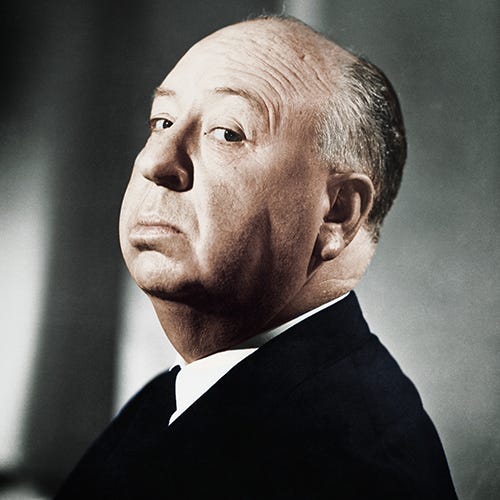
Your photos that you used at the top of the post, are instantly recognizable to me and likely to most people. That was quite a profile and side eye of Hitchcock. He was a master of suspense and what movies I’ve seen I equate with Rod Serling and his “Twilight Zone” TV series (only Serline on a lesser scale). I didn’t get to see “The Birds” as a youngster either and the same for “Psycho” both great movies, as was “Rear Window”.
LikeLiked by 1 person
I have probably seen most all of the Alfred Hitchcock Presents television shows over the years – it was run regularly on some retro channels when I was younger. And you are right, both that and Twilight Zone were great shows. And you are right, that if any two movies are synonymous with the man, they would be The Birds and Psycho.
LikeLiked by 1 person
I agree that the best Hitchcock is the string of films from the late 1950s…and out of that, I’ll cast another vote for Vertigo as the absolute best. That’s one of those films where nearly every single shot contains something that can be examined, and rewatched, to find something important that you hadn’t noticed on previous views.
Then again, I do love The Birds for its totally creepy vibe that seems unlike many other Hitchcock films. Plus, I’ll watch anything with Suzanne Pleshette in it.
LikeLiked by 1 person
Of this bunch, I think Vertigo is the most complex. Lots of people put it atop their lists of Very Best Hitchcock, but I rank it a little lower on my list. I think I need to re-watch it. As for The Birds – I have not seen that one in ages and ought to re-watch that one too. Now that I think about it, I wonder if I am man enough to commit to a watch/re-watch of every extant Hitchcock film, beginning to end. That might take awhile.
LikeLike
Hitchcock is a big favorite.
LikeLiked by 1 person
You have good taste!
LikeLike
Thank you. I love his creation of suspense. 💕
LikeLiked by 1 person