Rhapsody In Blue – A Gershwin Classic Turns 100
George Gershwin’s “Rhapsody In Blue” might possibly be America’s most popular piece of home-grown “classical” music. Written and originally performed as a fusion between classical and jazz, it burst onto the music scene in early 1924. It has been recorded countless times in the previous century, going back to the very beginning. But less well known is what a rough road the piece traveled in getting a version in the style to which we have become accustomed out of a recording studio for the first twenty years.
Jacob Gershwine was born in New York on September 26, 1898, the second son of Russian-Jewish immigrants. He began calling himself “George” as a boy and led a typical life for that time and place, except for one thing – the genius he exhibited in music.
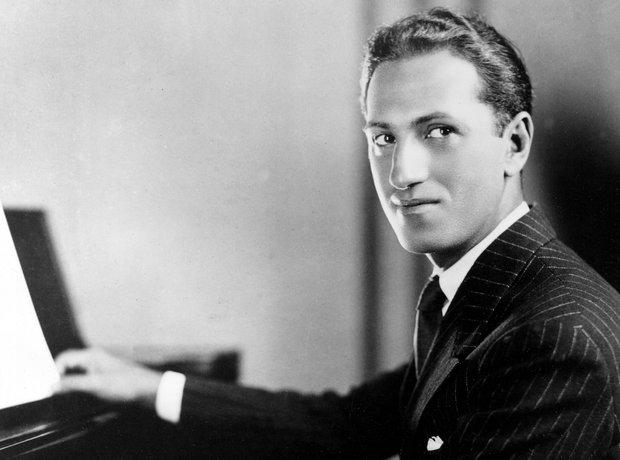
Gershwin (his Americanized name) took lessons from a series of better and better teachers, and became quite adept in the classical repertoire of the time. His love, however, was the new sounds of ragtime and then jazz. He quit school at the age of 15 to become a “song plugger” with a music publisher that was part of the New York’s famous “tin pan alley”. His job was to sit at a piano and sell the company’s songs to performers who were looking for new material.
He soon graduated to writing songs, and then the music for entire shows on Broadway. Most hits at the time came out of musical theater, and one of his early ones was “Swanee”, a song Gershwin wrote in about ten minutes for a 1919 show, and soon made famous when Al Jolson recorded it in 1920 after hearing Gershwin play it at a party, making it Gershwin’s first mega-hit.
But Gershwin also had a more serious side, and put great effort into learning the technical aspects of serious music. He continued lessons with learned teachers and even took two college courses on composition and scoring. However, he believed that when it came to serious music, jazz should be a legitimate part of the conversation. It was in November of 1923 when Gershwin was involved in such a project, where the classical singer Eva Gautier performed some popular jazz tunes, a concert that was well received.
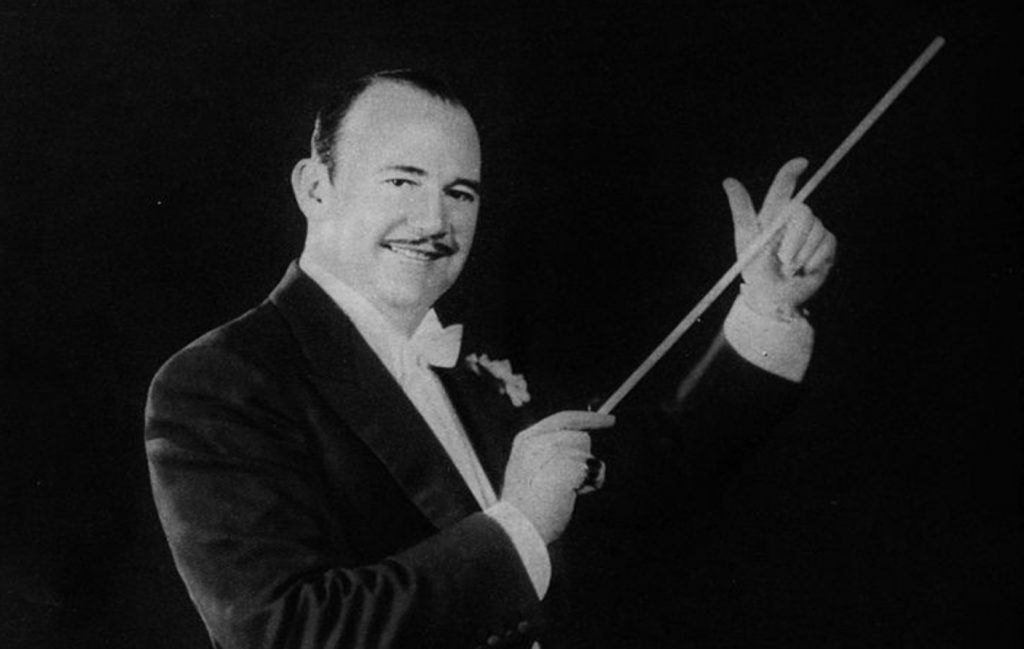
Following that concert, popular band leader Paul Whiteman got the idea for for a similar project for his orchestra. At that time, Whiteman may have led the most popular band in America, with the ability to play everything from hotel dances to light classics to popular jazz. He approached Gershwin to suggest an extended composition for this concert. Gershwin first turned him down, but Whiteman eventually prevailed on him – possibly by telling the press that Gershwin had agreed to do it. The twenty-five year old Gershwin started writing just five weeks before the concert, and the final orchestrations (by Whiteman arranger Ferde Grofe’) were finished just days before the February 12, 1924 premiere. Gershwin later told his biographer Isaac Goldberg that he imagined the piece as “a sort of musical kaleidoscope of America, of our vast melting pot, of our unduplicated national pep, of our metropolitan madness.”
The concert was, for the most part, a dud, but “Rhapsody in Blue” was very well received by the audience. Whiteman’s band was 23 pieces, and Gershwin himself played the piano. The only score for his piano part was in his head, and he relied on nods back and forth with Whiteman for cues. He did not write out the piano part until several months thereafter, and it is widely believed that there was more than a little improvisation in that first performance.
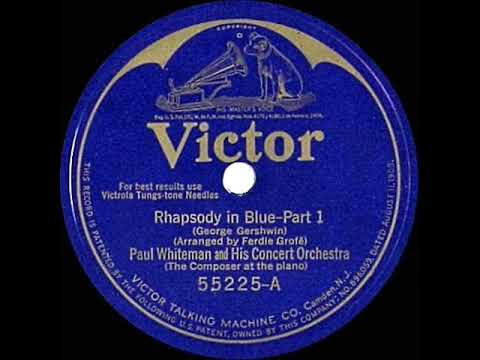
About four months later, the pair went into a studio for the Victor Talking Machine Company (where Whiteman’s orchestra had churned out hit after hit) and made the very first recording of the piece in June of 1924. Or most of it, because only about 9 minutes (of a piece that ran to about 15 minutes) made it onto the record. The problem was the technology.
In the era of the 78 rpm record, a performer could count on about 3 minutes of playing time per side of a 10 inch disc and maybe 4 1/2 minutes from a side of the larger 12 inch disc. The decision was made to offer the piece on two sides of a 12-inch disc on Victor’s “blue label”, which was kind of split the cost/status difference between the “normal” black label discs and the fancy classical “red seal” series.
The other technological issue was that this recording was made about a year before electrical recording through microphones and amplifiers was adopted by the recording industry. Therefore, the blue label 1924 Rhapsody came at the end of the era for acoustic recording, where the music’s physical sound waves pulsed into horns and tubes which created vibrations in a stylus which cut the master disc.
This record has much to recommend it – the performance has a raw vitality to it, and the music comes through about as well as was possible for an acoustically recorded disc. Gershwin’s playing comes through marvelously, though we are left to wonder if the tempos were determined by artistic merit or by the engineer’s stop watch. One interesting note about the opening notes – that long slide upwards over what was to be a seventeen-note run by the clarinet was something thought to be impossible. But Whiteman’s reed man, Ross Gorman, knew that it could be done and created one of the most recognizable openings to any piece in history. Wikipedia to the contrary, it was not done right before the opening, but took weeks of preparation, including a lengthy search for just the right reed for his horn.
The electrical recording process had made the old record obsolete fairly quickly, and the piece was re-recorded in 1927. Gershwin was on the piano again, but Whiteman walked out during a disagreement over how the music should be played. Both Gershwin and Whiteman had performed the piece many times in the previous three years, but Whiteman’s treatment had apparently diverged from Gershwin’s in a way that was not to the composer’s liking. Though Whiteman got the label credit, it is believed that Victor’s music director Nat Shilkret directed the orchestra.
This record was almost surely made as a money-grab, most likely by Whiteman or by Victor. The sound quality is much better than the 1924 disc, though Gershwin’s piano is badly under amplified (in my view). While the recording is more polished, it lacks the freshness of the original – which is understandable. There is a difference between the excitement of performing something new and performing something many times over a few years. And again, we got only 9 minutes of the piece on a 2-sided 12 inch disc.
That same year, another version was recorded – one completely out of the Gershwin/Whiteman ecosystem. Oscar Levant, a classically trained pianist who later became a friend of Gershwin, recalled that he got a call one morning from orchestra leader Frank Black. Black was in the Brunswick recording studio to record Rhapsody in Blue but his pianist was a no-show. Levant agreed to play and did so, for straight union scale.
This record is interesting because it shows that outside of the 9-minute format, no expectations had developed around the piece. so interpretations of it could vary. Levant and Gershwin met soon after, and disagreed about the relative merits of this treatment vs. that played by the composer.
The first full-length recording came in 1935, over a decade after the piece’s debut. A young Arthur Fiedler presided over the first recording session of The Boston Pops Orchestra, and included R in B in the list selections for that date. But it was not the same R in B as before. Fiedler oversaw the score for the work being reconfigured for a more standard symphony orchestra – though it is unclear whether he worked from Grofe’s 1926 enlarged arrangement for a “pit orchestra” or re-arranged the piece in-house.
This is probably the first recorded version that is familiar to anyone who has listened to almost any version of the piece recorded from the 1950’s through the 1970’s. The Fiedler version is probably the least like the original – the piano part as imagined by pianist Jose Sanroma varied quite a bit from Gershwin’s style, and was far more classical than jazz – notice the greatly subdued opening phrase for the clarinet. The entire piece seems to be interpreted almost purely through the lens of the traditional classical music establishment, something that is subtle but noticeable for one who is familiar with the piece.
At about 14 minutes, it took up 3 sides of two 12-inch discs, with the 4th side being used for other Gershwin music as a filler. It is not hard to believe that Fiedler and his classically-trained cohorts looked at a decade-old period-piece and thought “we can improve this.” As before, some tempos can be questioned because of the need to break things into 4 1/2 minute segments for the recording, but overall this was a worthwhile project which proved that R in B had some staying power with listeners.
In 1945 there was a popular biopic made about George Gershwin’s life (called, appropriately, Rhapsody in Blue). That same year saw Oscar Levant play piano on a recording by the Philadelphia Orchestra led by Eugene Ormandy. This recording was well-received at the time and remains respected all these years later. Notably, this may have been the first version done by an honest-to-goodness top-tier symphony orchestra.
We were still, however, in the era of the 78 rpm record and this one takes up six sides of three 10-inch discs. At a bit over 12 minutes, there was still some trimming to the original piece (though in a full orchestral version as would be the norm going forward). Oscar Levant eventually became a close friend and collaborator of Gershwin and did a wonderful job of bringing Gershwin’s jazz sensibilities to the performance.
One version that is often overlooked is one by Paul Whiteman, also from 1945. This one is unique because it was probably the only recording of the full-length (original) Grofe’ arrangement until that version started to regain a little respect (or at least interest) in the 1980’s. Whiteman’s 1945 effort stretched over all 4 sides of two 12-inch discs issued on the Signature label. Whiteman maintained more than a little creator’s pride in R in B for the rest of his career, so it should not be surprising that he would continue to perform it.
Where Arthur Fiedler’s 1937 performance pushed the piece to the classical extreme, this one went the opposite direction, as the only one I have heard that messes with the way Gershwin’s original theme is played. In my own opinion (humble or otherwise), this version suffers from two defects: first, the rhythmic changes to the theme comes across as something played by a circus band. The second is Whiteman’s addition of a vocal chorus to add drama to certain parts. Both of those sins can be sampled between 3:06 and 3:22 on this recording. But it is the only full-length version of the original score before the 1980’s, so I suppose we must take what we can get.
This version is ignored in most writing on R in B, but is one I became familiar with after finding both discs in a thrift store in the 1970’s. I still enjoy it, but the defects mentioned above keep it in the category of “historical curiosity” instead of as a really enjoyable listen. A more modern version (1987) of the 1924 Grofe’ score can be heard here.
The above clips represent well over an hour of music, and I do not expect that any but the most dedicated music geeks (a club of which I am a member) will listen to them all. Here is my subjective guide for more casual listeners to decide where to listen
If you are new to Rhapsody in Blue, start with the 1945 Oscar Levant/Eugene Ormandy version. It is the first modern version played in the style and spirit of the original (albeit with the newer symphony orchestra score), but with good sound quality and spirited Gershwin-style piano performance.
If you are familiar with modern versions, the 1924 original is a treat for its vigorous style, although it can be jarring for those who recognize what is skipped over at various points. The others are included for those who wish to follow the winding pathway this American musical classic took before reaching what most of us in the modern era have been used to hearing.
George Gershwin died in 1937, from complications after surgery to remove a malignant brain tumor. At just 38 years old, he had been at the peak of his musical career. Through the 1920’s and 1930’s, he would become one of the most prolific hit-makers in popular music, often with his brother Ira who was his collaborator for lyrics. But Gershwin was alone among popular song writers in yearning to make serious music, and he spent increasing amounts of his time writing and performing in concert halls. Interestingly, he had trouble getting American classical composers and critics to take him seriously – while in Europe, Gershwin was the only American composer of serious music who got any attention or respect.
On the piece itself, it is something remarkable and maintains a popularity that Gershwin’s subsequent serious efforts never managed. Most interesting is how this, probably the most popular piece of American “classical” music, did not come out of the vast infrastructure that brought us almost all of Americas 20th century classical repertoire. Instead, it came from the product of jazz and tin pan alley, who was able to elevate those traditions to something of exceptional quality and durability. It as been a century, but we have yet to see anything else like it.
Source note: Much background material for this post is from the book “Summertime: George Gershwin’s Life In Music” by Richard Crawford (W. W. Norton, 2019)
 J. P.'s Blog
Wow, what a great deep history of this song! Always a favorite, but didn’t know it was commissioned by Whiteman, a guy who never seems to get his “due” in the jazz community, since today he’s considered “meh” because he was too popular, and…lets face it, white. What can you say about Oscar Levant, I guy I knew first as the crabby wise-ass companion in the movies, which I loved him for, before I knew of his skills. My Dad, who was a classical and opera movie aficionado, had to fill me in on the great Levant! The fact that he popped out of bed and played this for scale says it all.
LikeLiked by 1 person
Whiteman was an interesting character – He was apparently a classically-trained violinist, but has often been called more businessman than artist.
One of the things I learned from the Gershwin bio I read (or listened to) was that Levant helped George’s brother Ira finish a song that was only partly finished before George Gershwin died – Our Love Is Here To Stay. George and Ira were working on a movie for MGM at the time. I always loved Levant in his movie roles.
LikeLike
Excellent essay. This musical work has endured and endured. And I’ve always been equally impressed with George’s brother Ira. Ira was a brilliant lyricist.
LikeLiked by 1 person
I agree completely – the combination of George and Ira was unbeatable. And yes, this piece of music has lasted long beyond what most probably expected in 1924, and shows no signs of old age. Late in his life, Gershwin remarked that the Rhapsody remained fresh, while popular jazz tunes of the time had grown dusty. Although I think a lot of his popular tunes have stayed fresh too.
LikeLiked by 1 person
Very interesting story! I remember the piece from when I was young, though don’t know which LP my parents had in their record collection.
LikeLiked by 1 person
I didn’t even attempt to look into the number of times this was recorded on an LP. My mother had this on an LP too – and I cannot remember which one either, but know it was from sometime in the later 1960’s. She also had an older one from the early 50’s that was on two or three extended-play 45s. I’m sure I first listened to this once I was old enough to be allowed to touch her “adult” records.
LikeLiked by 1 person
A centennial anniversary for this song is incredible, but I confess I have never heard it before. In the first recording/YouTube video, I was thinking that in the few, very old movies I have seen, they might have used that piece as background music. You really gave us a thorough tutorial on Gershwin and “Rhapsody Blue” here JP.
LikeLiked by 1 person
You may be remembering the piece from an ad campaign in which United Airlines featured it as a kind of theme music. Here is one version: https://youtu.be/9jbXcHwtfgc?si=HU3tPTSV4D7XeLMX
I got exposed to this at a young age because it was a favorite of my mother.
LikeLiked by 1 person
I think you’re correct about that JP. I just listened to the link you sent and especially the end part of this commercial. Amazing you remembered that commercial from 1987. You can thank your mother for your musical tastes then.
LikeLiked by 1 person
Sure, now you mention that. :) It took me most of an hour on Friday to figure out why a couple parts of this sounded very familiar, but the rest of didn’t.
LikeLiked by 1 person
It is amazing where advertisers get their music.
LikeLike
Who knew there was so much history here? I only listened to the first version you included (since I was already familiar with the piece) and I love the “laughing” clarinet, which isn’t evident at all in later renditions. The ragtime roots also come through in parts. But the piano is remarkable, esp. to your comment about Gershwin playing from memory. It’s sad to think how much potential American composition was lost as a result of his early death. Thanks for the research and the writing – a fitting birthday celebration to a wonderful piece.
LikeLiked by 1 person
I went far deeper into this rabbit hole than I probably should have, but I found the history of the early recordings so fascinating. I do love listening to Gershwin’s piano playing in the 1920’s versions. I find it interesting that on the one hand, the very first version is immediately recognizable as so similar to the way it is still played today, while at the same time, there are so many small differences in orchestration and styles. I have decided that this is really a brawny piece of music from a brawny country in a brawny decade, and the early recordings really grab ahold of that atmosphere.
I think many in the world of classical music still struggle with the language of jazz (or certainly did in the piece’s first fifty years or so), which is why so many newer recordings lack the muscular vitality found in these older records. But on the other hand, the fact that so many have recorded it show that it has taken a particular hold on the listening public.
LikeLiked by 1 person
I’m embarrassed to say I didn’t know Gershwin penned “Summertime” and “Someone to Watch Over Me”, a couple of stage production classics. I did know about “An American in Paris” but the music doesn’t come to me like “Rhapsody in Blue”. I need to give it another listen.
LikeLiked by 1 person
Also, I got to your piece on Renaissance Men too late to make a comment, but Dvorak’s New World Symphony is another favorite of mine.
LikeLiked by 1 person
BTW, both those album covers have “state of the art” graphics, for the era, written all over it! No one was just slapping something together for these recording packages!
LikeLiked by 1 person
In addition, I just got my latest issue of Down Beat magazine, and they have a deep dive into the latest Béla Fleck output, a reimagining of Rhapsody in Blue to celebrate its 100 year anniversary! Worth picking up, very interesting…
LikeLiked by 1 person
Pingback: Becoming Acquainted With Brian Wilson | J. P.'s Blog