Getz/Gilberto: Some Brazilians And An American Walk Into A Recording Studio And Make Some Musical History
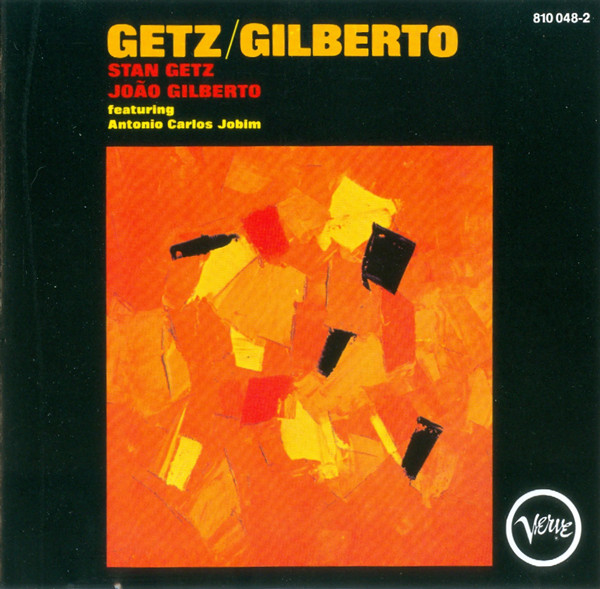
Fifty years ago, a group of Brazilian musicians and an American saxophonist came together to record an album that would combine the Brazilian bossa nova with American jazz. Although nobody expected much of it at the time, the result was far greater than anything any of them could have expected, including Grammy awards, the launch of a new singing sensation and the creation of a musical standard that everyone knows, whether aware of it or not.
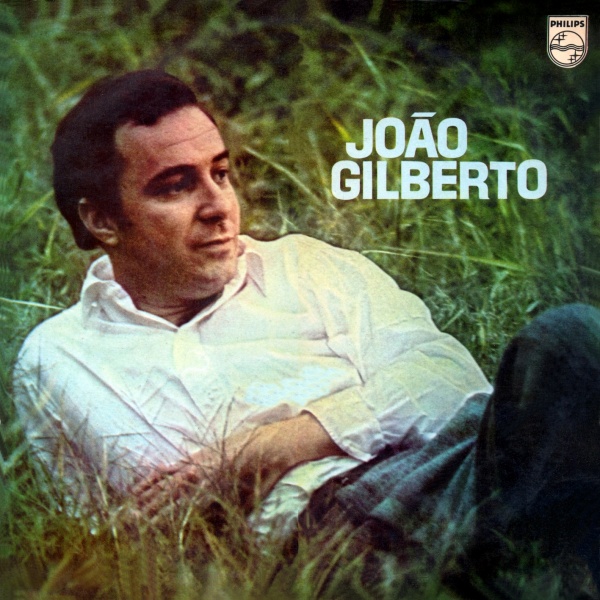
Jazz Music has many sub-genres, and not all of them are American in origin. Latin music has been an influence for most of jazz history, from the tango of the 1920’s through the rhumba of the 1930’s, the conga of the 1940’s and the mambo of the 1950’s. In the very late 1950’s, the bossa nova, a modernized, synchopated update of Brazil’s more traditional samba, became the newest thing following a 1959 Brazilian album (“Chega de Saudate”) that combined the music of Antonio Carlos Jobim with the guitar and vocals of Joao Gilberto. That album fueled a bossa nova boom that made its way to the US following a 1961 Brazilian tour by singer Tony Bennet.
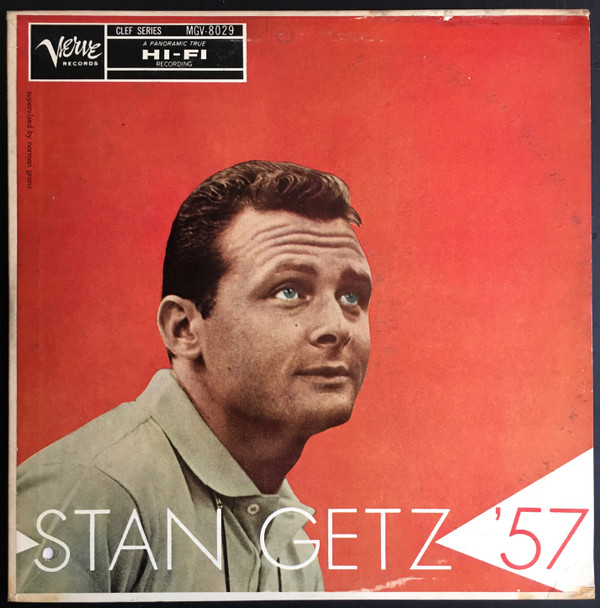
One musician who was especially taken with the new style was tenor saxophonist Stan Getz. Getz was the son of Ukranian Jewish immigrants who turned into something of a musical prodigy. By 1943 at age sixteen, he was playing in Jack Teagarden’s band. Following short stints with the big bands of Stan Kenton, Jimmie Dorsey and Benny Goodman, Getz found his footing with Woody Herman’s band in 1947 (which was featured on the very first musical post of this blog).
Getz was very much a disciple of tenor sax great Lester Young (whom we have also featured), and played with light, mellow style that was very much not that of the early hard-charging bebop players who were changing music in those early postwar years. Getz is considered an early example of “cool jazz” that would serve as a counterpoint to the harder bop style all through the 1950s. Getz had weathered a difficult time with drugs in the early 1950’s, and by 1958 was living and performing in Denmark.
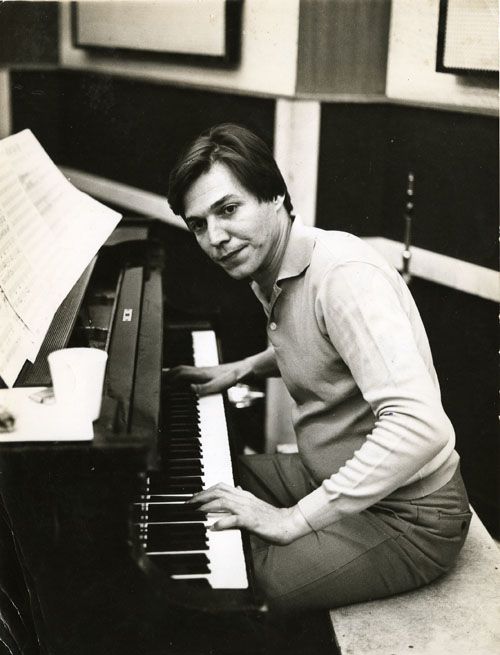
After returning to the US in 1961, Getz teamed up with guitarist Charlie Byrd and created a million-selling album called “Jazz Samba” and another pair of albums that followed it. So, when a group of Brazilian musicians (including Gilberto and Jobim) came to America to performed a concert of Brazilian music at Carnegie Hall, Getz was in the audience. Not long after that performance, Getz approached the Brazilians to propose a project that would combine their authentic Brazilian bossa nova and Getz’ saxophone.
The album was recorded over a twenty-four hour period on March 18-19, 1963 in a New York studio. Along with Gilberto (vocals and guitar) and Jobim (piano) were two other Brazilian bossa nova innovators – Milton Banana (drums) and Sabastiao Nito (bass). The session was not a smooth one, with both Gilberto and Getz having strong opinions on how the music should be played – opinions that often required an agreement to defer to the producer in their impasses.
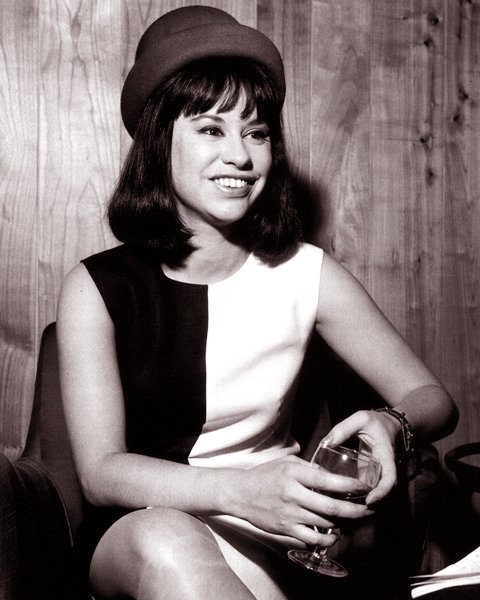
One fortuitous choice was made: Because Gilberto sang only in his native Portuguese, it was felt that a couple of the songs needed lyrics sung in English if there was any hope of airplay from this album. Gilberto’s wife Astrud was at the session as a spectator. She had never recorded, but was the only one of the Brazilians who spoke decent English, so she agreed to sing on a couple of the tracks. Although she received only a small one-time payment, this record launched a singing career that lasted most of the rest of her life.
Strangely, the recordings sat and gathered dust for close to a year before they were released in an album entitled “Getz/Gilberto” in March, 1964, partly because Verve Records believed that in a world being swept by The Beatles, the bossa nova was a receding tide. But then something funny happened: sales took off and the album won three Grammys, including Best Album of the Year, a first for a jazz album. It has gone down in history as an album essential to any decent jazz collection, and proof that an album can succeed both artistically and as popular music.
There is jazz for every mood. If you seek something calm for a rainy afternoon or for a romantic evening, it is hard to do better than Getz/Gilberto. Everything good about this album can be found in its opening track, “The Girl From Ipanema”.
It is hard to know where to begin. Is it Gilberto’s calming guitar? Or his Portuguese vocal? Or is it Jobim’s minimalistic piano? Astrud Gilberto’s vocal has to be part of it – her raw style is inimitable. She is, at once, shy, alluring, and thoroughly musical. A shorter version of the song was released in May, 1964 and hit No. 5 on Billboard’s Hot 100, even during the peak of Beatlemania. This longer version from the album is, however, far superior as each of the musicians gets a chance to shine. I think they saved the best for last when Astrud’s vocals are combined with Stan’s deft soloing that is neither too much nor too little.
This song has become oft-parodied as “elevator music” – never more effectively than in the 1980 film classic, “The Blues Brothers”. How effective? Check the clip here. I suspect, however, that the “elevator music” label can only apply to the many bland copies of this once-popular song. The “elevator music” description falls apart once one has listened to the original performance, which is truly inspired on multiple levels.
The entire album is worth a listen (and it can be heard here, in its entirety). But for now, another couple of tracks are worth our time. The second cut with Astrud Gilberto’s English vocal is Corcovado (Quiet Nights of Quiet Stars). As one who listens to music first and lyrics only as an afterthought, I enjoy the non-English vocals purely for their musical sound. Getz, of course, provides a master class on how the art of jazz can be as beautiful and listenable as it is on musical merit. Again, this longer album cut is far superior to the shortened commercial single release.
O Grande Amour lacks English lyrics, but is first-rate jazz that combines the best of Brazilian and American musicianship. And, it is also just one more example of the superb quality of the original recording and mixing (Best Engineered Recording – Non Classical was one of its three Grammys). Really, anything I could write about it is made unnecessary by listening to it.
So many later albums trace their roots to this one. Both Joao Gilberto and Astrud Gilberto had long musical careers. Astrud, in fact, just passed away earlier this month at the age of 83. Antonio Carlos Jobim recorded many albums, both on his own and in collaboration with other notables, including a 1967 album with Frank Sinatra. Jobim may be the most prolific writer of music of his genre and generation.
And, of course, there is Stan Getz. Getz’ career eked into six decades and he recorded prolifically in all but the last one, from the 1940s through the 1980s. Even in his sixties, he played regularly, including an extended solo on Huey Lewis & The News’ Small World (part 2) (1989). He died of liver cancer in 1991, at the age of 64 – the same year he won his last Grammy for a jazz performance of I Remember You which he had recorded only a few years earlier).
Some “classic jazz albums” seem to have become classics because of the cheerleading from the jazz illuminati, but are difficult for those less schooled in the music to appreciate. Others, however, show the less experienced jazz fan a big, wide, welcoming front door to enter and an ever-richer experience from there. Getz/Gilberto is of the second kind. Personally, I was late coming to this particular party, but have been having a fabulous time now that I am here.
Further Reading:
NPR’s obituary/retrospective on Astrud Gilberto
2019 retrospective on Getz/Gilberto from Jazz Online
 J. P.'s Blog
So timely with the passing of Astrud! Corcovado is one of my absolute favorites, and I love this genre…it makes me feel like I’m a kid and back walking the streets of Chicago. Something about this era in jazz and this music that brings a feeling back of an era of big promise!
LikeLiked by 1 person
For some reason, most of my life I have avoided the latin flavors of jazz. I’m not sure why. Quite a few of them have been great recent discoveries for me, and very good ones. I started with the idea of writing something about Sinatra’s album with Jobim – I found a CD at a Half Price Books store around last Christmas, and have listened to it several times. I didn’t know much about Jobim at the time, and some research led me here.
Stan Getz is a favorite of mine – but then he sounds quite a lot like Lester Young in his prime, and Lester Young is a favorite of mine too.
LikeLike
BTW, a killer version of Corcovado by Stacey Kent, who I just missed seeing in Evanston some months ago…
LikeLiked by 1 person
Hello there. It truly is a great album. Here’s an article you might enjoy:
https://www.inquirer.com/news/astrud-gilberto-brazilian-singer-girl-from-ipanema-society-hill-20230616.html
LikeLiked by 1 person
Thanks for the link – sadly, it is for you subscribers only. But I was able to noodle around a bit and get the gist of it, that she lived either in Society Hill or in Narberth. My niece had her wedding reception in the Society Hill area and the last place my grandmother lived was in Wynnewood, just across Wynnewood Avenue from Narberth. I had no idea.
LikeLiked by 1 person
The article says she lived in Philly’s Society Hill section (in the Society Hill Towers) from 1999 onward. She lived there pretty anonymously.
LikeLiked by 1 person
Wow, “Corcovado” is one sweet lullaby. I closed my eyes while listening and went far, far away for a few minutes. Astrud’s accented English is alluring, but frankly every element of the song is captivating.
LikeLiked by 1 person
I know, Astrud’s singing is really captivating. I once worked in an office where one of the secretaries was an immigrant from Portugal. Her accent was really charming. I’m glad you found something good in the music – and I am glad I found it so that it could be shared a little.
LikeLiked by 1 person
Soothing. Sapped me of energy for doing scheduled chores!
LikeLiked by 1 person
My work here is done. 🙂
LikeLiked by 1 person
Unfortunately, I don’t know any of this type of music JP, but I remember the line “Blame it on the Bossa Nova”. Now “The Girl from Ipanema” I remember as it was more recent (which is not really so recent, but a well-known song, elevator music or not). I heard sound bites of it several times this past few weeks since the passing of Astrud Gilberto.
LikeLiked by 1 person
I had seen the mentions of Astrud’s passing, but had not paid much attention at the time. It was only coincidence that I got into this album and then noticed the connection and the recent death.
Blame It On The Bossa Nova was a 1963 hit record for Eydie Gorme’.
LikeLiked by 1 person
Well I was old enough to remember a 1963 hit I guess (at age 7). My parents used to watch Lawrence Welk and Ed Sullivan – one TV in the house, so we ALL watched those programs and she was probably on there at some point.
LikeLiked by 1 person
So this led down a rabbit hole that took a couple of weeks to get back to.
First, the long version is great and I had not heard it before. That’s going into a playlist. 🙂
Second, Do I own several different copies of the Blues Brothers movie? Yes, I do. Did I still click the link and watch the whole thing again anyway? Also yes.
I have the official soundtrack, I have also picked up the other songs from the movie that didn’t make the soundtrack album, and have managed to track down several of the numbers that got cut from the movie, but it occurred to me that I didn’t have the elevator version of Girl From Ipanema.
Turns out nobody does. At least nobody on the internet can find it, and there is some question as to where exactly it came from originally. Best guess is that it is a version recorded specifically for FM100, the easy listening station in Chicago in the ’70s. It may have involved musicians Norm Geller & Richard Alden, but none of their catalogs turn it up. Even John Landis has been quoted as saying he doesn’t remember where they got it. Apparently Universal Studios did keep a copy after Blues Brothers, as Kevin Smith was able to use the same version in his film Mallrats, but other than that it has vanished into thin air.
Interestingly, Ipanema & the similar muzak style cover of Don’t You Go Changing (from the Holiday Inn Lounge scene) may be the only songs not in the movie credits.
LikeLiked by 1 person
Wow, I never thought to inquire where that Blues Brothers version came from. You have indeed found a mystery.
I don’t think I had heard the long version before I found this album. At first, something sounded off before I realized that it was longer than the one I knew. Now the short version sounds off.
LikeLike
Pingback: Jazz Where The Stars Are The Stars | J. P.'s Blog